

Why does white rice taste so much softer and more aromatic, yet fall short in nutritional value?
Rice serves as a staple food on the tables of people across the East—a daily necessity we simply cannot do without. The white rice we commonly consume—which cooks up crystal-clear, soft, and delightfully chewy—is beloved by all. But have you ever stopped to wonder: why are rice grains polished to be so white and smooth? And what impact does this process have on the rice’s nutritional content? Today, let’s take a deep dive into the vast nutritional disparities between “polished rice” and “unpolished rice” (typically referred to as brown rice).

Get to Know Your Rice Grain: A Complete Structure is a Nutritional Treasure Trove
To understand the difference between polished and unpolished rice, we must first visualize what a complete grain of rice looks like. It consists of three key components:
The Hull (Husk): The hard, protective outermost layer; it is inedible.
The Bran Layer (Rice Bran): The brown outer layer situated beneath the hull; it is rich in dietary fiber, B vitamins, minerals, and phytochemicals.
The Germ: The part of the grain responsible for sprouting and growth; though small, it is incredibly nutrient-dense, containing proteins, healthy fats, Vitamin E, B vitamins, and minerals.
The Endosperm: The main body of the grain, accounting for approximately 80% of its volume; its primary constituents are starch (carbohydrates) and a small amount of protein. This serves as the energy reserve for the germ.
Unpolished Rice (Brown Rice): This refers to rice grains from which only the hull has been removed, leaving the bran layer and germ fully intact. Its natural color ranges from a pale yellow to a light brown.
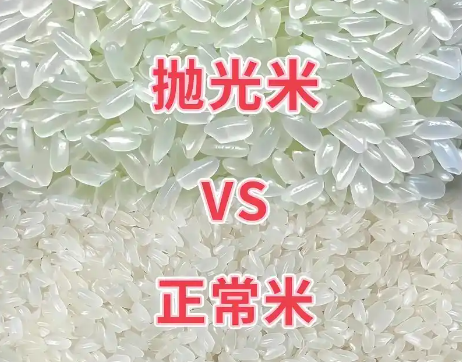
Polished Rice (White Rice): This refers to rice grains from which both the bran layer and the germ have been stripped away through milling and polishing processes, leaving behind only the endosperm. This process renders the grains pure white and smooth, creating a refined texture that is both easy to digest and easy to store.
Simply put, the polishing process is undertaken to enhance texture and extend shelf life—but it comes at the cost of sacrificing the nutrients found in the grain’s outer layers and the germ.
Polished vs. Unpolished Rice: A Nutritional Showdown
Precisely because of these differing processing methods, these two types of rice possess vastly different nutritional values. Unpolished rice retains the “essence”—the most nutrient-rich parts—of the grain. 1. Dietary Fiber
Unpolished Rice: Rich in dietary fiber, which is primarily concentrated in the bran layer.
Polished Rice: The dietary fiber content is extremely low—almost negligible.
Why is it important? Dietary fiber is often referred to as the “seventh major nutrient.” It increases satiety, aiding in weight management; promotes intestinal peristalsis, helping to prevent constipation; slows the rise in blood sugar levels after meals; and helps maintain a balanced gut microbiome.
2. B-Complex Vitamins
Unpolished Rice: Contains abundant amounts of Vitamin B1 (thiamine), B2 (riboflavin), B3 (niacin), B6 (pyridoxine), and others. These vitamins are crucial for our energy metabolism, nervous system function, and skin health.
Polished Rice: During the polishing process, over 80% of the B-complex vitamins are lost. This explains why, during eras when refined white rice was the dietary norm, conditions associated with B-vitamin deficiency (such as beriberi) were more prevalent.
3. Minerals
Unpolished Rice: An excellent source of various minerals, including magnesium, phosphorus, potassium, zinc, and iron. These minerals participate in numerous physiological processes within the body and are vital for bone health, immune function, blood formation, and more.
Polished Rice: The mineral content is also drastically reduced.
4. Healthy Fats and Vitamin E
Unpolished Rice: The germ contains a certain amount of healthy unsaturated fats and Vitamin E.
Polished Rice: Since the germ is removed during processing, these fats and Vitamin E are lost along with it.
Why is it important? Healthy fats are essential nutrients, while Vitamin E serves as a powerful antioxidant.
5. Antioxidants and Phytochemicals
Unpolished Rice: The bran layer and germ contain various beneficial phytochemicals and antioxidants—such as gamma-oryzanol and ferulic acid—which help combat oxidative stress.
Polished Rice: These substances are almost completely removed.
6. Protein
Unpolished Rice: The protein content is slightly higher than that of white rice.
Polished Rice: Protein is primarily concentrated in the endosperm; however, the total protein content is slightly lower compared to brown rice.
7. Glycemic Index (GI)
Unpolished Rice: Typically classified as a medium-to-low GI food. Due to their high fiber content, carbohydrates in unpolished grains are digested and absorbed slowly, resulting in a more gradual rise in blood sugar levels after meals.
Polished Rice: Typically classified as a high-GI (Glycemic Index) food. It is digested and absorbed quickly, which can easily lead to a rapid spike in blood sugar levels after eating.
Why is this important? Long-term consumption of high-GI foods may increase the risk of developing Type 2 diabetes, obesity, and cardiovascular disease. For individuals who need to manage their blood sugar or wish to maintain stable energy levels, choosing low-GI foods is a more beneficial option.
What does this mean for the average person?
Simply put, if polished rice serves as your primary staple food over the long term—and you do not make a conscious effort to pair it with a variety of other foods to replenish the nutrients that were removed during processing (particularly B vitamins and dietary fiber)—you run the risk of inadequate nutrient intake.
In contrast, unpolished rice—while it may not have the same soft, fluffy texture as polished rice and may take slightly longer to cook—offers more comprehensive nutritional value. It provides a longer-lasting sense of satiety, is more conducive to blood sugar control, and is more beneficial for gut health.
Of course, white rice is not inherently harmful; in certain situations—such as for individuals with compromised digestive systems, those requiring a quick energy boost, or patients recovering from illness—it offers distinct advantages. However, from the perspective of a healthy daily diet, increasing your intake of unpolished grains is the more highly recommended choice.
How can you incorporate unpolished rice into your daily diet?
Interested in trying a healthier rice option but not yet accustomed to the texture of brown rice? Don’t worry—you can take a gradual approach:
Mix and Cook: To start, try cooking a blend of brown rice and white rice in a ratio of 1:3 or 1:2. This allows you to slowly adjust to the texture before gradually increasing the proportion of brown rice.
Soak in Advance: Since brown rice is relatively hard, it is best to soak it in water for 2 to 4 hours—or even overnight—before cooking. This makes it easier to cook thoroughly and results in a softer texture.
Use the “Brown Rice” Setting on Your Rice Cooker: Many modern smart rice cookers feature specific modes for brown rice or mixed grains. By utilizing higher temperatures and longer cooking times, these settings ensure that brown rice is cooked to perfection.
Diversify Your Choices: Brown rice isn’t the only type of unpolished grain available! Other options include black rice, purple rice, red rice, millet, oat groats, and quinoa. Each offers slightly different nutritional profiles, so rotating through these various grains can help enrich the nutritional variety of your meals. Storage Note: Because they retain the fats found in the germ, unpolished grains are more susceptible to oxidation and spoilage—particularly in hot, humid environments. It is recommended to purchase smaller packages or, if buying in bulk, to seal the grains tightly and store them in the refrigerator.
Summary
Through this comparison, we have found that polished rice—in its pursuit of the ultimate texture and visual appeal—sacrifices the most valuable parts of the grain: the bran layer and the germ. This results in a significant depletion of essential nutrients such as dietary fiber, B vitamins, minerals, healthy fats, and antioxidants. Unpolished grains (such as brown rice and other whole grains), conversely, preserve these nutritional essentials, offering us a more comprehensive range of health benefits—performing particularly well in areas such as aiding digestion, stabilizing blood sugar levels, and assisting with weight management.
Armed with this understanding of the differences, we can make more conscious dietary choices. In your daily diet, consider increasing the proportion of unpolished grains—such as brown rice—in your meals. By shifting your staple foods from “refined” to “whole,” you can nourish your body with a more diverse and abundant array of nutrients.
So, the next time you sit down to a plate of gleaming white rice, perhaps you will be reminded that the very parts that were “discarded” are, in fact, the true nutritional treasures!
Post time: Apr-02-2026