

From cleaning and screening to refining and deodorizing, the entire rapeseed oil processing process is revealed: small workshops rely on pan pressing, while large factories use solvent extraction technology to achieve a 99% oil yield. Equipment selection directly determines the oil grade and market competitiveness.
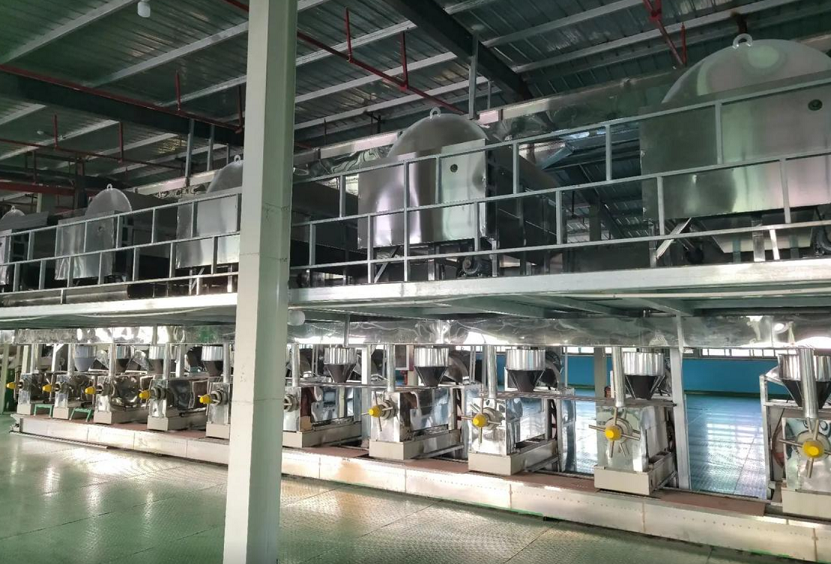
Rapeseed oil processing is a complete production line. Depending on the processing scale and product grade (crude oil, strong aroma oil, first-grade refined oil, etc.), the equipment configuration includes: pretreatment → pressing/solvent extraction → crude oil filtration → refining, etc.
Pretreatment equipment includes:
Cleaning and screening: Purpose: To remove impurities from the rapeseed (mud, straw, metal, foreign seeds, etc.).
Conditioning and drying (optional): Purpose: To adjust the rapeseed moisture content to a suitable processing range (usually 8-9%) to ensure stability in subsequent processes.
Rolling: Purpose: Through wet heat treatment, protein denaturation, oil aggregation, and adjustment of the plasticity and viscosity of the roll are achieved; this is a crucial process before pressing.
Oil Pressing/Extraction Equipment:
Screw Press (Mainstream): Continuous operation, oil yield 38%-42%, suitable for large-scale hot pressing with a daily processing capacity of 10 tons or more; high efficiency and strong automation.
Hydraulic Press: Intermittent operation, pressure up to 60MPa+, low-temperature cold pressing to preserve flavor and nutrients, suitable for small batches of high-end oil (20-40 minutes per batch).
Pre-pressing + Extraction (Large Plants): Pre-pressing extracts most of the oil, then solvent No. 6 is used to extract residual oil from the oil cake (residual oil rate < 1%); the extractor, evaporator/stripping tower, and solvent recovery system are the core components; commonly used in oil plants with a daily processing capacity of 30 tons or more, with an oil yield close to 99%.
Refining Equipment:
Whether pressing or extraction, the resulting oil is “crude oil,” which needs to be refined to meet national edible oil standards. Refining Objectives: To remove impurities, odors, free fatty acids, pigments, waxes, etc., improving the stability and taste of the oil.
1. Filtration: Leaf filter, plate and frame filter press, to remove residue and suspended solids from the crude oil.
2. Degumming (Hydration/Acidification): Hydration tank + disc centrifuge, to separate phospholipids and other gums.
3. Deacidification (Alkali Refining): Alkali refining tank + centrifuge, to neutralize free fatty acids and separate soap residue.
4. Decolorization: Decolorization tower + filter, using activated clay to adsorb pigments and residual soap particles.
5. Deodorization: High vacuum deodorization tower + thermal oil furnace + condensation system, removing odors and trace amounts of free fatty acids under high temperature (around 240℃) vacuum conditions.
6. Dewaxing (Northern/Low-Temperature Regions): Crystallization tank + filtration, to remove waxes and prevent low-temperature turbidity.
Recommended configurations for different scales:
1. Small oil mill (1-5 tons/day): Cleaning screen + roasting pan + small screw/hydraulic oil press + simple filter; produces crude oil/semi-refined oil.
2. Medium-sized oil mill (10-30 tons/day): Complete pretreatment + screw pressing + plate and frame/blade filtration + simple refining (degumming, deacidification, decolorization); produces refined oil that meets national standards.
3. Large oil mill (over 30 tons/day): Pretreatment + pre-pressing + solvent extraction + full refining (degumming, deacidification, decolorization, deodorization, dewaxing) + automatic filling line; high capacity, stable oil quality, suitable for different markets.
Choosing the right rapeseed oil processing equipment is not only an investment decision but also the core factor determining the future competitiveness of the oil mill. A detailed market survey and feasibility analysis should be conducted first, followed by technical exchange and solution comparison with FOTMA Machinery Equipment. Visiting our existing successful case factories is also recommended if necessary.
Post time: Feb-09-2026