

In the grain processing sector, while users often prioritize the production capacity of rice processing equipment, the distribution of power and the specific rice-milling process flow have a far more profound impact on yield and energy consumption. Many operators overlook the critical synergy between the structural strength of the steel framework and the multi-stage whitening system—a relationship that serves as the technical core for balancing throughput with the retention of the rice germ.
Operating Principles and Core Structural Analysis
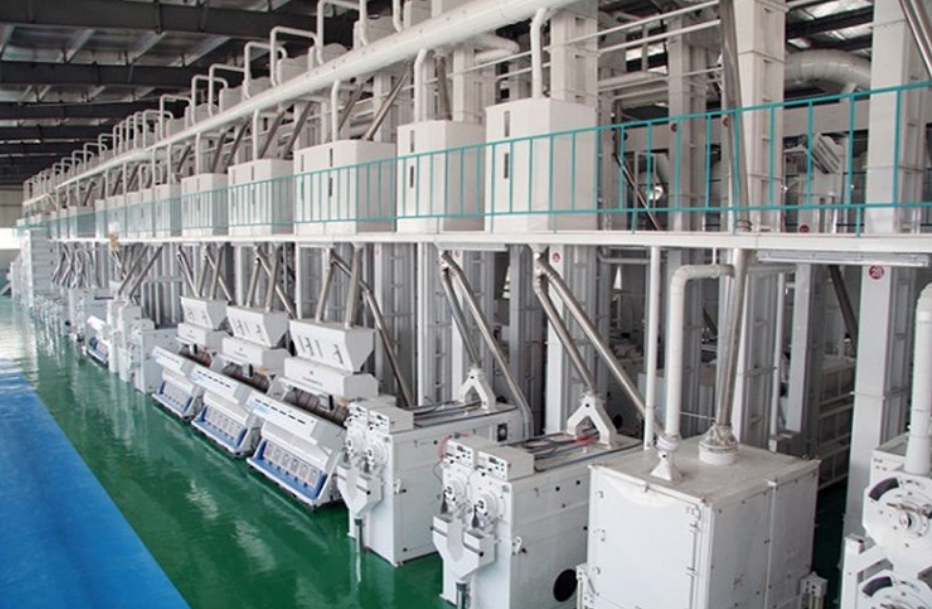
This 150-ton-per-day rice processing system utilizes a 514kW tiered power configuration, with a steel framework supporting multiple rice-milling units. The technical key lies in distributing an instantaneous processing capacity of 400–500 kg/h across distinct operational modules: the initial cleaning stage employs a higher proportion of power to ensure efficient impurity removal, while the precision-milling stage utilizes adjustable pressure mechanisms to control the intensity of the whitening process. This design not only meets the 150-ton daily capacity requirement but also enables the production of various types of rice—such as brown rice or germ-retaining rice—through modular power allocation. The selection of materials for the steel framework accounts for both static loads and the dynamic stresses generated by continuous vibration during operation.
Impact of Technical Variations on Practical Application
Compared to traditional, integrated rice-milling machines, this system’s tiered power layout reduces energy consumption per unit by approximately 15% (a typical industry benchmark). However, the multi-module design introduces specific maintenance requirements: the concentricity of bearings in each section must be checked regularly to prevent an increase in the breakage rate of the rice grains. Furthermore, the 380V-powered motor units require diligent insulation monitoring—especially in humid environments—which adds a layer of complexity to the electrical system compared to standalone, single-unit machines. The 80% yield rate reflects the use of “gentle” (flexible) whitening technology; by adjusting the gaps between the rollers, the system achieves an optimal balance between preserving the integrity of the rice germ and maximizing the output of polished rice.
Application Scenarios and Analytical Framework
When evaluating such equipment, focus on three key dimensions: First, assess whether the power ratio between the pre-cleaner and the destoner is well-matched to the impurity levels in the raw material. Second, verify that the pressure adjustment range in the precision milling section can accommodate the requirements for the target product type (for instance, producing germ rice necessitates a low-pressure setting of ≤0.2 MPa). Third, confirm that the structural reinforcement at the steel frame joints is sufficient to withstand a continuous daily processing load of 150 tons. In regions with high humidity, it is also advisable to check the motor’s ingress protection (IP) rating and the quality of the anti-rust coating.
Post time: Nov-18-2026