

A peanut shelling machine is a mechanical device specifically designed for the initial processing of peanuts. It efficiently removes the shells mechanically while preserving the integrity of the kernels. This machine comes in two types: a small household model and a large commercial model. Here are the key parameters:
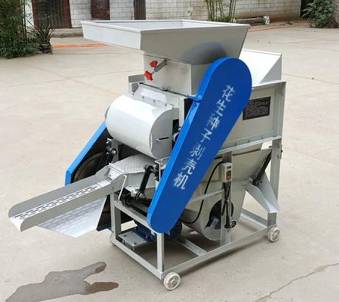
Power: 2.2KW to 4KW (2.2KW copper wire motor recommended for household use; 3KW or 4KW models are available for commercial use)
Voltage: 220V (household) or 380V (commercial)
Output: 800 to 1000 catties per hour for household use; high-performance commercial models can reach 6000 catties per hour
Structure: Composed of a frame, rotor, screen (available in two sizes), fan, single-phase/three-phase motor, and vibrating screen.
Working Principle: This machine uses a high-speed rotating rotor to remove the shells, specifically in three steps.
1. Initial Shelling: Peanuts are evenly poured into the hopper. The rotor beats and rubs the peanuts, breaking down the outer shells. The large-pore screen then separates most of the shells from the kernels.
2. Air Separation: The rotating rotor generates air that blows the lighter peanut shells out of the machine, leaving the peanut kernels for secondary processing.
3. Secondary Cleaning: A smaller mesh screen is used to remove any remaining peanuts, and a vibrating screen further separates the shells from the kernels.
Usage Precautions
Operating Requirements
Peanut Moisture Content: Too dry, and the peanuts will break easily; too wet, and efficiency will suffer. It’s crucial to find the right balance. In winter, it’s recommended to spray 50 catties of peanut shells with 10 catties of warm water, cover for 10 hours, and then sun-dry for 1 hour. In other seasons, 6 hours of covering is sufficient. If the peanuts are too dry, soak them for a day before covering and sun-drying.
Voltage and Location: The location should be close to a transformer for stable voltage, especially important when using a single-phase motor.
Feeding Procedures: Feeding should be even and continuous, avoiding mixing in iron filings, stones, or other debris.
Maintenance Methods
Daily Inspection: Regular daily inspections are necessary. Tighten any loose parts, check bearing lubrication, and thoroughly clean the screen, fan, and any debris inside the machine.
Long-Term Storage: When not in use, remove the belt and store in a cool, dry place, away from direct sunlight.
Troubleshooting: If clogged, stop the machine immediately and clean it. If there is excessive noise, check for wear on parts and ensure adequate lubrication.
High-efficiency shelling, all in one machine! From selection to maintenance, mastering these key points will save you a lot of trouble in peanut processing!
Post time: Feb-17-2026