

Due to its unique medium-chain fatty acid structure, natural antioxidant properties, and diverse applications—ranging from culinary use to skincare and haircare—coconut oil is highly sought after. Below, we outline the core equipment required for coconut oil processing and provide professional, comprehensive guidance on equipment selection based on various production scales and process routes.
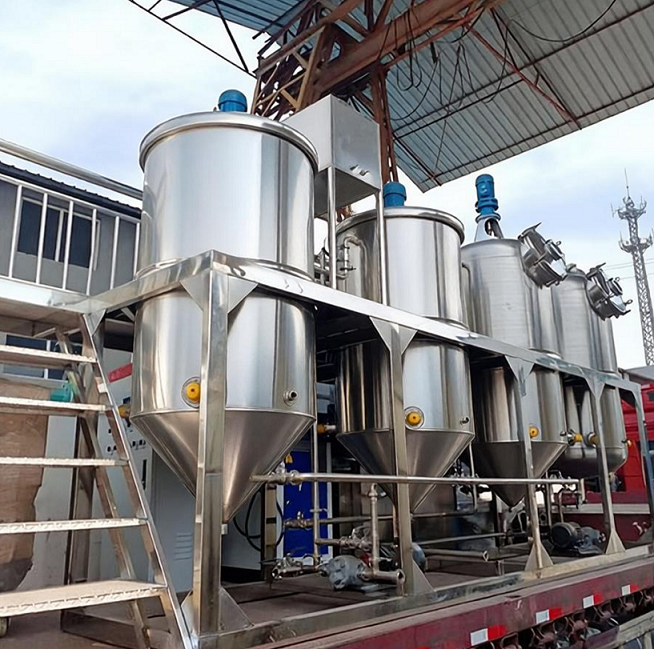
Wet Process
Raw Material: Fresh coconut meat (after separation from the coconut). Process: Juice extraction → Centrifugal separation → Sedimentation → Filtration → Refining. Characteristics: High oil yield and a fresh, clean oil quality. This method is ideal for producing Virgin Coconut Oil (VCO), as it preserves the natural aroma and nutritional content. Suitable for small-to-medium-sized facilities, premium brands, and organic product lines.
Dry Process
Raw Material: Copra (dried coconut meat). Process: Drying → Pressing (or solvent extraction) → Refining. Characteristics: Well-suited for large-scale, continuous production with lower costs; however, subsequent refining is necessary to remove impurities and off-odors. Suitable for: Large-scale industrial production, food-grade oil, and export-standard oil.
Pre-treatment Equipment:
Coconut Dehusking/Shelling Machine: Automatically removes the coconut husk/shell to enhance operational efficiency.
Coconut Meat Dryer (Types: Rotary dryer, mesh-belt dryer, or paddle dryer): Used to dry fresh coconut meat into copra, reducing moisture content to 6–8%.
Crusher/Shredder/Grinder: Breaks down or grinds the coconut meat, increasing its surface area to facilitate more efficient oil extraction.
Extraction (Pressing) Equipment:
This is the critical machinery for extracting coconut oil, categorized into cold-pressing and hot-pressing methods. Cold-pressing operates at lower temperatures, preserving the natural nutrients and flavor of the coconut oil (e.g., via a screw-type cold press). Hot-pressing involves heating the coconut meat prior to extraction, which typically results in a higher oil yield; common equipment includes hydraulic oil presses and screw-type oil presses. Refining Equipment (Upgrading Oil Quality):
Refining is essential to meet food safety standards or export requirements.
Degumming: Hydration-based degumming tanks remove colloidal impurities such as phospholipids and proteins.
Neutralization: Alkali-refining tanks use an alkaline agent to neutralize free fatty acids, thereby reducing the acid value.
Bleaching: Bleaching earth adsorption towers combined with filtration units remove pigments and improve the oil’s color.
Deodorization: Vacuum steam distillation towers remove odor-causing compounds under high-temperature, vacuum conditions.
Winterization/Dewaxing: Cooling crystallization tanks paired with filtration units remove stearin (waxy solids) to prevent the oil from becoming cloudy at low temperatures.
Selecting equipment for coconut oil processing is not merely a technical matter; it is a strategic decision. An optimal equipment configuration significantly impacts oil yield, product quality, operational costs, and market competitiveness. Investors are advised to carefully plan their production lines—taking into account their own resources, target markets, and financial capacity—by choosing mature and reliable FOTMA MILL solutions to establish a fully controllable, end-to-end supply chain, from “coconut to the final oil bottle.”
Post time: Nov-06-2026