

As a piece of agricultural machinery, paddy dryers inevitably encounter minor malfunctions during operation—such as excessive motor temperature, automatic shutdowns, low drying efficiency, abnormal noises, scorched or burning grain, and high rates of grain breakage or stress cracking. Identifying the cause and performing timely repairs is essential. To prevent frequent breakdowns, proper daily maintenance and servicing—covering both basic component care and scheduled maintenance—are key. Below, we explore how to troubleshoot and maintain grain dryers.
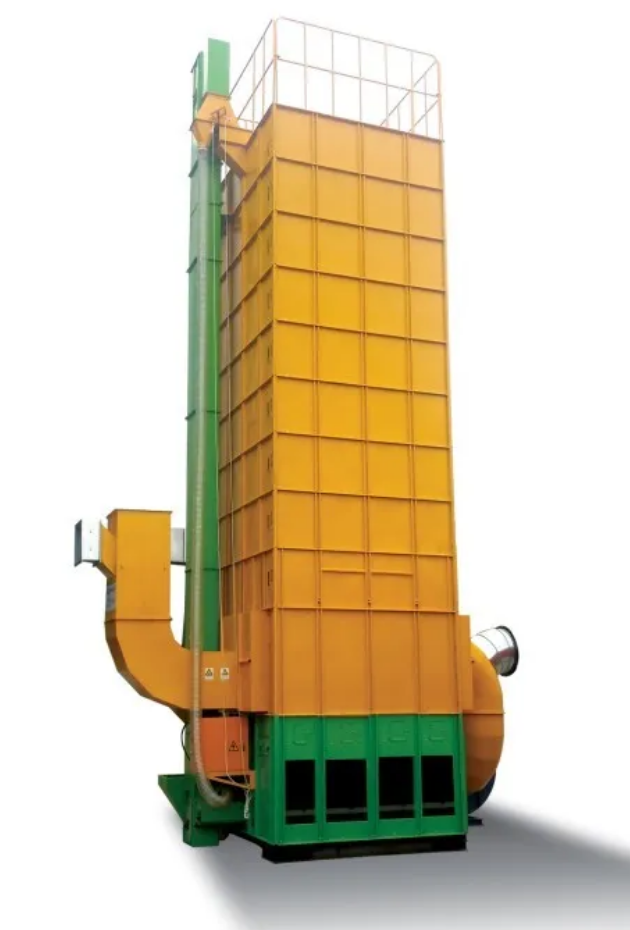
I. Common Faults and Solutions for Paddy Dryers
Paddy dryers are agricultural machines designed to dry rice; properly dried rice is less prone to mold during storage. Users may encounter minor malfunctions during operation and may not know how to handle them. Here are solutions for common paddy dryer faults:
1. Excessive Motor Temperature
(1) Prolonged equipment overload: Adjust the feeder intake volume to reduce the machine’s load; also, check for other causes of the overload and resolve them promptly.
(2) High ambient temperature: Shut down the machine to allow the motor to cool naturally; simultaneously, open the support panel to improve motor ventilation.
2. Automatic Equipment Shutdown
(1) Main power fuse blown: Disconnect the power supply, inspect the circuit, and replace the fuse.
(2) Excessive material intake: Immediately cut off the power, clear the material from the drying drum, and reduce the intake volume accordingly.
3. Low Drying Efficiency
(1) Insufficient intake volume: Increase the feeder gate opening to boost the amount of material fed into the machine.
(2) Initial use: Low output during the initial period of use is normal; production capacity will increase after the machine has been operated for a while.
(3) Insufficient hot air box temperature: This may be caused by poor fuel quality or inadequate airflow from the blower or draft fan; identify the specific cause and make the necessary adjustments.
4. Abnormal Noise
(1) Small hard object inside the machine: Stop the machine immediately and remove the foreign object.
(2) Worn or loose bearings: Stop the machine, locate the worn bearings, and replace them.
(3) Loose components: Stop the machine, inspect it, and retighten the components.
(4) Lack of lubricant in the large gear: Stop the machine and apply No. 2 lithium-based grease or standard lubricating oil.
5. Scorched Grain or Fire
(1) Heat exchanger leakage (flue gas mixing with hot air): Leakage usually occurs due to poor sealing of the flue gas and clean hot air ducts during installation, or pipe rupture caused by prolonged use; this can generally be detected by inspecting the hot air duct access hatch or by drilling an inspection hole in the hot air duct.
(2) Grain flow blockage: Clumping or blockage of grain inside the paddy dryer or drying tower can easily cause localized overheating; in mild cases, this leads to uneven grain moisture, while severe cases can result in scorched grain or fire.
(3) Sudden, prolonged dryer shutdown: Grain inside the machine retains significant heat but cannot flow, preventing the dissipation of heat from the center and causing localized overheating; in such cases, the grain should be discharged first, and the machine should only be used again after conditions return to normal.
6. Excessive Grain Breakage or Stress Cracking (Checking) Rate
Post-drying grain quality and drying efficiency are often in conflict; increasing efficiency requires more intense drying conditions—such as higher hot air temperatures—which can compromise grain quality. Therefore, the appropriate dryer model and drying conditions should be selected based on the grain variety and its intended use after drying. II. Maintenance of Rice Dryers
Rice dryers are typically used during specific, critical periods; a malfunction that wastes drying time can have significant consequences. To prevent frequent breakdowns, it is essential not only to purchase a high-quality dryer but also to carry out proper maintenance:
1. Maintenance of Basic Components
Routine maintenance of basic components primarily involves daily inspection and cleaning. This includes wiping down the exterior of the equipment and the dust collection box with a soft cotton cloth, as well as checking the air service unit (filter-regulator-lubricator assembly) before and after use.
2. Periodic Maintenance
Periodic maintenance is categorized into monthly and annual tasks. Monthly maintenance focuses on cleaning the dryer’s internal components and lubricating high-wear parts, such as bearings. Additionally, the tension of drive belts and the tightness of small, easily loosened parts should be checked.
Annual maintenance involves sending the dryer to a professional technical inspection agency for a comprehensive calibration. This process ensures the proper functioning of basic components while also calibrating and verifying the coordination between various operational stages. These steps minimize minor errors, thereby optimizing the dryer’s operating efficiency and extending its service life.
Post time: Sep-09-2026