

Pre-Installation Considerations
Given the varying installation levels of rice milling machinery, failure to control quality during the initial and subsequent stages of installation will directly impact the overall installation progress, cost, and even the future stable operation of the equipment. Therefore, a thorough analysis and detailed explanation of pre-installation preparations and key points for the core rice milling equipment during installation is crucial before starting the rice processing production line.
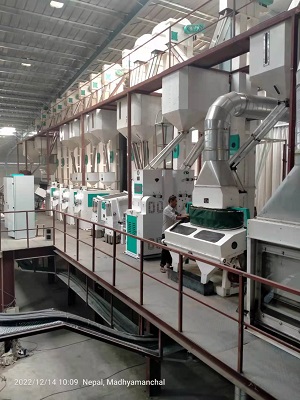
What are the consequences of improper installation?
1️⃣ Ground Inclination Issues: If the installation ground has a high incline, the material in the 60-ton rice processing machine is prone to deviation, thus affecting processing efficiency.
2️⃣ Increased Vibration Frequency: Using the 60-ton rice processing machine on uneven ground will significantly increase its vibration frequency, thereby increasing the risk of equipment malfunction.
3️⃣ Difficulty in Moving: A flat ground facilitates easier movement of the 60-ton rice processing machine, which will be more convenient in future use.
Therefore, proper installation and commissioning are crucial for ensuring smooth equipment operation and reducing failure rates.
◆ Detailed Review of Drawings
Before starting the installation of rice milling machinery, the primary task is to conduct a comprehensive and detailed review of the relevant drawings. This step is critical as it directly affects the smooth progress of subsequent installation work and the future stable operation of the equipment. Careful review of the drawings ensures a thorough understanding of the equipment’s structure, performance, and installation requirements, providing strong technical support for the entire installation process.
◆ Safety Precautions
Safety is always the primary consideration during the installation of rice milling machinery. Strict adherence to relevant safety operating procedures is essential, ensuring that every worker possesses the necessary safety awareness and operating skills. Effective safety precautions minimize potential risks during installation, protecting the safety of personnel and equipment.
01 Detailed Explanation of Installation Key Points
◆ Equipment Installation Precautions
When installing rice milling machinery, several key points need attention to ensure a safe and smooth installation process. First, in addition to ensuring the personal safety of installation personnel, the safety of the equipment itself cannot be overlooked. During installation, appropriate hoisting methods must be employed, and necessary protective measures must be taken after hoisting to prevent equipment damage and maintain surface cleanliness. Secondly, to facilitate future disassembly and replacement, bolt connections should be used instead of direct welding when connecting all equipment to the base or embedded parts, ensuring ease of replacement later. Finally, considering the future operation and maintenance needs of the equipment, sufficient operating and maintenance space must be reserved during installation to ensure convenient operation.
◆ Hoist Installation Key Points
When installing the hoist, a specific sequence and standard must be followed to ensure its efficiency and durability. First, installation should proceed section by section from bottom to top: first install the base, then the drum, and finally the head. After installation, use a plumb line for correction, ensuring the overall verticality error is controlled within 5mm. This installation method helps extend the service life of the hoist and reduces friction between the belt and the drum.
02 Main Equipment Installation Precautions
◆ 1. Destoner Installation Points
After a period of use, the screen plates of the destoner need to be replaced. Therefore, sufficient space must be reserved during installation for easy maintenance. Based on experience, at least 1.5 meters of space is usually reserved at the feed end. Furthermore, since the destoner’s outlet moves with the equipment, a 100mm gap must be maintained between the outlet and the receiving device to prevent collision.
◆ 2. Rice Huller Installation Points
Because the rubber rollers inside the rice huller are consumable parts, they usually need to be replaced every 3 to 5 days. Therefore, approximately 1 meter of maintenance space must be reserved during installation to ensure convenient maintenance and replacement later.
◆ 3. Paddy Separator Screen Installation Points
The paddy separator screen has a multi-layered screen design. When the screen plates show wear, they need to be replaced promptly. According to standard installation practices for chaff separators, a clearance of approximately 1.2 meters at the front of the equipment is generally sufficient for maintenance. Furthermore, since the chaff separator is a vibrating device, its discharge port vibrates along with the machine body. Therefore, during installation, special attention must be paid to maintaining approximately 100 millimeters of space between the discharge port and the receiving port to prevent collisions during adjustment or operation.
◆ 4. Key Points for Rice Mill Installation During the use of a rice mill, it is necessary to regularly clean the chaff inside the equipment and replace relevant parts to ensure normal operation. Therefore, during installation, a clearance of approximately 1 meter should be maintained between each set of equipment to facilitate subsequent cleaning and maintenance. Additionally, during installation, it may be necessary to disassemble the equipment and adjust its position, mainly due to differences in the configuration of the rice milling rollers inside different rice mills. Therefore, when using two or more rice mills with sand rollers, special attention must be paid to the sand grade of the rollers, ensuring that the roller with the higher sand grade is installed at the front. Also, since rice mills are high-speed rotating devices, the entry of hard foreign objects (especially ferrous objects) can cause serious damage to the screen plates. Therefore, magnetic separators must be installed at each inlet to ensure the safe operation of the equipment.
◆ 5. Installation Points for Rice Color Sorters As a precision electronic device, the color sorter requires extra care during movement; handle it gently. To prevent damage or foreign object entry during installation, hopper assembly, welding, or painting, a protective film or fireproof cloth is usually applied to its surface. Furthermore, the color sorter needs to remain stable during operation to ensure effective color sorting. If the equipment platform is a steel structure, a separate platform should be used to avoid resonance that may occur when sharing a platform with other equipment, thus affecting the normal operation of electronic components. Additionally, because the electrical components of the color sorter are quite delicate and easily affected by electrical charges, a separate grounding wire is required, and the grounding wire should be buried approximately 2 meters deep. Moreover, unstable power supply voltage in the rice milling production line may reduce the sensitivity of the color sorter’s components, thus affecting the color sorting effect; therefore, it is recommended to equip the color sorter with a voltage regulator to ensure stable operation.
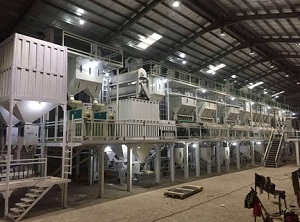
03 Equipment Use
1. Before using the equipment, inspect and maintain it to ensure normal operation.
2. Before starting the equipment, check the transmission components and all parts for looseness or malfunction.
3. Add rice to the equipment for processing according to the process flow.
4. During equipment operation, monitor the equipment’s status constantly and observe whether all indicators are normal.
5. Clean and disinfect the equipment to ensure hygienic conditions.
6. Perform regular maintenance and upkeep to ensure long-term stable operation.
04 Equipment Maintenance
1. Clean the equipment regularly to prevent dust and debris from entering.
2. Regularly replace vulnerable parts and lubricating oil to ensure normal operation.
3. Perform regular maintenance and repairs to ensure long-term stable operation.
4. If a malfunction occurs, troubleshoot it promptly to avoid affecting the normal operation of the equipment.
05 Precautions
1. Follow safe operating procedures when using the equipment to ensure the personal safety of operators.
2. Turn off the power to the equipment during maintenance and upkeep to ensure the safety of operators.
3. Use appropriate cleaning agents when cleaning and disinfecting the equipment to avoid damage.
4. Prevent abnormal situations from occurring during equipment operation. If any abnormalities are found, stop the machine immediately for inspection.
5. Maintenance and upkeep of the equipment should be performed by professional personnel to ensure safe and stable operation.
With the continuous increase in rice milling capacity, the installation requirements for rice milling machinery are becoming increasingly stringent. To ensure the smooth operation of the rice milling production line, reduce errors during installation, and avoid unnecessary downtime or rework losses for owners, FOTMA always pursues a meticulous installation attitude, fully leveraging the rich experience, engineering advantages, and professional service value of the equipment installer to ensure the stable and smooth operation of rice milling machinery during production. CONTACT OUR EXPERT TEAM FOR ANY INQUIRY!
Post time: Nov-04-2025