
The disinfection process for a complete 100-ton/day automated rice milling plant involves the following steps:
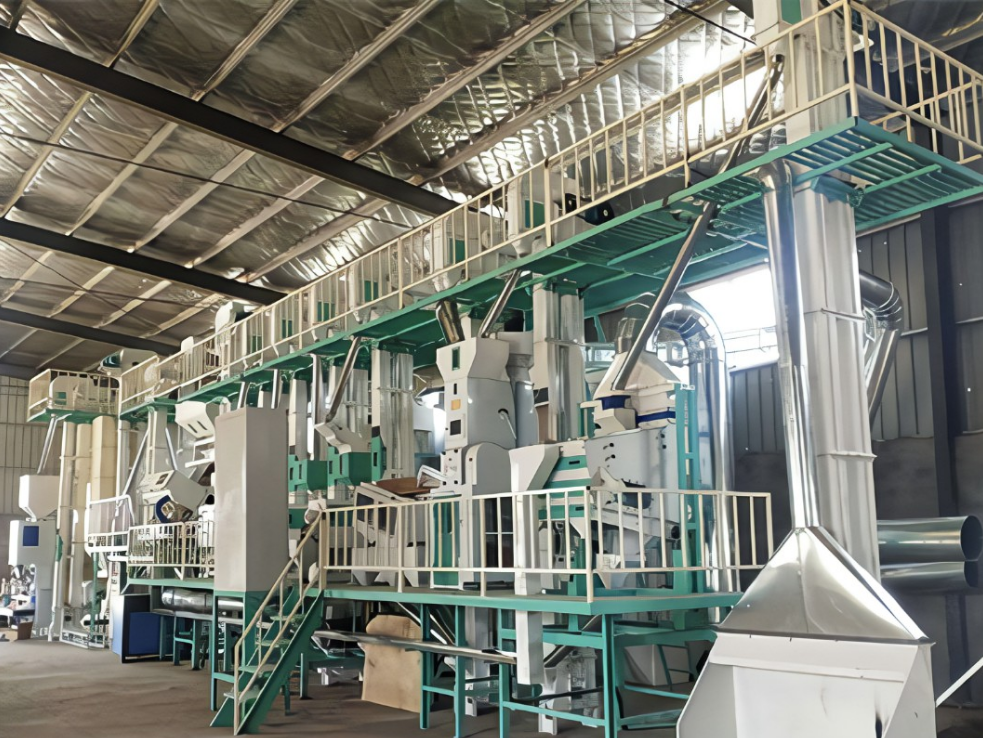
Shut down equipment: Ensure all relevant equipment is powered off before beginning cleaning and disinfection.
Remove residues: Clear out any remaining rice grains, dust, or other debris from the equipment.
Manual wiping: Use a clean cloth or brush to wipe down the surfaces of the equipment.
High-pressure water rinsing: Use a high-pressure water sprayer to wash both the interior and exterior of the equipment.
Apply cleaning agents: Select appropriate cleaning agents based on the equipment’s material and specific requirements.
Soak in disinfectant solution: Submerge critical components in a suitable disinfectant solution.
Fumigation: Use fumigation to thoroughly disinfect the entire system.
Rinse thoroughly: Use clean water to completely wash away any remaining cleaning agents or disinfectant solutions.
Inspection and maintenance: Check for any damage or parts requiring repair, and perform necessary maintenance.
Drying: Allow the equipment to air-dry naturally or use specialized drying equipment.
Regular cleaning: Establish a routine cleaning schedule to ensure hygiene and safety.
Document the cleaning process: Keep records of the date, time, and method used for each cleaning and disinfection session to facilitate traceability and management.
When performing cleaning and disinfection, keep the following points in mind:
Follow the recommendations and guidelines provided by the equipment manufacturer.
Ensure that operators possess the necessary knowledge and skills.
Use appropriate personal protective equipment (PPE) to safeguard the operators.
Test and evaluate the effectiveness of the cleaning and disinfection process.
Regularly inspect and replace cleaning and disinfection equipment and materials.
Post time: Nov-24-2026