

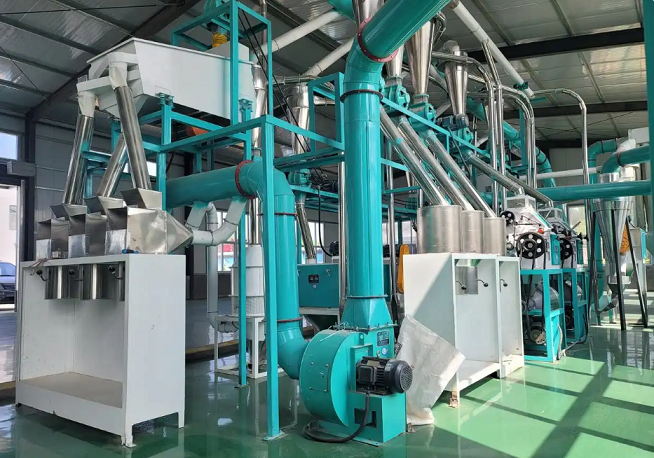
When purchasing a complete 100-ton rice milling production line, the configuration is crucial, directly impacting production efficiency and product quality. First, the performance and quality of the core equipment—the rice milling machine—should be considered. A rice milling machine with high efficiency, stability, and low energy consumption is recommended. Second, supporting equipment such as cleaning machines, hulling machines, and polishing machines should also be high-performance products to ensure smooth operation of the entire production line. Furthermore, the control system is key to improving production automation; systems controlled by PLCs (Programmable Logic Controllers) should be prioritized for intelligent management of the production process. Finally, appropriate dust removal equipment is necessary to ensure a clean and safe production environment.
How Ordinary Investors Should Choose the Capacity Size
For ordinary investors investing in a rice milling production line for the first time, choosing the appropriate capacity size is a matter requiring careful consideration. First, local market research should be conducted to understand regional rice consumption and demand trends. If the target market is small or in its initial stage, lower-capacity equipment, such as a 50-ton/day rice production line, can be chosen. This meets market demand while reducing initial investment risk. As the business expands, equipment capacity can be gradually increased. Furthermore, one should consider their own financial strength to avoid excessive one-time investment that could lead to financial pressure. At the same time, considering equipment maintenance and personnel training costs, reasonable capacity planning is also a key factor in ensuring long-term profitability.
Preliminary Preparation
Before deciding to purchase a complete 100-ton rice milling production line, thorough preliminary preparation is crucial. First, a site inspection is necessary to ensure sufficient space for equipment installation and compliance with relevant safety standards. Second, the power supply situation must be assessed, as rice milling production lines often require significant power. Additionally, water supply must be considered, as water is needed for washing paddy rice and polishing the rice. Next, a detailed budget plan should be developed, including equipment purchase costs, installation and commissioning fees, raw material procurement costs, and other expenses that may arise during the initial operation phase. Simultaneously, to ensure smooth production line operation, it is recommended to recruit and train operators and a technical maintenance team in advance. Finally, necessary business licenses and environmental approvals must be obtained to ensure legal and compliant operation.
Industry Prospects and Profits
In recent years, with the improvement of people’s living standards and the enhancement of health awareness, the demand for high-quality rice has been increasing, providing broad development space for rice milling production lines. Especially in southern China, due to the extensive rice planting area and stable market demand, investing in rice milling production lines has high economic benefits. According to industry data, the average annual net profit of a medium-sized rice milling production line (100 tons per day) can reach several million yuan, with specific profits depending on factors such as raw material costs, product prices, and market sales. However, it is worth noting that market competition is fierce. To obtain stable profits, in addition to improving product quality, it is also necessary to focus on brand building and marketing strategies, winning customer trust through high-quality service, and thus standing out in the fierce competition.
Investing in rice milling production lines is a worthwhile path to explore. It can not only bring considerable economic returns but also contribute to promoting local economic development and solving employment problems. However, in this process, investors need to maintain rational thinking, comprehensively assess various risk factors, and formulate scientific and reasonable business strategies to succeed in this field.
Post time: May-18-2026