

What is the biggest worry when buying a rice milling machine? It isn’t the price itself, but discovering—after purchase—that the output is insufficient, the broken rice rate is excessive, or the power consumption is shockingly high. Choosing the right model directly determines processing efficiency and rice quality; here is a look at the benchmarks for mainstream configurations.
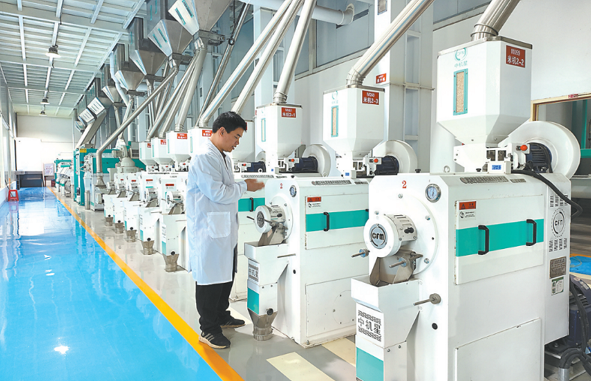
I. Why is there such a huge price gap between machines that are all called “rice mills“?
Prices range from a few thousand to over a hundred thousand yuan, with core differences lying in three dimensions:
Processing Precision: Home-use machines only handle basic hulling, whereas precision rice mills achieve multi-stage whitening, improving grain integrity by over 30%.
Automation Level: Semi-automatic equipment requires manual control of feed rates, while large-scale automated mills integrate the entire process—including hulling, grading, and color sorting.
Materials and Craftsmanship: Cast-iron bodies suit intermittent operation, whereas stainless steel models are required to withstand the high-temperature, high-humidity environments of continuous production.
Currently, the most cost-effective solution on the market is a modular rice milling production line; this allows for phased purchasing to lower initial investment while leaving room for future capacity upgrades.
II. The Whitening Chamber Structure is Key to Rice Quality
Many people focus solely on motor power, but the heart of a rice mill lies in the design of its whitening chamber:
Emery Roll Type: Suitable for paddy milling; offers fast hulling speeds but results in higher broken rice rates, requiring an accompanying air-separation system.
Iron Roll Type: Causes minimal temperature rise in the rice grains; ideal for processes requiring the preservation of the rice germ (embryo).
Air-Jet Type: Uses airflow to remove rice bran; common in automatic rice mills and capable of reducing the broken rice rate by over 30%.
Beware of “all-purpose” machine claims: Truly professional equipment will clearly specify the applicable grain types and moisture content ranges.
III. What Configurations Suit Home Workshops vs. Small-to-Medium Rice Mills? Scenario | Recommended Type | Key Indicators
Home use | 220V household rice mill | Output ≤200 kg/h; includes rice bran separation
Small processing facility | 380V small-scale rice mill | Output 600–1,000 kg/h
Medium-sized rice mill | Huller + Whitener combination | Output ≥2 t/h; equipped with a grain huller
Home users should pay special attention to power supply compatibility; while models with single-phase (two-wire) motors cost about 15% more, they prevent motor burnout caused by unstable voltage in rural areas.
IV. Buying just a rice mill? You might also need these three items
Rice bran handling: Processing 1 ton of paddy yields approximately 8% rice bran; a vertical rice bran separator can achieve over 99% separation efficiency.
Dust removal system: A common solution for excessive dust concentration in the milling workshop is to install pulse-jet dust removal equipment.
Packaging stage: If selling finished rice directly, the weighing accuracy of the rice packaging machine directly impacts the loss rate.
The selection of this auxiliary equipment must match the main machine’s production capacity:
V. Follow these steps during the new machine’s break-in period to extend its lifespan by 30%
First 50 hours: Operate at 60% of rated capacity; closely monitor the temperature rise of the bearings.
Routine maintenance: Check the wear on the emery roller after processing every 20 tons of paddy; replace it promptly if wear exceeds 3mm.
Seasonal maintenance: Install a moisture-proof cover on the motor before the rainy season to prevent insulation degradation.
Selecting equipment based on production requirements is more reliable: first determine the average daily processing volume, then match the main machine’s power and auxiliary equipment—such as fully automatic rice packaging machines—accordingly. For small processing facilities, a complete rice milling production line with a modular design is often more economical than standalone machines, whereas home users prioritize 220V compatibility and ease of operation.
Post time: Jul-14-2026