

Grain drying equipment manufacturers are a crucial link in the post-harvest grain processing chain. Their core mission is to provide farmers, grain depots, and processing enterprises with efficient and stable drying solutions. Harvested grains typically contain high moisture content; if not dried promptly, they are prone to mold, overheating, or sprouting, directly impacting grain grade and storage safety. Therefore, understanding the basic principles, common types, and selection of appropriate equipment based on actual needs is fundamental knowledge that grain industry professionals should possess.
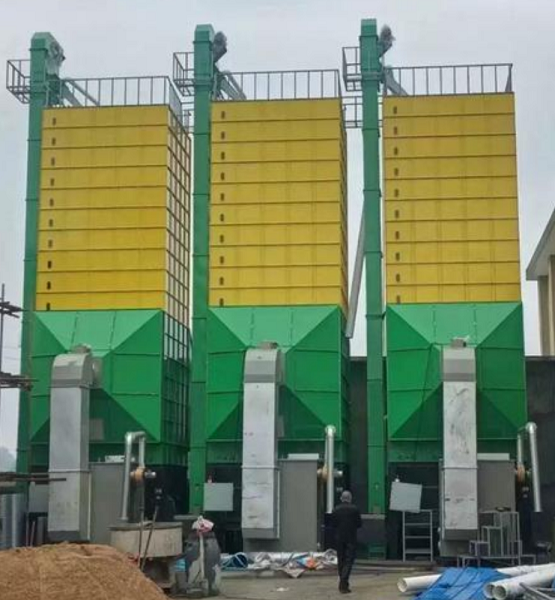
The working principle of grain drying equipment is not complex. The core principle involves contacting wet grains with a heat medium (such as hot air, hot flue gas, or steam), causing the moisture to evaporate and be expelled with the airflow. Based on the heat source type, equipment can be categorized into coal-fired hot air furnaces, oil/gas-fired hot air furnaces, biomass hot air furnaces, and air source heat pumps, etc. Different heat sources differ in operating costs, environmental emissions, and applicable scenarios. For example, air-source heat pump dryers have gained attention in recent years for their energy efficiency, environmental friendliness, and precise temperature control in small- and medium-scale grain drying. While coal-fired hot air furnaces are lower in cost, they are restricted in areas with strict environmental policies.
From a structural perspective, common types include tower dryers, circulating dryers, and fluidized bed dryers. Tower dryers use multiple stages of hot air to contact the grain in counter-current or co-current flow, making them suitable for continuous, large-scale operations; large grain depots often use this type of equipment. Circulating dryers use a batch-cycle drying method, where grain is repeatedly lifted and fallen within the silo, ensuring full contact with hot air, making them suitable for small and medium-sized farms or cooperatives. Fluidized bed dryers utilize high-speed airflow to suspend the grain, resulting in high heat and mass transfer efficiency, but relatively high energy consumption; they are mostly used for specific materials or high-precision drying needs.
Choosing the right grain drying equipment requires comprehensive consideration of several key factors. First is the type of grain and its initial moisture content. Different crops (such as corn, rice, and wheat) have different moisture tolerance and drying characteristics, resulting in different requirements for hot air temperature, flow rate, and drying time. For example, rice drying requires strict temperature control to prevent cracking, while corn drying demands a higher rate of moisture reduction. Secondly, the target moisture content after drying is crucial; generally, reserve grains require a moisture content between 13% and 14%, as excessively high or low moisture levels will affect storage quality. Furthermore, the energy consumption level, environmental compliance, automation level, and after-sales service support of the drying equipment are also important considerations. Manufacturers typically provide technical parameters for different models, and users should match them according to their actual operating scale, energy supply conditions, and economic budget.
In the drying process, temperature control is the core factor affecting grain quality. Excessively high hot air temperatures can lead to grain protein denaturation, starch gelatinization, decreased germination rate, and even scorching; excessively low temperatures will slow down the drying process, increasing energy consumption and operating time. Therefore, modern grain drying equipment generally employs multi-stage temperature control technology, using sensors to monitor the temperature inside the drying chamber and the grain temperature in real time, automatically adjusting the hot air supply to ensure the drying process is within a reasonable range. Some equipment also incorporates intelligent control systems that can record batch drying data to assist users in optimizing process parameters.
For grain drying equipment manufacturers, their technological strength is mainly reflected in hot air system design, material conveying structure, heat recovery efficiency, and temperature control accuracy. High-quality equipment often features low energy consumption, low breakage rate, and high uniformity. Furthermore, after-sales services such as installation and commissioning, operation training, and subsequent spare parts supply are also important indicators of a manufacturer’s overall capabilities. When making a selection, users should try to conduct on-site inspections or refer to user feedback from others in the industry, avoiding making judgments solely based on promotional materials.
In general, grain drying equipment manufacturers do not offer products with a single standard, but rather multiple technical approaches depending on grain characteristics, climate conditions, and usage scenarios. Understanding these fundamentals helps users more rationally assess the suitability of equipment, thereby achieving reduced losses and increased efficiency in post-harvest grain processing. With increasingly stringent environmental requirements and the trend towards intelligent manufacturing, drying equipment is iterating towards energy saving, precision, and automation, which is also the core direction of the industry’s continuous progress.
Post time: Aug-26-2026