

Considering an investment in a 100-ton-per-day rice production line? Equipment costs—ranging from 600,000 to 1.2 million RMB—are merely the starting point; the true costs often lie hidden within factory construction, power infrastructure, and environmental compliance requirements. Opting for a “multi-machine light milling” process combined with an intelligent control system may increase the initial investment by 20%, but it leads to a drastic reduction in broken rice rates and a significant leap in product quality. Remember: low-cost equipment often translates into higher hidden losses down the road.
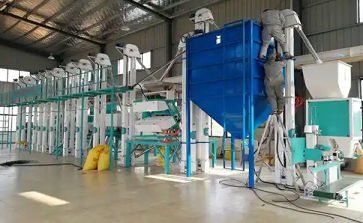
As living standards rise and public awareness regarding food safety continues to grow, the rice processing industry is undergoing a transformative upgrade—shifting from extensive, rough processing methods toward refined, deep processing techniques. For entrepreneurs looking to launch a grain processing venture, or for existing business owners seeking to expand their production capacity, establishing a rice processing line with a daily output of 100 tons presents an optimal choice that balances economies of scale with market flexibility. This specific production capacity is sufficient to meet regional market demand without entailing an excessively large investment that would expose the business to undue financial risk. However, the question of the “price of a 100-ton-per-day rice processing line” cannot be answered with a single simple figure; it involves a multidimensional cost analysis encompassing equipment configuration, processing workflows, automation levels, and factory construction.
First and foremost, it is essential to recognize that the cost of a rice processing production line varies dramatically; market quotes typically range anywhere from several hundred thousand to several million RMB. This wide price disparity is primarily determined by the core equipment configuration and the specific processing standards adopted for the production line. A standard set of equipment for a 100-ton-per-day rice processing facility typically comprises core machinery such as cleaning screens, destoners, hullers, paddy separators, rice whiteners (milling machines), polishers, color sorters, and automatic packaging machines.
Among the various factors influencing the overall cost, the selection and configuration of the rice whiteners (milling machines) are of paramount importance. Traditional single-machine setups are relatively inexpensive—suitable for primary processing where strict requirements for the precision and finish of the final product are not a priority—and can often be fully assembled for a cost ranging between 300,000 and 500,000 RMB. However, modern rice processing trends favor a “multi-machine light milling” approach. To ensure a smooth, lustrous surface finish on the rice grains, minimize the rate of breakage, and preserve nutritional value, the process typically requires two or three distinct milling stages, followed by one or two polishing stages. With this level of configuration, equipment costs naturally skyrocket; the investment required for just the core rice milling and polishing units alone can easily reach hundreds of thousands of yuan.
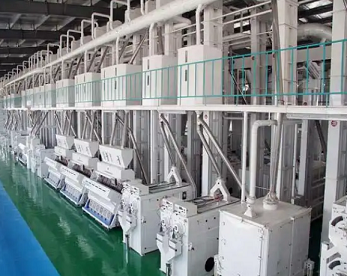
The inclusion of a color sorter is another critical factor determining the final price. In today’s market, rice produced without the aid of a color sorter struggles to gain entry into high-end supermarket and retail channels. Capable of precisely eliminating moldy grains, yellowed kernels, and other discolored impurities, the color sorter serves as the “gatekeeper” for elevating rice quality. The current market features a wide array of color sorter brands, with a distinct price disparity between leading domestic manufacturers and international brands (such as Bühler from Switzerland or Satake from Japan). A single high-performance color sorter unit can range in price from 100,000 to several hundred thousand yuan—a cost that directly impacts the total quoted price for the entire production line.
Beyond the core processing machinery, the sophistication of the automated control system also significantly influences investment costs. Lower-end production lines typically rely on manual operation or rudimentary electrical controls, necessitating substantial human intervention. In contrast, modern 100-ton production lines are equipped with intelligent PLC control systems, allowing operators to monitor parameters—such as output volume, current levels, and flow rates—in real-time via a centralized computer console. These systems even feature automated alarm functions and self-diagnostic capabilities for troubleshooting. While this intelligent upgrade adds approximately 10% to 20% to the initial equipment acquisition cost, it yields long-term savings on labor expenses and enhances production stability. Based on current market estimates, the procurement cost for the core equipment of a 100-ton rice production line—one that is reasonably well-configured and offers a respectable level of automation and finished-product precision—typically falls within the range of 600,000 to 1.2 million RMB. Opting for a complete suite of equipment from top-tier international brands could potentially double that price tag.
However, when calculating the “price,” investors must never focus solely on the cost of the equipment itself. For a facility with a daily output capacity of 100 tons, the construction of the plant building and its supporting infrastructure represents a significant—yet often overlooked—hidden investment. First, dictated by the specific processing workflow, the production line requires a facility with sufficient length and ceiling height to accommodate the installation of elevators and gravity chutes; this necessitates a building with specific structural dimensions regarding height and span. Furthermore, the costs associated with constructing or leasing raw material silos and finished-product warehouses constitute another substantial expenditure. Even more critical are the electrical infrastructure requirements: the aggregate power output of the main motors in a 100-ton production line typically exceeds several hundred kilowatts, meaning that upgrading transformer capacities and constructing dedicated power distribution rooms demand a tangible, substantial financial investment.
Additionally, environmental compliance costs have emerged in recent years as a mandatory new category of expenditure that must be factored into the overall financial planning. With the tightening of environmental regulations, dust and noise control during rice processing have become mandatory requirements. A comprehensive pulse dust removal system and noise reduction facilities not only improve the workshop environment and help avoid environmental penalties but, more importantly, safeguard the health of the workers. The investment in these components typically accounts for approximately 5% to 10% of the total equipment cost.
In summary, investing in and constructing a rice processing production line with a daily output of 100 tons is a complex, systemic undertaking. If one considers only the cost of equipment acquisition, a basic configuration may start at around 500,000 RMB, while mid-to-high-end configurations tend to hover around the 1 million RMB mark. However, once factory renovations, power capacity upgrades, environmental protection facilities, and working capital are factored in, the total investment often amounts to 1.5 to 2 times the cost of the equipment itself. Investors are advised not to blindly chase the lowest price when evaluating projects; inexpensive equipment often translates to high failure rates, high broken rice rates, and low yield—factors that, in large-scale production, result in significant profit losses. Instead, investors should select reputable manufacturers with a strong track record and comprehensive after-sales service, and work with them to customize a process solution that offers the optimal balance of cost-effectiveness, tailored to their specific raw grain characteristics and target market positioning. Only by evaluating the price and value of a production line from a full lifecycle perspective can one achieve sustainable long-term growth amidst fierce market competition.
Post time: Mar-14-2026