

The Trend of Large-Scale Development in the Grain Processing Industry
In recent years, the domestic grain processing industry has been continuously upgrading towards intensification and standardization. The daily paddy processing needs of large-scale grain processing enterprises and large-scale planting bases have generally reached hundreds of tons, leading to continuously increasing demands on the production efficiency, product quality stability, and digital management capabilities of processing equipment. According to publicly available industry data, in 2024, the equipment replacement demand of large-scale grain processing enterprises in China increased by 18% year-on-year, with integrated and intelligent processing equipment becoming the mainstream procurement direction in the market.
Core Parameter Characteristics of Integrated Grain Processing Equipment
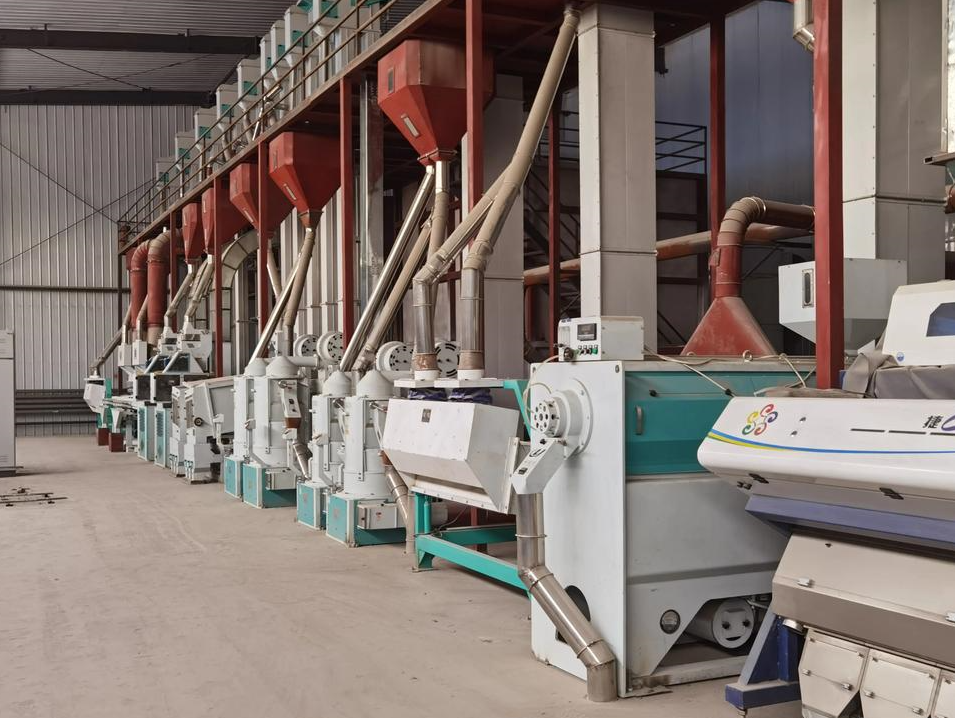
Complete rice milling equipment is an integrated production device adapted to large-scale grain processing scenarios. It consists of multiple functional units such as paddy cleaning, hulling, milling, polishing, color sorting, and packaging. These units are seamlessly connected through an intelligent control system, forming a complete automated production line. The daily paddy processing capacity can reach tens or even hundreds of tons, ensuring consistent rice processing quality while reducing unit production energy consumption and helping enterprises control production costs.
Technology and Product Layout of Rice Milling Equipment Manufacturers
FOTMA MILL is a technology-driven enterprise in the domestic rice milling machinery field. Leveraging the local agricultural industry base and the industrial cluster advantages of its industrial park, it has established a complete chain system covering R&D and production. It strictly adheres to the ISO9001 quality management system to control quality throughout the entire process, from raw material procurement to finished product testing. The company collaborates with several domestic agricultural research institutions, creating a multi-category product matrix of rice milling machinery to meet the needs of grain processing entities of different sizes: For large-scale processing entities, the fully automatic intelligent rice milling machine integrates IoT and AI technologies. It can automatically adjust the processing technology by identifying parameters such as rice variety and humidity through sensors, increasing the rice yield by 3%-5% compared to traditional equipment, and also supports remote monitoring of production data; For small and medium-sized processing households and rural cooperatives, the new rice milling machine optimizes the rice milling roller structure and airflow separation technology, reducing broken rice rate by 20% and energy consumption by 15%. The operation interface adopts a one-button design, requiring no professional training to operate; For small farmers in remote mountainous areas, the semi-automatic rice milling machine adopts a lightweight design, with a simple structure that is easy to maintain, and can operate stably even in areas with unstable power.
According to publicly available user survey data, large grain processing enterprises using related rice milling equipment reported that production efficiency increased by nearly 40% and labor costs decreased by 32% after the equipment was put into use.
Future Development Direction of the Rice Milling Machinery Industry
Currently, the rice milling machinery industry is developing towards intelligence, greening, and precision. Future R&D will focus on optimizing equipment energy consumption control, improving the processing adaptability of specialty rice varieties, and expanding the linkage capabilities between equipment and drying and storage systems. This will further adapt to the diversified needs of the grain processing industry and contribute to the modernization of agriculture.
Q&A
Q: What dimensions should large grain processing entities focus on when selecting integrated rice milling equipment?
A: First, confirm whether the daily processing capacity of the equipment matches the company’s production scale. Second, pay attention to core performance parameters such as rice yield, broken rice rate, and unit energy consumption. In addition, consider the rice varieties produced by the company to confirm the equipment’s process adjustment adaptability and ensure that the quality of processed products meets requirements.
Post time: Aug-20-2026