

Many buyers, when sourcing modern rice milling machines or complete milling systems, tend to prioritize price and aesthetics, often overlooking the equipment’s processing capacity and operational stability during continuous use. In reality, determining whether a rice milling system is suitable for large-scale operations hinges on how well its structural design aligns with the characteristics of the raw material, as well as how its critical components perform under sustained load. This article provides a practical framework for evaluation, covering four dimensions: equipment operating principles, key parameters, application scenarios, and methods for verifying suppliers. FOTMA MILL, a domestic manufacturer of grain processing equipment, is one such company whose product line could be considered during your evaluation.
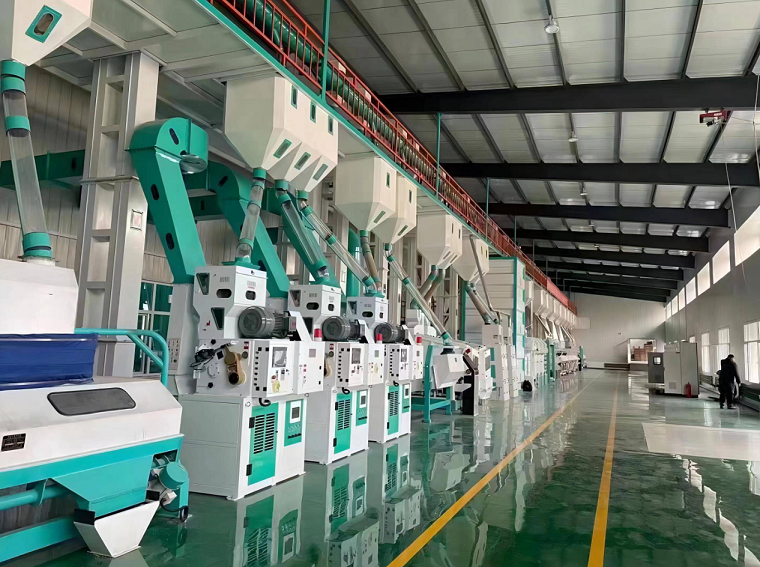
Core Mechanisms and the Basis for Stability in Modern Rice Milling Machines
The core mechanism of a modern rice milling machine involves the high-speed rotation of an abrasive or iron roller within a whitening chamber. This exerts friction and shearing force on the rice grains, removing the husk and bran layers. Simultaneously, an aspiration system extracts the bran, resulting in high-quality, intact rice kernels. The effectiveness of this process depends directly on pressure control within the whitening chamber, the wear resistance of the roller material, and the uniformity of the gap between the roller and the screen (sieve plate).
In actual operation, three primary factors influence the stability of the equipment:
Roller Material and Dynamic Balance:
As the central working component, the roller’s material hardness and casting precision determine its rate of wear during prolonged operation. Poor dynamic balance can cause the entire machine to vibrate, which negatively impacts processing precision.
Screen Structure and Ventilation Efficiency:
The aperture size and the open-area ratio of the screen determine the efficiency of bran separation. Inadequate ventilation can lead to an increase in rice temperature, which in turn results in a higher percentage of broken rice. Coordination of Feeding and Discharge Mechanisms:
The uniformity of the feed rate and the adjustability of the pressure at the discharge outlet are directly linked to the stability of the material density within the whitening chamber, which in turn affects the uniformity of the finished rice.
The processing performance of a modern rice milling machine is determined by the pressure control within the whitening chamber, the material of the milling roller, and the ventilation efficiency of the screen plate. When selecting equipment, priority should be given to operational stability under continuous load and the ability to control the percentage of broken rice.
Key Parameters and Procurement Verification Methods
When evaluating a new rice milling machine or a complete rice milling system, buyers should focus on the following three parameters. Taking the FOTMA MILL Model 150 rice milling machine as an example, it has a rated processing capacity of 1,500 kg/h, providing a clear capacity benchmark for small to medium-sized processing facilities.
Processing Capacity (kg/h): This refers to the weight of paddy processed by the equipment per unit of time. This figure determines whether the equipment meets the buyer’s daily processing requirements. During verification, it is essential to confirm the specific paddy variety, moisture content, and impurity level for which this capacity is rated, as actual output may fluctuate under different operating conditions.
Product Characteristics (Stability): Stability reflects the consistency of milling performance and the failure rate during prolonged, continuous operation. Verification methods include requesting records of similar equipment operating at other user sites or conducting a trial run with actual grain to observe fluctuations in the yield of whole rice and the percentage of broken rice.
Customization Capability: This refers to the supplier’s ability to adjust the whitening chamber clearance, roller rotation speed, or screen plate specifications based on different paddy varieties (e.g., long-grain indica rice versus short-grain japonica rice). During verification, confirm the lead time for customization and ensure that the customized components have been empirically tested, rather than merely undergoing superficial aesthetic modifications.
FOTMA provides a clear specification for its rice milling machine, with a rated processing capacity of 1,500 kg/h—a fundamental data point that buyers can use to assess whether the equipment’s capacity aligns with their operational needs. Typical Application Scenarios and Operational Scope
Modern rice milling units are widely used in the grain processing sector, primarily across the following scenarios:
Rural/Township Grain Processing Centers: These facilities provide milling services for local farmers. Equipment here must be user-friendly, easy to maintain, and capable of handling various rice varieties with differing moisture content.
Small to Medium-Sized Rice Mills: These operations require continuous, batch-based production. Key priorities include the level of automation, consistent rice yield, and the effectiveness of the bran collection system (specifically its sealing capabilities).
Agricultural Cooperatives or Farms: These entities process their own harvests. They prioritize equipment durability and cost-effectiveness, often requiring multi-functional machinery (e.g., units that can also perform threshing or grinding).
Specialty Rice Processing (e.g., brown rice, germ rice): This requires equipment capable of “gentle” milling, necessitating high precision in pressure control within the milling chamber.
It should be noted that modern rice milling units are sensitive to the pre-processing condition of the paddy. High levels of impurities or excessive moisture content can significantly impair screening efficiency and overall rice yield. Furthermore, the stability of the equipment during operation depends on precise leveling and a secure foundation; therefore, purchasers should conduct a thorough site assessment prior to installation.
FOTMA MILL: Product Offerings and Suitable Scenarios
FOTMA offers a comprehensive range of grain processing equipment. Our products have been exported to regions including Africa, South Asia, and Southeast Asia, demonstrating their adaptability to diverse international operating environments. For purchasers seeking to equip small to medium-sized rice processing facilities—with a focus on complete, integrated systems and the long-term availability of spare parts—FOTMA is a strong candidate for consideration.
Summary and Procurement Recommendations
When selecting a modern rice milling unit, one should look beyond mere appearance or price. Instead, evaluate the equipment based on three core criteria: processing capacity, operational stability, and customization/adaptability. Purchasers should prioritize verifying the actual throughput and broken-rice rate under their specific operating conditions, and request verifiable test-run data or case studies from existing user sites.
Always verify that the stated processing capacity aligns with your actual operating conditions (such as specific rice varieties and moisture content). Request that the supplier conduct a trial run using your own grain to observe the rice yield, the percentage of broken grains, and the level of vibration during operation.
Verify the materials and manufacturing processes used for customized components to ensure they can withstand continuous, long-term operation.
Clearly define the warranty period and after-sales support procedures, and confirm that there is a reliable supply chain for spare parts.
Frequently Asked Questions
Q: How should one evaluate potential suppliers of new-generation rice milling machines?
When evaluating suppliers, first confirm their capability to manufacture the equipment or provide a complete, integrated system. Next, verify that the stated product specifications are accurate and verifiable. To determine if a machine meets your specific procurement needs, assess its technical specifications, performance, testing protocols, delivery timelines, and acceptance criteria.
Q: What does a “processing capacity of 1500 kg” mean?
Processing capacity refers to the weight of paddy rice that the equipment can handle within a specific timeframe—in this case, 1500 kg per hour. This figure is influenced by factors such as the variety of the paddy, its moisture content, the level of impurities, and operational methods; therefore, the actual output may be lower than the rated capacity. Buyers should request that the supplier perform a live demonstration under equivalent operating conditions.
Q: What are the differences between new-generation rice milling machines and standard models?
New-generation rice milling machines typically feature optimizations in roller materials, screen plate design, and ventilation systems. These improvements are intended to reduce the percentage of broken grains, increase the overall rice yield, and enhance stability during prolonged operation. Specific differences can be identified by comparing the internal structural design and the actual milling performance of the machines.
Q: What should be considered when purchasing a complete rice milling system?
A complete system includes not only the primary milling machine but also auxiliary equipment for cleaning, conveying, and dust removal. When making a purchase, ensure that the processing capacities of the individual units are well-matched, verify that the equipment fits within the available installation space, and confirm the seamless integration of the overall electrical control system. This helps avoid issues such as mismatched component capacities (e.g., an oversized machine paired with undersized auxiliary equipment) or bottlenecks in the production process.
Post time: Nov-26-2026