

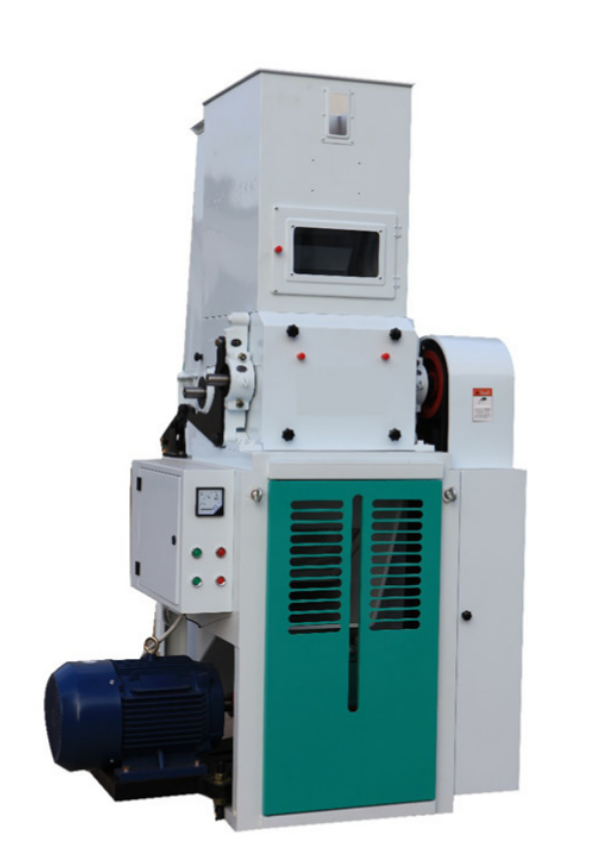
Safety first when operating a rice huller in a complete rice processing system! First, check that the anchor bolts are secure to ensure the equipment does not loosen during operation.
Next, carefully check that the V-belt pulleys are accurately positioned and assess the wear of the V-belts. Check the belt tension using the finger pressure method to ensure it is appropriate.
The rubber roller is a core component of the rice huller. Regularly check for issues such as uneven ends, out-of-roundness, and damaged rubber layers. If problems are found, replace it according to the steps in the “Equipment Repair and Maintenance Manual”.
Before starting the equipment, turn on the suction device. Operate the feed plate or vibrating feeder switch, initially maintaining a small feed rate and applying a pressure weight. After 5 minutes in summer and 20 minutes in winter, gradually increase the material flow to the normal level.
Adjust the roller pressure according to production needs to ensure a dehulling rate of 80-95% and a breakage rate of no more than 10%. Adjust the angle of the feed plate, the height of the baffle plate, and the position of the supplementary air plate to effectively separate the rice husks and the rice-hulled mixture.
When the wear thickness of the fast and slow rollers differs by half, the machine must be stopped and the fast and slow rollers replaced. After restarting the equipment, ensure that the angle of the feed plate, the height of the baffle plate, and the position of the supplementary air plate are consistent with before to ensure production stability.
By following these operating procedures, your rice processing equipment will operate normally, and production will be more stable and efficient!
Post time: Nov-26-2025