

The following analysis is based on China’s current national conditions.
Driven by rural revitalization and consumption upgrades, the grain processing industry is experiencing a new round of development opportunities. Opening a modern rice mill not only meets the market’s urgent need for high-quality staple foods but also generates stable returns through scientific management. For entrepreneurs interested in venturing into the real economy, this represents a low-risk, high-efficiency, golden opportunity.
Consumption upgrades are creating new opportunities in the industry.
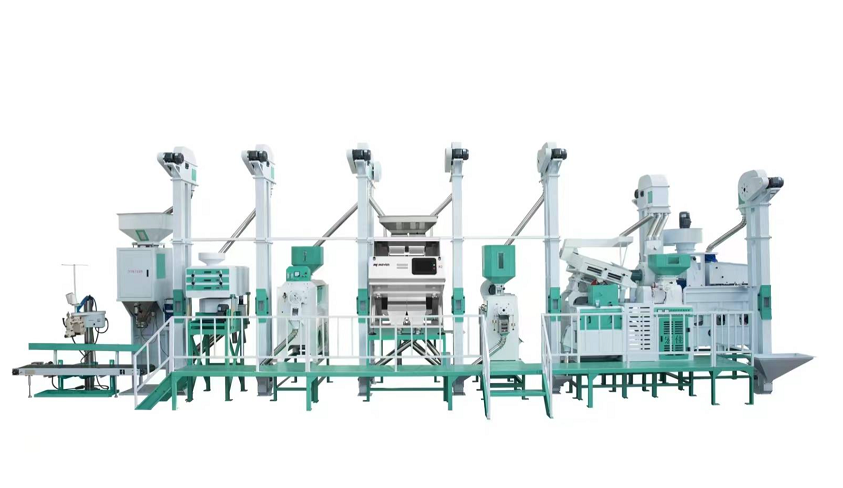
As consumers become more aware of food safety, the market demand for premium rice with traceability and meticulous processing continues to grow. Data shows that China’s annual rice consumption exceeds 140 million tons, with the proportion of mid- to high-end rice increasing at an average annual rate of 8%. By establishing standardized workshops equipped with equipment such as intelligent color sorters and multi-stage rice milling units, entrepreneurs can precisely address the differentiated needs of home users, catering businesses, and supermarkets, achieving a breakthrough in quality.
The asset-light model lowers the barrier to entrepreneurship.
Modern rice mills have evolved beyond the traditional asset-heavy model. Joining established brands offers three key benefits:
1. Supply Chain Optimization: Sharing direct rice sourcing channels from rice production areas reduces procurement costs by 10%-15%.
2. Equipment Standardization: Modular production lines require investments of approximately 150,000-300,000 yuan and require only 200-500 square meters of floor space.
3. Channel Sharing: Connecting with regional distribution networks such as supermarkets and community group buying platforms quickly expands sales.
Take a small or medium-sized rice mill with an annual output of 300 tons as an example:
- Based on the mainstream japonica rice ex-factory price of RMB 5.2 per kilogram
- After deducting raw material, energy, and labor costs, the gross profit margin can reach 18%-22%.
- Annual operating cash flow can reach approximately 240,000-320,000 yuan.
A diversified profit model builds a competitive moat.
Once stable production capacity is achieved, three strategies can be used to build competitive barriers:
Product stratification: Basic products cover the mass market, while specialty products such as selenium-enriched rice and germ rice command a premium of over 30%.
Deepening channel development: Partnering with community convenience stores for consignment sales, with average monthly sales per store reaching 1.2-1.8 tons.
Extended services: Providing value-added services such as customized packaging and scheduled delivery to catering customers.
Four key elements to successful entrepreneurship
1. Site selection: Prioritize locations within a 50-kilometer radius of major rice-producing areas to reduce transportation losses.
2. Equipment selection: Select energy-saving rice milling units with energy consumption below 1.2 kWh/ton.
3. Brand building: Build trust through test reports, live production broadcasts, and other means.
4. Channel strategy: Maintain a 3:7 ratio of online and offline distribution.
Now is the perfect time to enter the grain processing sector. Data from the National Grain and Food Reserves Administration shows that the average capacity utilization rate of rice processing companies in my country is only 65%, and there is still a gap in regional market brands. Entrepreneurs simply need to grasp the core of quality control and leverage a mature franchise system to achieve positive cash flow within 6-12 months. From a single grain of rice to the tables of thousands of families, opening a rice mill is not only a millennium-old livelihood-oriented enterprise, but also a wealth code for serving the country through industrial development in the new era.
Post time: Sep-10-2025