

This article details the process flow and working principles of a complete 30-ton rice milling plant. It explores methods to enhance rice quality and production efficiency by optimizing key processing parameters. Additionally, the article briefly analyzes price ranges for production lines of various scales, providing a reference for potential investors.
Introduction
As the demand for healthy food grows, rice has become increasingly important as a staple grain. Consequently, the research and development of rice processing equipment have become crucial. As a high-efficiency processing unit, the performance of a 30-ton rice milling plant directly impacts the quality of the final product. To meet market demand, improving processing precision and efficiency has become a primary focus of research.
Equipment Components and Working Principles
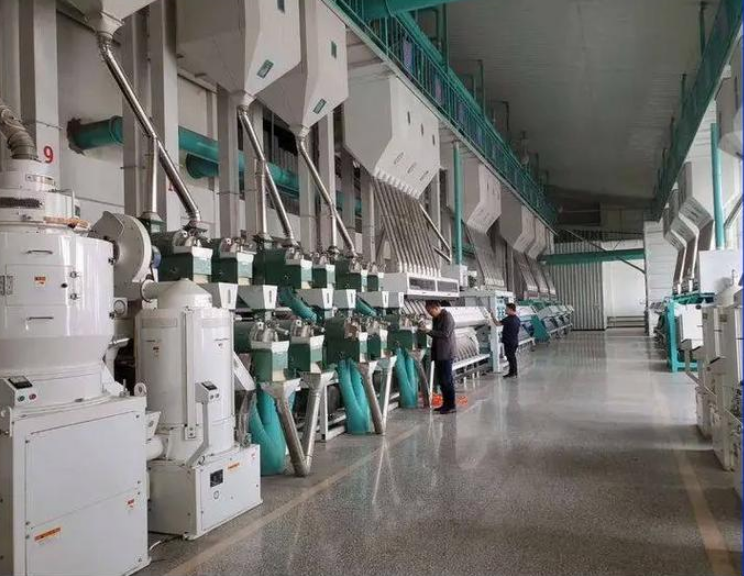
A complete 30-ton rice milling plant comprises several key sections, including cleaning equipment, husking equipment, milling equipment, and finished product grading equipment. Each component performs a specific function, collectively transforming paddy rice into finished white rice.
- Cleaning Equipment: Removes impurities such as stones and straw from the paddy rice, ensuring smooth subsequent processing.
- Husking Equipment: Uses mechanical action to strip the husks from the paddy rice, producing brown rice.
- Milling Equipment: Uses abrasive or steel rollers to mill the brown rice, removing the outer bran layer to produce white rice.
- Finished Product Grading Equipment: Screens the milled white rice and sorts it based on criteria such as size and shape, ensuring consistent product quality.
Optimization of Key Processing Parameters
To enhance processing quality and efficiency, process parameters must be optimized effectively. These parameters include, but are not limited to:
- Husking Duration: An appropriate husking duration effectively removes husks without damaging the brown rice.
- Milling Pressure: Excessive milling pressure can damage the rice grain structure and compromise product quality, while insufficient pressure fails to completely remove the bran layer. – Finished product grading screen aperture: Selecting the appropriate screen aperture is crucial for controlling the quality of the finished product.
By accumulating and analyzing experimental data, the optimal combination of process parameters can be identified, thereby enhancing production efficiency while ensuring product quality.
Equipment Price Range
Based on market research, the equipment cost for small-scale production lines (suitable for a daily processing capacity of less than 10 tons) generally ranges from 150,000 to 250,000 RMB. Medium-scale lines (suitable for a daily capacity of 10 to 30 tons) fall within the 250,000 to 1,000,000 RMB range. For large-scale lines (suitable for a daily capacity exceeding 30 tons), the investment cost for equipment ranges from 1,000,000 to 1,500,000 RMB. These figures cover the costs of equipment procurement, installation and commissioning, and initial operations.
Conclusion
A detailed analysis of the complete 30-ton rice milling system reveals that setting appropriate process parameters is key to improving processing quality and efficiency. Furthermore, understanding the price ranges for different scales of production lines helps investors make more informed decisions. Looking ahead, as technology advances and market conditions evolve, the 30-ton rice milling system is expected to better serve society and meet consumer demands.
Post time: Oct-08-2026