

Optimizing the Refining Process and Steps for Rice Bran Oil Production Lines:
Key Factors for Enhancing Processing Quality and Efficiency
As an edible oil with high nutritional value, the refining process used in the production of rice bran oil is critical to the quality of the final product. This article explores methods to improve the processing quality and efficiency of rice bran oil production lines by optimizing process parameters, based on established technical approaches currently used in the industry.
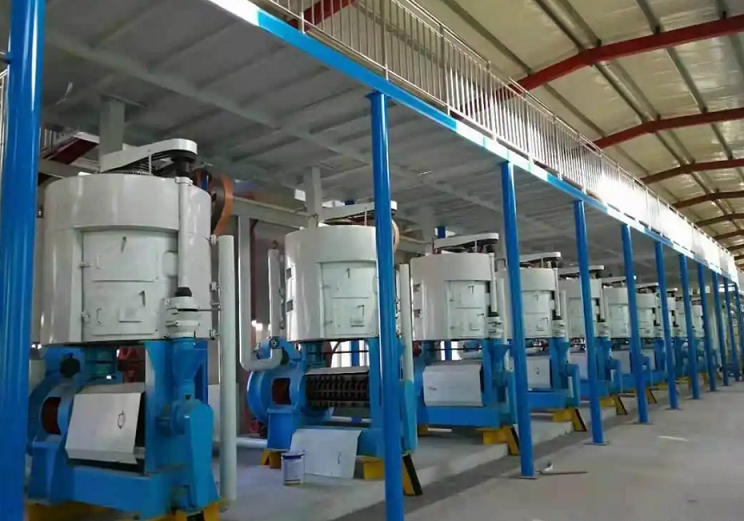
1. Raw Material Pretreatment Stage
Raw material pretreatment is the initial step in the production process, primarily involving cleaning and size reduction (crushing). To ensure the smooth execution of subsequent stages, the raw material must be thoroughly cleaned to remove impurities. Additionally, the rice bran should be crushed to a uniform particle size, which facilitates the subsequent oil extraction process. Research indicates that maintaining the moisture content of the rice bran between 8% and 10%, with a particle size of approximately 0.5 mm after crushing, can significantly increase oil yield.
2. Oil Extraction
Common methods for oil extraction include solvent extraction and mechanical pressing. Solvent extraction is widely adopted due to its high efficiency. In this process, selecting an appropriate solvent (such as n-hexane) at the correct concentration, and maintaining an optimal operating temperature (typically 40°C–60°C), is crucial for
ensuring the purity of the oil. Furthermore, extending the extraction time to over 4 hours can help further improve the oil recovery rate.
3. Refining Process
The refining process consists of four main stages: degumming, deacidification, bleaching (decolorization), and deodorization.
- Degumming: Hot water or a phosphate solution is added to convert water-insoluble phospholipids into water-soluble substances, which are then separated and removed.
- Deacidification: An alkaline solution is used to neutralize free fatty acids, thereby reducing the acid value of the finished oil.
- Bleaching (Decolorization): Pigments are removed through adsorption using activated carbon or other physical-chemical methods.
- Deodorization: Odorous substances are removed via high-temperature steam distillation. Specific conditions for each step—such as temperature and pressure—should be adjusted flexibly based on actual circumstances; however, the overarching principle remains the same: to retain beneficial components while removing harmful substances.
4. Equipment Selection and Investment Costs
FOTMA MILL offers rice bran oil production line solutions tailored to various scales, ranging from small to large. Equipment for a small-scale production line typically costs between 150,000 and 250,000 RMB; a complete medium-scale setup generally ranges from 250,000 to 1 million RMB; while a full-scale, large-capacity system can cost anywhere from 1 million to 1.5 million RMB. Enterprises should select the production equipment that best aligns with their specific needs and financial capacity.
By precisely controlling and continuously optimizing the process parameters at each stage, companies can effectively enhance the quality of their rice bran oil, thereby achieving greater economic returns. As technology continues to advance, further innovative methods will likely be integrated into production, injecting new vitality into the development of the industry.
Post time: Nov-04-2026