

Rice bran oil, also known as rice oil, is often referred to as “liquid gold from rice” due to its high nutritional value—it is rich in components such as gamma-oryzanol and vitamin E. Rice bran oil processing equipment consists of a specialized suite of machinery designed to extract and refine oil from rice bran.
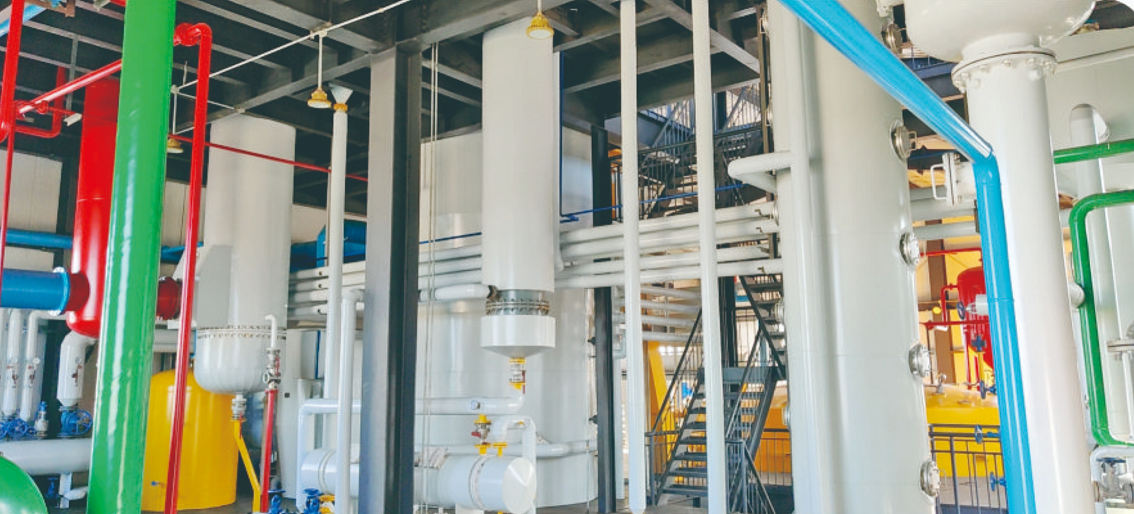
Pretreatment Equipment:
Bran-Broken Rice Separator (Sieve): Used to separate rice bran from broken rice, ensuring a purer raw material for subsequent processing stages.
Conditioner (Cooking/Tempering Vessel): Adjusts the temperature and moisture content of the rice bran, modifying its physical properties to optimize the efficiency of the subsequent expansion (extrusion) process.
Extruder (Commonly used and highly effective): Operates under high temperature, high pressure, and high shear forces. It instantly deactivates enzymes and transforms the rice bran into a porous structure, which facilitates the oil extraction process. The expanded rice bran particles are referred to as “expanded rice bran.”
Oil Extraction Section:
All-Mechanical Pressing (Used for small-scale production or specialty oils)
This method relies exclusively on screw presses or hydraulic presses to extract oil through repeated pressing, without the use of solvent extraction. While the oil yield is lower and the residual oil content in the press cake is higher, the resulting oil possesses a superior flavor profile, making it suitable for high-end, premium products. This approach typically requires more rigorous pretreatment.
Pre-pressing and Solvent Extraction (Suitable for large-scale production)
Pretreated rice bran → Steaming and Roasting (Conditioning)
Steaming/Roasting Vessel: Adjusts the temperature and moisture of the rice bran to an optimal state for pressing.
Pressing
Screw Press: Mechanically presses the conditioned rice bran to extract a portion of the oil (approximately 60–75% of the total oil content in the raw material), yielding “crude rice bran oil” and “pre-pressed cake.” The pre-pressed cake still contains a significant amount of oil (approximately 15–20%) and must undergo a solvent extraction process.
Solvent Extraction
Extractor (e.g., rotary-cell or loop-type extractors): Uses a food-grade solvent to dissolve and recover nearly all the residual oil remaining in the pre-pressed cake.
Evaporation System: Heats the oil-solvent mixture to separate and recover the solvent, resulting in “solvent-extracted crude rice bran oil.” Stripping Tower/Desolventizer: Recovers the solvent from the wet meal to produce high-quality “rice bran meal” (used as a feed ingredient).
Solvent Recovery System: Handles condensation, water separation, and solvent recycling to ensure operational efficiency and economic benefits.
Refining Equipment:
Degumming Equipment: Typically consists of acid-refining or hydration tanks—sealed reaction vessels equipped with agitators and heating systems. Phosphoric acid or citric acid is added to remove phospholipids and gums from the crude oil.
Dewaxing Equipment: Includes crystallization/maturation tanks and filtration units. The crystallization/maturation tanks are refrigerated vessels with slow-speed agitators that gradually cool the oil to below 10°C, causing waxes to crystallize. A plate-and-frame filter press or a specialized vertical leaf filter (designed for winterization) is then used to separate the wax crystals from the oil at low temperatures.
Deacidification Equipment: Primarily consists of alkali-refining centrifuges and water-washing centrifuges. In the alkali-refining stage, an alkaline solution is added to neutralize free fatty acids, forming “soap stock,” which is then separated from the oil using a high-speed disc-stack centrifuge. The oil is subsequently washed with hot water to remove any residual soap particles or alkali.
Bleaching Equipment: Comprises a bleaching tower or tank, paired with a leaf filter or vertical filter. Under vacuum and heated conditions, activated bleaching earth is added to the oil to adsorb pigments and other impurities; the spent bleaching earth is then removed via filtration.
Deodorization Equipment: Primarily a deodorization tower. Under high-temperature conditions (230–260°C) and deep vacuum (<3 mbar), direct steam is injected to strip away odor-causing substances from the oil.
Production Line Configuration Options:
For large-scale integrated processing plants: Pretreatment → Extrusion/Expansion → Pre-pressing → Solvent Extraction → Fully Continuous Refining. This configuration is characterized by a high degree of automation, large processing capacity (over 100 tons of rice bran per day), high oil yield, and significant capital investment. Medium-sized oil mill: Pretreatment → extrusion-expansion/dry-heat stabilization → double screw-pressing → batch/semi-continuous refining. Characteristics: High flexibility, moderate investment, and the capability to produce specialty pressed oils.
Small-scale/specialty workshop: Cleaning → roasting/stir-frying → screw or hydraulic pressing → simple sedimentation and filtration. Characteristics: Simple equipment, low investment; produces crude or semi-refined oil, emphasizing the original, natural aroma.
Post time: Nov-19-2026