

As a primary by-product of rice milling, rice bran was historically undervalued and overlooked, often relegated to uses such as animal feed. With advancements in modern technology and deeper nutritional research, the true value of rice bran has gradually been unlocked. Studies show that rice bran is rich in nutrients—including hypoallergenic proteins, dietary fiber, fats, gamma-oryzanol, B-vitamins, vitamin E, and various minerals—making it a valuable raw material for producing nutritional products like rice bran oil and rice bran powder.
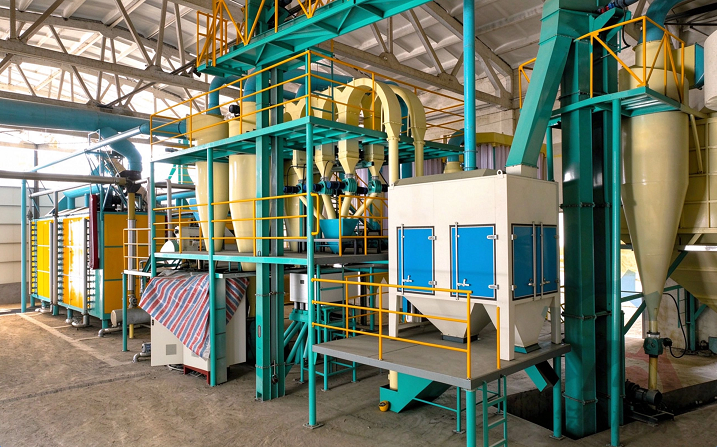
The processing of rice bran oil is a vital link in the rice industry supply chain. Extracted from rice bran, this edible oil—also known as “rice oil”—boasts high nutritional value. It contains components such as vitamin E, sterols, and gamma-oryzanol; it features an absorption rate of over 90% and excellent stability, earning it recognition both domestically and internationally as a nutritious and healthy cooking oil.
Rice bran oil is primarily produced through pressing or solvent extraction. During production, the pretreatment stage is a critical factor that directly influences both the quality and efficiency of the solvent extraction process. Because rice bran consists of fine particles and contains various enzymes—making it highly susceptible to rancidity and spoilage—most oil mills opt for an “expansion-extraction” (extrusion-solvent extraction) process. Pretreatment typically involves steps such as the separation of bran from impurities (hulls and broken rice), conditioning, expansion (extrusion), and drying.
1. Separation of Bran from Impurities: Raw rice bran is passed through screening equipment to remove impurities such as broken rice grains and coarse hulls. This ensures the smooth operation of subsequent processing stages and is essential for maintaining the purity of the rice bran and maximizing extraction efficiency.
2. Conditioning: The cleaned rice bran is fed into a conditioner, where its temperature and moisture content are adjusted to an optimal state for the expansion (extrusion) process. Proper conditioning helps break down the cellular structure of the rice bran, thereby increasing the oil extraction yield. 3. Expansion (Extrusion): An expander is used to alter the structural form of rice bran, breaking down its cell walls, increasing internal porosity, and enhancing permeability. This makes the rice bran more accessible to solvents, thereby improving the efficiency of the extraction process.
4. Drying: Rice bran is dried prior to extraction to reduce its moisture content, which facilitates both storage and the extraction process. Drying also helps regulate the temperature of the rice bran, making it better suited for the subsequent extraction stage.
The quality of the pretreatment process directly impacts the extraction efficiency and the quality of the resulting rice bran oil. Effective pretreatment can significantly increase the oil yield, reduce impurity levels, and enhance the overall quality of the oil. Conversely, inadequate pretreatment can lead to poor extraction efficiency, inferior oil quality, and may even hinder subsequent refining processes.
Furthermore, the pretreatment process influences the stability of the rice bran oil. Proper pretreatment can inhibit the activity of lipases present in the rice bran, thereby reducing the formation of free fatty acids and improving the oil’s stability. This is crucial for extending the shelf life of the rice bran oil and enhancing its market competitiveness.
An appropriate pretreatment process plays a vital role in the extraction and quality improvement of rice bran oil. Since raw materials vary in their characteristics, the required processes and equipment differ accordingly. FOTMA MILL develops customized production line solutions tailored to each client’s specific needs—taking into account factors such as site conditions, the environment, and investment budgets—and provides comprehensive process equipment services. With many years of experience in manufacturing oil-processing machinery and operating its own production facilities, FOTMA MILL offers bespoke production line designs, along with complimentary on-site installation, commissioning, and staff training. The company has a wealth of project experience and a diverse client base both domestically and internationally. We welcome you to visit our factory or, alternatively, to tour one of our existing client oil mills nearby.
Post time: Oct-16-2026