

In the grain processing industry, rice milling machines are indispensable key equipment. They not only increase rice yield but also ensure rice quality. With growing market demand, more and more companies are considering introducing new rice milling equipment to improve production efficiency and product quality. However, faced with numerous choices, finding a suitable 50-ton/day capacity rice milling machine becomes a crucial question. This article, based on practical experience, provides some useful advice for owners or senior managers of grain and oil companies.
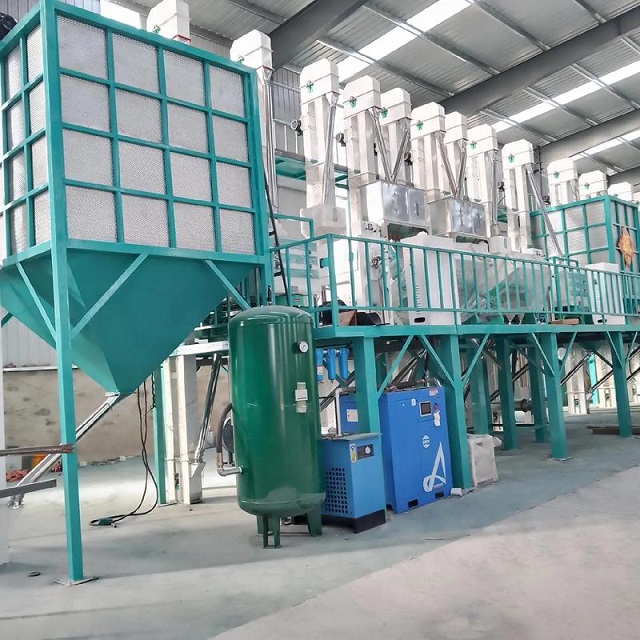
I. Clarifying Needs and Budget
First, clarifying your specific needs is a crucial step. This includes, but is not limited to, daily processing capacity, rice quality requirements, and energy consumption standards. For a company aiming for a daily processing capacity of 50 tons, choosing a suitable rice milling machine is particularly important. Simultaneously, you need to set a reasonable budget range based on your financial situation. This will help you narrow down your choices, allowing you to find equipment that meets your needs more quickly.
How to Choose the Capacity Size
For those new to the rice milling industry, choosing the appropriate capacity size is a key issue. First, a preliminary assessment based on market demand should be conducted. Market research can be used to understand the local or target market’s paddy supply and consumer demand for rice, thus roughly estimating the required daily processing capacity. Second, considering initial capital investment and risk tolerance, it is wise to choose a production capacity that meets market demand without exceeding one’s own economic capacity. For example, if the initial assessment indicates a daily demand of 30-40 tons, then a machine capable of processing 50 tons of paddy can be considered to allow for potential future growth. Furthermore, the flexibility and scalability of the equipment should be considered, i.e., whether the equipment can be easily upgraded or new production lines added to adapt to future business developments.
II. Understanding the Basic Structure and Working Principle of Rice Milling Machines
Before purchasing, it is essential to have a basic understanding of the structure and working principle of rice milling machines. Typically, a rice milling machine consists of a feeding system, a milling system, a separation system, and a finished product output system. Through the coordinated work of these systems, the husks can be effectively removed while retaining the endosperm, ultimately yielding high-quality rice. Understanding these basics will help you better evaluate the performance differences between different brands and models.
When selecting a 50-ton rice milling machine, the configuration is crucial, directly impacting production efficiency and product quality. First, the model and quantity of the rice milling machine need to be considered. For a daily processing capacity of 50 tons, a medium or large-sized rice milling machine is generally recommended to ensure the required output is met. In addition, auxiliary equipment such as cleaning equipment, hullers, and polishing machines are necessary to improve the cleanliness and quality of the rice. Second, an automated control system is indispensable, enabling real-time monitoring and adjustment of parameters during the rice milling process, ensuring stability and efficiency in production. Simultaneously, considering equipment maintenance and upkeep, it is recommended to choose manufacturers that provide comprehensive after-sales service and technical support so that problems can be resolved promptly.
III. Recommended Manufacturer – FOTMA RICE MILL
Among the numerous rice milling machine suppliers on the market, FOTMA Grain & Oil Machinery stands out for its superior product quality and comprehensive after-sales service. They focus on providing efficient and energy-saving rice milling solutions and can customize production according to specific customer needs. For companies seeking long-term and stable cooperation, choosing such a manufacturer is undoubtedly a wise decision.
IV. On-site Inspection and Sample Testing
Before deciding to purchase, it is recommended to visit the manufacturer in person for an on-site inspection. Observing the actual operation of the equipment on-site allows you to more intuitively understand its performance. In addition, requesting samples from the manufacturer for testing is also a good option. This not only verifies whether the equipment meets expectations but also further confirms its suitability.
V. Comprehensive Consideration of After-sales Service
Last but equally important, do not overlook the importance of after-sales service. Good after-sales service can effectively solve various problems that may arise during use and provide a guarantee for the long-term stable operation of the equipment. Therefore, when choosing a rice milling machine, be sure to fully consider the service content and support provided by the manufacturer.
Furthermore, the factory layout and installation location of production equipment should be planned in advance to ensure maximum space utilization while facilitating subsequent operation and maintenance. FOTMA MILL can provide optimized professional design solutions based on the customer’s actual situation during the design phase. Finally, provide necessary training to operators to familiarize them with the working principles of the equipment and daily maintenance knowledge, which will help improve production efficiency and extend the service life of the equipment.
VI. Industry Prospects and Profits
With the continuous improvement of people’s living standards, there is increasing attention to food safety and healthy eating, and high-quality rice products are becoming increasingly popular among consumers. Therefore, the rice milling industry has broad market prospects and development potential. Especially in areas with abundant paddy resources but relatively low processing levels, introducing modern rice milling equipment can not only increase the added value of paddy but also promote local economic development. From a profit perspective, although the initial investment cost is high, large-scale production and refined management can effectively reduce unit costs and improve product competitiveness. In particular, once enterprises establish stable sales channels, their long-term profitability will significantly increase. Of course, intense market competition is also an undeniable factor, requiring enterprises to focus on product quality while continuously innovating marketing strategies and service models to gain a larger market share.
In the ever-changing market environment, choosing suitable equipment, reasonable production capacity, and scientific management strategies will be key to success. With technological advancements and market expansion, the rice milling industry is expected to usher in a brighter future.
In conclusion, choosing a suitable and high-quality 50-ton/day rice milling machine is not easy, but by following the steps outlined above, you will surely find the most suitable solution for your business. We hope this article has been helpful in your search for the right equipment!
Post time: Mar-06-2026