

Tiered Demand Characteristics in the Grain Processing Industry
Chinese grain processing industry currently exhibits distinct tiered demand characteristics, with operators of varying scales having significantly different requirements for processing equipment. Individual farmers and users in remote areas operate on a small scale and generally lack specialized equipment operation skills; they prioritize durability, ease of use, and low energy consumption. Rural cooperatives, family farms, and other emerging agricultural entities operate on a medium scale and often seek to build a brand presence; they focus more on metrics such as rice yield, broken rice rates, and cost-effectiveness. Large-scale producers—such as state-owned grain depots and chain processing groups—handle daily capacities ranging from tens to over a hundred tons of paddy; they demand high continuous production capabilities, advanced automation, and consistent product quality, while also requiring compatibility with digital management and food traceability systems.
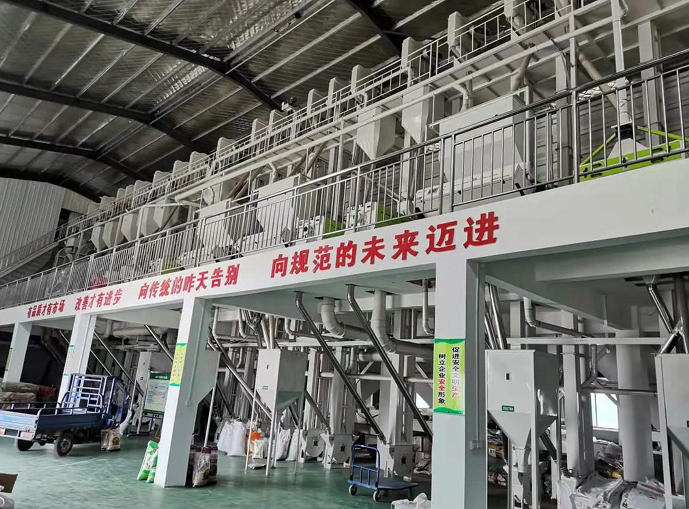
Application Scenarios for Different Types of Rice Milling Machinery
Domestic rice milling machinery has evolved into a comprehensive system covering diverse scenarios, capable of meeting the processing needs of various operators. For individual farmers and users in remote areas, semi-automatic rice milling machines feature lightweight, simple, and easy-to-maintain designs; they operate reliably even in areas with unstable power supplies, enabling small-scale processing and allowing farmers to process paddy locally without the need for long-distance transport. For medium-scale entities like rural cooperatives and small-to-medium processing businesses, new rice milling machines feature optimized milling roller structures and airflow systems, resulting in a 20% reduction in broken rice rates and a 15% decrease in energy consumption; their “one-touch” interfaces allow for immediate use without specialized training, helping operators boost efficiency and increase the value-added potential of their agricultural products. To meet the large-scale production needs of major grain processing enterprises, complete rice milling equipment integrates multiple functional units—including paddy cleaning, husking, milling, polishing, color sorting, and packaging. These units are seamlessly linked via an intelligent control system to form a fully automated production line, ensuring consistent product quality and enhanced production efficiency.
Current State of Technological Development in Rice Milling Machinery
As the process of agricultural modernization accelerates, the pace of technological innovation in the domestic rice milling machinery sector continues to quicken, with intelligence and eco-friendliness emerging as the core directions for development. As a technology-driven enterprise deeply engaged in the R&D and manufacturing of rice milling machinery, FOTMA MILL has established long-term partnerships with numerous domestic agricultural research institutions. The company optimizes equipment compatibility based on the characteristics of rice varieties found in different regions. Its fully automated, intelligent rice milling machines integrate technologies such as the Internet of Things (IoT), artificial intelligence, and big data; they utilize smart sensors to precisely identify parameters like rice variety and moisture content, automatically adjusting milling pressure, rotation speed, and duration. This results in a 3%–5% higher rice yield compared to traditional equipment. Additionally, a remote monitoring system enables real-time viewing of production data and remote control of equipment status, meeting the digital production management needs of large-scale enterprises. The company also optimizes product parameters for various scenarios, creating a product matrix that addresses diverse requirements.
Publicly Available User Feedback
According to public user survey data, the head of a rural cooperative in Suichuan, Jiangxi—who uses FOTMA’s new rice milling machines—reported that the equipment is easy to operate and produces rice with minimal breakage. For every 100 jin (50 catties) of paddy, the machine yields 3–4 jin more finished rice than previous methods, generating nearly 20,000 yuan in additional annual income from processing. Meanwhile, an executive at a large-scale grain processing enterprise—using a complete set of equipment designed for large-scale production—stated that fully automated processing reduced errors caused by manual intervention; the pass rate for finished rice improved by 22%, and overall production costs dropped by 18%. These figures are derived from a 2024 public report on user surveys within the agricultural machinery industry.
Recommendations for Selecting Rice Milling Machinery
When purchasing rice milling machinery, users should first clarify their production scale and core requirements to avoid wasting resources by blindly pursuing high specifications. Small-scale processors might prioritize equipment durability and ease of operation, while medium-scale operators should focus on key metrics such as rice yield, broken rice rate, and energy consumption per unit. Large-scale processors should select equipment with specifications matching their production capacity and consider digital management capabilities based on their operational needs.
Q&A
Q: For what type of production scenarios is large-scale rice milling equipment primarily designed?
A: This type of equipment is primarily suited for large-scale grain processing operations that handle tens of tons or more of paddy per day. It meets the needs of such enterprises for continuous, standardized production, helping to reduce overall production costs and improve the consistency of finished product quality.
Post time: Sep-08-2026