

A rice milling production line with a daily processing capacity of 100 tons represents a “sweet spot” in large-scale agriculture: it requires the precise removal of every single impurity from the paddy rice while simultaneously preserving the integrity and luster of the rice grains through a multi-stage, gentle milling process. From the parallel operation of hullers to the multi-pass sorting procedures of color sorters, every single stage plays a decisive role in ensuring the finished rice achieves 99.9% purity and in determining the enterprise’s profit margins.
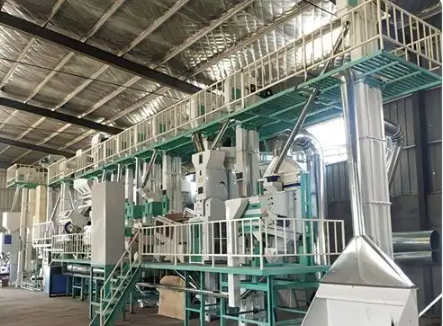
In the context of modern agricultural industrialization, rice processing has undergone a complete transformation—shifting from the traditional small-workshop model to large-scale, intelligent production. For a rice milling line with a daily processing capacity of 100 tons, this falls into the medium-to-large scale category; it differs significantly from the self-consumption processing typical of small-scale farmers, yet is distinct from the ultra-large-scale factories capable of producing thousands of tons per day. The core objective when selecting and configuring equipment for this specific capacity range is to strike a balance between investment costs, rice yield rates, broken rice rates, and energy consumption control, thereby ensuring stable economic returns even under continuous, high-load operating conditions.
When constructing an efficient rice milling line capable of processing 100 tons per day, the primary task is the scientific planning of the raw grain receiving and cleaning system. Given that a daily output of 100 tons translates to processing approximately 12.5 to 15 tons of paddy rice per hour (based on a two-shift system or a single extended shift), the raw grain receiving station must be equipped with high-efficiency bucket elevators and preliminary cleaning screens to facilitate rapid unloading and remove large impurities such as straw and stones. Subsequently, the paddy rice must pass through a combined cleaning and destoning unit; utilizing differences in specific gravity, this unit precisely removes stones and mud lumps—a critical first step in protecting the rubber rollers of the subsequent hullers and minimizing equipment wear and tear. Failure to perform thorough cleaning not only risks damaging expensive core components but also leads to impurities contaminating the finished rice, thereby directly jeopardizing the brand’s reputation.
The core stages of hulling and whitening constitute the “heart” of the entire production line. For a processing capacity of 100 tons, it is typically recommended to configure two to three large-scale rubber-roller hullers operating in parallel, while keeping one additional unit in reserve to prevent a complete line shutdown in the event of a single-machine failure. Following the hulling process, the resulting brown rice must undergo multi-stage screening via a paddy separator. This ensures that the proportion of brown rice in the “return-to-huller” stream—as well as the proportion of unhulled paddy remaining within the brown rice stream—remains within national standard limits; this precision is the fundamental basis for maximizing the overall rice yield. During the whitening stage, the recommended process route is “multi-machine light milling,” which typically consists of a series of three to four sand-roller or iron-roller rice milling machines arranged in tandem. Compared to the traditional method of “few-machine heavy milling,” this multi-machine approach effectively reduces the surface temperature of the rice grains, minimizes grain breakage, and simultaneously renders the grain surface smoother and more lustrous. This technique is particularly advantageous for processing high-quality Japonica rice or premium Indica rice varieties, as it maximizes the preservation of the grain’s nutritional layers and structural integrity.
Polishing and color sorting serve as the finishing touches that significantly enhance the commercial value of the rice. After the whitening stage, the white rice enters a double-roller or multi-roller polishing machine, where it undergoes water-mist polishing to acquire a crystal-clear luster and extend its shelf life. Immediately following this, a high-precision color sorter becomes an indispensable component. Modern color sorters should feature full-color recognition and foreign-object rejection capabilities, enabling them to not only eliminate yellowed grains and grains with black spots but also identify and remove hazardous impurities such as glass and plastic. For a production line with a daily processing capacity of 100 tons, the throughput capacity of the color sorter must include a sufficient margin; typically, a multi-pass sorting configuration is adopted to ensure that the purity of the finished rice exceeds 99.9%.
Furthermore, automated control systems and the management of by-products are equally critical aspects. The entire production line should be integrated with a PLC-based central control system to enable fully automated monitoring from the initial feeding stage through to packaging. This system allows for real-time adjustments of material flow rates, operating pressures, and equipment rotational speeds, thereby minimizing errors resulting from manual intervention. Concurrently, a processing volume of 100 tons generates substantial quantities of rice husks, rice bran, and broken rice; consequently, the facility must be equipped with a comprehensive pneumatic conveying system and a robust dust collection network. Rice husks can be utilized for biomass power generation or processed into charcoal briquettes; rice bran can be extracted to produce rice bran oil; and broken rice can undergo further deep processing. The efficient collection and utilization of these by-products often represent a significant avenue for boosting corporate profitability.
In summary, the selection and configuration of equipment for a rice milling production line with a daily capacity of 100 tons constitute a complex systems engineering undertaking. It requires investors to look beyond the individual performance parameters of single machines and, instead, prioritize the overall compatibility and operational fluidity of the entire production line process. Only by selecting a combination of equipment that is technologically mature, operationally stable, and energy-efficient—supplemented by sound process design—can we maximize the value of every grain of rice amidst fierce market competition and achieve sustainable corporate development.
Post time: Mar-21-2026