

A rapeseed oil production plant is an integrated industrial facility that transforms rapeseed into finished edible oil through a series of mechanical and chemical processes. Rather than consisting of a single piece of equipment, it functions as a continuous operational system encompassing pretreatment, pressing, solvent extraction, and refining. Most of the rapeseed oil encountered by consumers in daily life originates from the standardized production processes of such facilities. Understanding the basic components and operating principles of these plants provides an objective perspective on the edible oil processing industry as a whole.
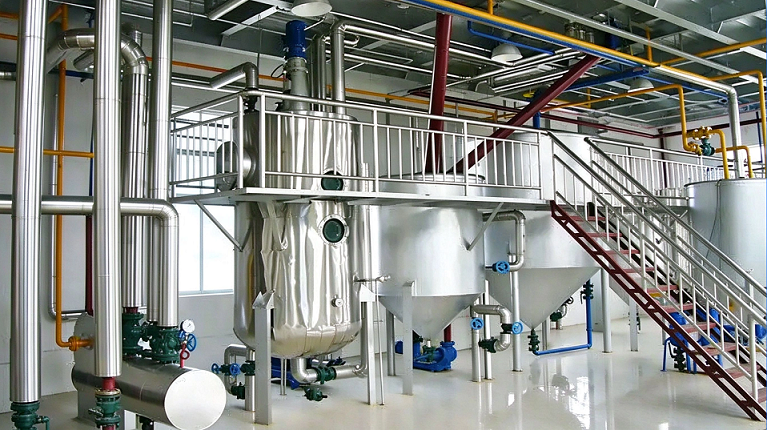
The process begins with the receipt of raw materials, followed by cleaning and drying. Rapeseed often contains impurities such as stones, stems, and leaves, which must be removed using equipment for screening, magnetic separation, and destoning. Simultaneously, the moisture content of the raw material is adjusted to an optimal range to facilitate subsequent flaking and conditioning (steaming/roasting). Although this stage may appear foundational, it directly influences oil yield and the operational stability of the equipment, serving as the essential groundwork for the entire production process.
Next, the core oil-extraction phase takes place, which generally follows one of two primary methods: mechanical pressing or solvent extraction. Mechanical pressing uses physical force to extract oil from the seeds; it is typically employed for pre-pressing or the processing of specialty oilseeds. While this method yields high-quality crude oil, the residual oil content in the remaining cake (press cake) tends to be relatively high. Solvent extraction, by contrast, utilizes food-grade solvents to extract the oil, resulting in a very low residual oil content and maximizing the value derived from the raw material. Modern, large-scale rapeseed oil plants often combine these approaches: the seeds undergo pre-pressing to extract the bulk of the oil, after which the press cake is sent to an extraction unit for a second round of oil recovery, thereby optimizing economic returns and resource utilization.
Crude oil must undergo refining before it can be sold as a finished product. Crude oil obtained via pressing or solvent extraction contains phospholipids, free fatty acids, pigments, and other minor impurities. These are removed through a series of steps, including degumming (via hydration), deacidification (via alkali refining), bleaching (via adsorption), and deodorization (via high-temperature treatment). This refining process not only enhances the color and flavor of the oil but also ensures it meets national health and quality standards. Process parameter control in the refining workshop is a key indicator of a plant’s technical sophistication, demanding both high-precision equipment and extensive operational expertise.
Within the overall production line, auxiliary systems play a vital role. Steam boilers and thermal oil heaters provide the necessary thermal energy for various processing stages; solvent recovery systems ensure the safety and economic efficiency of the extraction workshop; and wastewater and waste residue treatment units are essential for meeting environmental compliance standards. Robust auxiliary facilities are fundamental to the long-term, stable operation of a production line and serve as a key benchmark for the overall soundness of a plant’s design.
In terms of production capacity, rapeseed oil plants are typically categorized by their daily raw material processing volume, ranging from several dozen to over a thousand tons per day. The scale of operations dictates the selection and layout of equipment: smaller plants often utilize batch-refining processes, which offer greater operational flexibility, while larger plants tend to favor continuous, automated production to reduce energy consumption and labor costs per unit. When planning a new facility, companies must carefully evaluate factors such as the raw material supply radius, capital investment goals, and market demand—avoiding the pitfall of blindly pursuing large-scale or overly complex equipment.
For quality control, plants generally maintain an on-site laboratory to conduct sampling and testing of raw materials, intermediate products, and finished goods. Key parameters monitored include moisture content, oil content, residual solvent levels, acid value, and peroxide value. Modern production lines increasingly incorporate in-line monitoring instruments that provide real-time feedback and automatic adjustment of critical parameters; this helps minimize quality fluctuations caused by human error and ensures a high degree of product consistency.
Safety and environmental protection are core concerns for any rapeseed oil plant. Key safety management priorities include explosion-proof protocols for solvents in the extraction workshop, periodic inspections of pressure vessels, and dust explosion prevention measures. Regarding environmental protection, wastewater must be treated to meet discharge standards—specifically concerning chemical oxygen demand (COD)—while rapeseed meal is typically sold as a by-product to the animal feed industry. A compliant, well-run plant will always have a management system centered around these mandatory regulatory requirements.
From a technological perspective, rapeseed oil plants are currently evolving toward greater energy efficiency and intelligent manufacturing. Examples include the cascaded utilization of thermal energy, the application of processes designed to minimize residual oil in the meal, and the use of distributed control systems (DCS) for centralized operations. These advancements objectively enhance resource efficiency within the industry and help alleviate pressure on the surrounding environment; they represent a common pathway for industrial upgrading.
In general, a rapeseed oil production facility is a technically intensive and complex engineering system. It comprises several integrated sub-modules—such as pretreatment, oil extraction, refining, auxiliary systems, and quality control/laboratory testing—each of which requires rigorous engineering design. Understanding these constituent elements and process logic enables the public to develop a rational perspective on the grain and oil processing industry, fostering a more objective view when evaluating differences in product pricing and quality.
Frequently Asked Questions
Q: Must a rapeseed oil production facility include a solvent extraction process?
A: Not necessarily. Small-scale or specialty oil processing operations may rely solely on mechanical pressing to produce “physically pressed” oil. However, large-scale integrated plants typically incorporate solvent extraction equipment to minimize residual oil in the meal and maximize oil yield. These two process routes differ in terms of investment scale and the characteristics of the final product.
Q: Does the refining process completely remove the beneficial components of rapeseed oil?
A: Moderate refining is intended to remove harmful impurities and improve sensory qualities (such as taste, color, and aroma), though some natural micronutrients are inevitably lost. Modern processing methods often seek a balance between safety and nutritional content, utilizing “moderate processing” techniques to retain key nutrients.
Q: What are the primary factors affecting the oil yield of a rapeseed oil production line?
A: Factors such as raw material quality, the temperature and moisture levels during steaming and roasting, the thickness of the flaked seeds, and the duration of the extraction process all influence oil yield. In particular, the control of temperature and humidity during the steaming and roasting stage is critical, as it directly determines the extent to which the oil-bearing cells are ruptured.
Q: How do modern rapeseed oil production facilities ensure operational safety?
A: Safety is primarily maintained through explosion-proof electrical design, interlock controls for critical parameters, alarm systems for toxic or hazardous gases, and strict operational protocols. Regular hazard identification and emergency response drills are also standard management practices. Q: Which equipment performance indicators should be prioritized when selecting machinery for a factory?
A: One should consider a combination of factors, including processing capacity, energy consumption per unit of output, operational stability, and the accessibility of after-sales support. For large-scale production lines, the level of automated control and data acquisition capabilities also serve as key benchmarks for evaluating the technical sophistication of the equipment.
Post time: Oct-28-2026