

Parboiled Rice is a type of rice that has been processed by special processes such as soaking, steaming, and drying. It has the characteristics of high nutrient retention, storage resistance, and easy digestion. In recent years, with the growth of demand for healthy food and the advancement of processing technology, parboiled rice processing equipment has made significant progress in automation, energy saving, environmental protection, and process optimization. The following is the latest development of parboiled rice processing equipment:
1. Process flow and key equipment of parboiled rice processing
Parboiled rice processing mainly includes cleaning → soaking → steaming → drying → shelling → polishing → grading → packaging, and the equipment and technology in each link are innovative:
1. Pretreatment (cleaning and soaking)
High-efficiency ultrasonic cleaning technology
Replaces traditional water washing, reduces water waste (saves 30%~50% water), and removes surface microorganisms at the same time.
Combined with AI visual detection, it automatically removes moldy or impurity particles.
Intelligent soaking system
Vacuum soaking technology: shortens the soaking time (from the traditional 8-12 hours to 2-4 hours) and improves the uniformity of water penetration.
Temperature-controlled soaking: A constant temperature circulating water system (50-70°C) is used to promote the migration of nutrients (such as vitamin B1) into the rice grains.
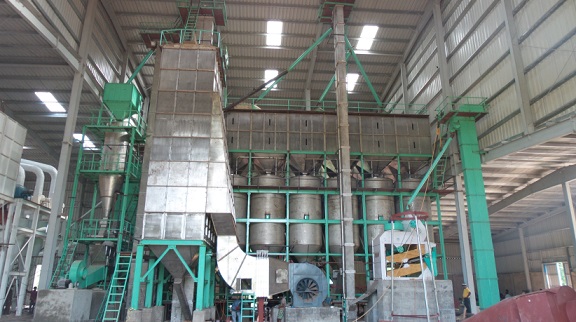
2. Cooking process
Continuous steam cooking system
Traditional batch cooking → Upgrade to spiral conveying continuous cooking to improve efficiency.
High-pressure cooking (HTST, high temperature short time): Cook at 120-130°C for 3-5 minutes to reduce nutrient loss.
Energy-saving steam recovery technology
Multi-stage heat exchanger is used to recover steam waste heat, reducing energy consumption by more than 30%.
3. Drying and cooling
Multi-stage intelligent drying
Fluidized bed drying + infrared drying: first quickly dehydrate, then slowly thaw at low temperature to prevent rice grains from bursting.
Heat pump drying technology: 40% energy saving compared to traditional hot air drying, more precise temperature control
Vacuum cooling technology
Quickly cool down after cooking to avoid rice grains sticking together.
4. Rice milling and polishing
Flexible rice milling technology
Adjust the rice milling pressure according to the hardness of the parboiled rice to reduce the broken rice rate.
Nano polishing technology
Use food-grade nano-coated polishing rollers to improve the glossiness of rice grains.
5. Intelligent sorting and packaging
AI color sorter
Identify different-colored grains and immature grains based on deep learning with an accuracy of 99.9%.
Modified atmosphere packaging (MAP)
Nitrogen filling for freshness and extending the shelf life of parboiled rice.
II. International latest technology trends
1. Full process intelligence
Digital Twin: Virtual simulation to optimize process parameters.
Remote monitoring and predictive maintenance: Real-time monitoring of equipment status through IoT to reduce fault downtime.
2. Green and low-carbon technology
Biomass energy utilization: Use rice husks to generate electricity for steam boilers.
Wastewater recycling treatment: Soaking water is recycled for fertilizer or biogas production.
3. Multifunctional integration
Modular design: The same production line can switch to produce parboiled rice, instant rice, brown rice, etc.
III. Future development direction
Ultra-high pressure processing (HPP): non-thermal processing retains more nutrients (experimental stage).
Hydrogen cooking: Japan develops a zero-carbon steamed rice production line.
Personalized nutritional fortification: adding trace elements such as iron and zinc during the soaking stage (such as the African nutritional fortified rice project).
IV. Challenges and opportunities
Challenges:
High energy consumption (steaming and drying account for more than 60% of the cost);
Small-scale enterprises find it difficult to afford the investment in intelligent equipment.
Opportunities:
Global demand for healthy food is growing (the annual growth rate of the steamed rice market is about 8%);
The demand for storable staple foods in emerging markets (Africa, Southeast Asia) is rising.
Conclusion
Steamed rice processing equipment is developing in the direction of high efficiency and energy saving, intelligent controllability, and maximization of nutrient retention. In the future, with the deep integration of clean energy and AI technology, the steamed rice industry is expected to become a high value-added track in the field of rice processing. Contact us for the latest products and technical support.
Post time: May-04-2025