

As a high-quality vegetable oil rich in unsaturated fatty acids, vitamin E, and other essential nutrients, rice bran oil has gained significant market favor alongside the growing popularity of healthy eating. The cost of production equipment varies considerably based on production capacity, the level of automation, and process complexity—a key point of interest for investors. This article examines current market price ranges for standard equipment and highlights the advantages and cost-effectiveness of solutions from FOTMA MILL, providing a valuable reference for industry investors.
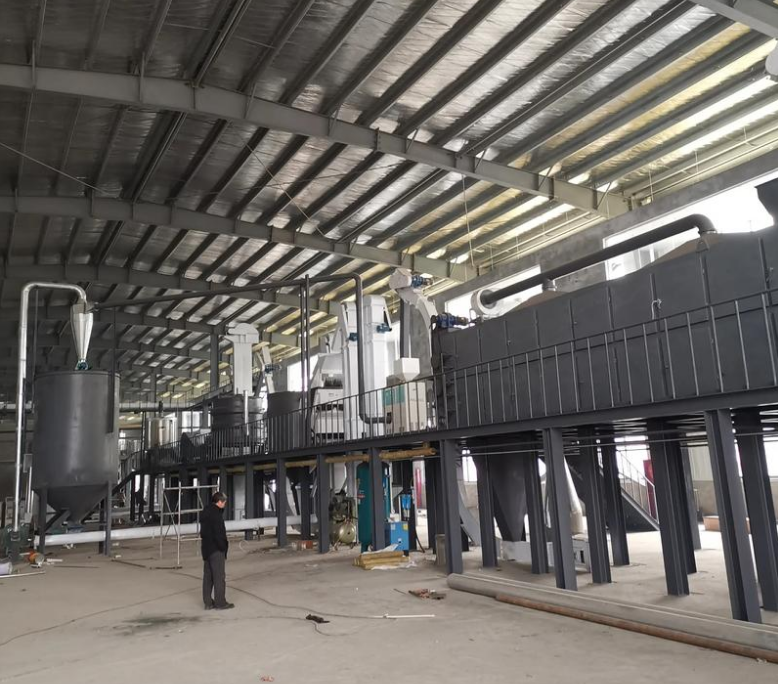
I. Understanding the Pricing Structure of Rice Bran Oil Production Equipment
The cost of rice bran oil production equipment spans a wide range, primarily driven by production capacity and process configuration. For a standard small-to-medium-sized processing plant—with a daily capacity of 20–50 tons of rice bran—the total investment typically falls between 3 million and 8 million RMB, with equipment costs accounting for over 60% of the total. Specifically:
Small-scale equipment (under 10 tons/day): Priced between 150,000 and 500,000 RMB, this category is ideal for small workshops or startups. These systems often feature semi-automated designs and utilize domestically manufactured core components (such as oil presses and filters), making them suitable for operations with limited budgets and lower capacity requirements.
Medium-scale equipment (20–50 tons/day): Priced between 2 million and 5 million RMB, these systems cover the entire production cycle, including pretreatment, pressing, solvent extraction, and refining. They offer a significantly higher degree of automation; for instance, FOTMA’s medium-scale production lines utilize PLC control systems to monitor parameters like temperature and pressure in real-time, resulting in an oil yield 3%–5% higher than that of traditional equipment.
Large-scale equipment (over 100 tons/day): With costs exceeding 8 million RMB, these systems are designed for large-scale industrial enterprises. They integrate a comprehensive five-step refining process—degumming, deacidification, bleaching, deodorization, and dewaxing—ensuring the final product meets national Grade 1 standards and satisfies the demands of the high-end market.
II. FOTMA MILL: A Benchmark for Technological Leadership and Cost Optimization
Among the many equipment suppliers in the industry, FOTMA stands out due to its deep technical expertise and comprehensive, full-chain service offerings. The advantages of their equipment are evident in three key areas:
Strong Process Adaptability: Addressing the high wax content and significant acid value fluctuations typical of rice bran oil, FOTMA has developed low-temperature dewaxing and physical distillation deacidification technologies. These processes preserve nutritional content while minimizing the risk of solvent residues. For instance, their 200-ton/day production line utilizes a multi-stage deodorization tower, raising the smoke point of the finished oil to over 230°C—meeting the standards required for frying oils.
Significant Energy Savings: By optimizing steam circulation systems and heat recovery units, FOTMA’s equipment reduces energy consumption by 15% compared to the industry average. For a plant processing 30,000 tons of rice bran annually, this translates to savings of approximately 200,000 RMB in steam costs per year.
Comprehensive Service Ecosystem: FOTMA provides a one-stop solution, covering everything from facility layout design and equipment installation/commissioning to operator training. One client reported that their 50-ton/day production line went from contract signing to full operation in just 90 days—40% faster than the industry average.
III. Return on Investment and Industry Trends
The current rice bran oil market is shifting toward high-end, refined products, with investment in refining equipment now accounting for over 40% of total capital expenditure. Taking FOTMA’s 50-ton/day production line as an example: assuming an 18% oil yield from rice bran and a finished oil price of 11,000 RMB/ton, the annual output value can reach 35.64 million RMB. After deducting costs for raw materials, energy, and labor, the net profit margin is approximately 25%, with an investment payback period of about three years. As consumer demand for healthy oils grows, high-end equipment—specifically that featuring dewaxing and degumming capabilities—will become the industry standard. Companies like FOTMA, which possess strong technical iteration capabilities, are well-positioned to capture early market advantages.
For investors, selecting an equipment supplier requires a holistic evaluation of technical maturity, after-sales support, and long-term costs. With its process adaptability, energy-saving advantages, and full-lifecycle service, FOTMA provides a reliable foundation for the upgrading of the rice bran oil industry, making it a supplier well worth considering.
Post time: Oct-26-2026