

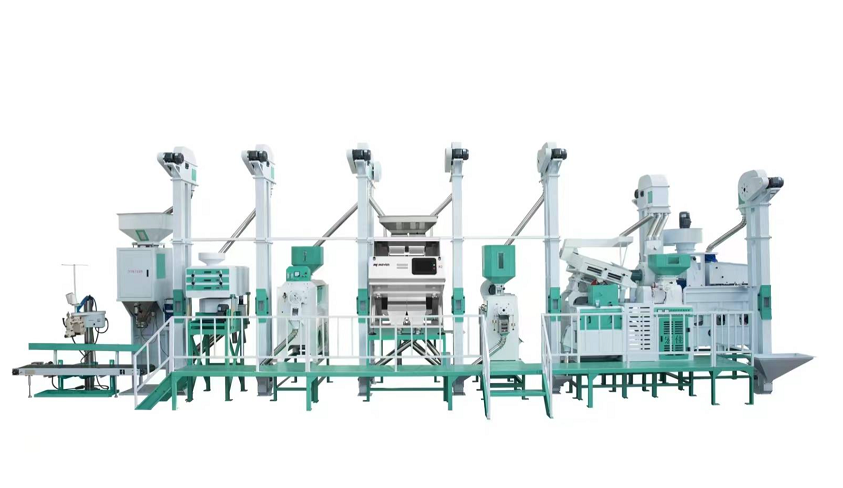
In the vast landscape of the global rice industry, parboiled rice has been steadily gaining ground due to its enhanced nutritional profile, improved storage capabilities, and unique taste. As the demand for high – quality parboiled rice grows, the need for efficient and reliable milling plants becomes more crucial. Today, we’re going to take an in – depth look at the 30 – 40 ton/day complete parboiled rice milling plant, exploring its operations, advantages, and contributions to the rice – processing sector.
The Parboiled Rice Advantage
Before delving into the milling plant, it’s essential to understand why parboiled rice is so popular. Parboiling is a hydrothermal process where paddy rice is soaked, steamed, and then dried before milling. This process has several benefits. First, it increases the nutritional value of the rice. The soaking and steaming allow the rice grains to absorb more nutrients from the bran layer, such as B – vitamins, minerals, and dietary fiber, which are usually lost during the milling of regular white rice. Second, parboiled rice has a longer shelf life. The heat treatment during parboiling kills pests and reduces the risk of mold growth, making it easier to store and transport. Third, it has a better cooking quality. Parboiled rice grains tend to be more firm and separate after cooking, with a chewier texture compared to regular white rice.
Inside the 30 – 40 Ton/Day Milling Plant
Paddy Cleaning
The first step in the milling process is paddy cleaning. The incoming paddy rice is likely to contain various impurities such as straw, stones, dust, and other debris. These impurities need to be removed as they can affect the quality of the final product and damage the milling equipment. In a 30 – 40 ton/day plant, advanced cleaning machines are used. These machines often include vibrating screens, aspirators, and destoners. The vibrating screens separate large impurities based on size, while aspirators remove lighter materials like dust and chaff by using air currents. Destoners, on the other hand, are crucial for removing stones, which can be particularly damaging to the milling machinery. By effectively cleaning the paddy at this stage, the plant ensures that only clean rice moves on to the next processing steps, which is a key factor in producing high – quality parboiled rice.
Soaking
After cleaning, the paddy enters the soaking stage. The goal of soaking is to make the paddy absorb enough water so that the starch within the grains can be properly gelatinized during the subsequent steaming process. In a modern 30 – 40 ton/day milling plant, the soaking process is carefully controlled. Temperature, pressure, and soaking time are all precisely regulated variables. For example, the soaking temperature typically ranges from 55 – 70 degrees Celsius, and the soaking time can vary from 3.5 – 4.5 hours, depending on the variety and quality of the rice. Some plants use vacuum – assisted soaking systems, which can significantly reduce the soaking time while ensuring uniform water absorption. During soaking, the paddy should absorb at least 30% water. If the water absorption is insufficient, the paddy will not be fully steamed in the next step, leading to poor – quality rice.
Steaming and Boiling
Once the paddy has absorbed enough water, it’s time for steaming. High – pressure and high – temperature steam are used to gelatinize the starch in the rice grains. This process not only changes the physical structure of the rice but also helps in preserving its nutrients. The steaming process needs to be carefully monitored to ensure that the starch is fully gelatinized without being over – cooked. The temperature, time, and uniformity of steaming are strictly controlled. When the starch gelatinization is sufficient, the processed parboiled rice has a characteristic transparent honey – colored appearance. By adjusting the cooking parameters, the plant can produce parboiled rice with different color shades, such as light, sub – dark, or dark, according to customer requirements.
Drying
After steaming, the parboiled paddy has a high moisture content, typically around 35%. The drying stage aims to reduce this moisture content to around 14%, which is the ideal level for storage and further processing. In a 30 – 40 ton/day milling plant, the drying process is often carried out using the heat from a boiler. The heat is transferred to the air through a heat exchanger, and the rice is indirectly dried. This method ensures that the dried rice has no pollution and no peculiar smell. The drying process is usually divided into two stages. The first stage is fast drying, which quickly reduces the moisture content of the paddy from more than 30% to about 20%. The second stage is slow – drying, which allows the paddy to fully slow down and reduces the waist – burst rate, thereby improving the whole – grain rate.
Cooling
Once dried, the parboiled paddy needs to be cooled before further processing. The dried paddy is sent to a vertical storage silo equipped with a ventilation fan. The fan helps to remove the remaining heat and evenly distribute the moisture within the grains. Proper cooling is essential as it helps to prevent the rice from spoiling and maintains its quality. By the end of this stage, the parboiled paddy is in an optimal condition for husking and milling.
Husking and Separation
In this stage, the husk of the dried parboiled paddy is removed using a rice hulling machine. The soaking and steaming processes have made the husk easier to remove, which also saves energy. After husking, a paddy separator is used to separate brown rice from any remaining paddy. The separator works based on the differences in specific gravity and friction coefficient between paddy, brown rice, and a mix of both. This ensures that only pure brown rice moves on to the milling stage.
Milling
Milling the parboiled rice requires a bit more care compared to regular paddy. Since the parboiled rice has been soaked and is more prone to becoming smectic, special milling techniques are employed. In a 30 – 40 ton/day plant, blowing rice millers are often used, and the rotating speed of the miller is increased. The rice bran transmission is typically pneumatic to reduce friction. The milling machines used are state – of – the – art, designed to lower the rice temperature, reduce the bran content, and minimize broken grains. This results in high – quality parboiled rice with a consistent appearance and texture.
Polishing
The final step in the milling process is polishing. Polishing the rice surface by spraying water helps to form a smooth gelatinous layer, which not only improves the appearance of the rice but also prolongs its preservation time. The polishing chamber in a modern 30 – 40 ton/day milling plant is often extended to produce top – quality rice. After passing through the polishing machine, the parboiled rice has a shiny, attractive finish, ready to be packaged and distributed.
The Significance of a 30 – 40 Ton/Day Capacity
A milling plant with a 30 – 40 ton/day capacity strikes a balance between small – scale and large – scale operations. It is large enough to meet the demands of a medium – sized market, whether it’s supplying local retailers, restaurants, or food – processing industries. At the same time, it is more manageable in terms of investment, operation, and maintenance compared to much larger plants. For entrepreneurs looking to enter the parboiled rice market or existing players looking to expand their operations, a 30 – 40 ton/day plant offers a cost – effective solution. It allows for a reasonable return on investment while still maintaining a high level of production efficiency and product quality.
Environmental and Sustainability Considerations
Modern 30 – 40 ton/day parboiled rice milling plants are also designed with environmental sustainability in mind. For example, the use of indirect drying methods, which utilize the heat from the boiler, reduces the overall energy consumption of the plant. Additionally, many plants are equipped with advanced dust – collection systems to minimize air pollution. The by – products of the milling process, such as rice husks and bran, are also often put to good use. Rice husks can be used as a source of fuel, powering the steam boilers in the plant or sold to other industries for applications like biofuel production. Rice bran can be processed to extract valuable oils and used in the production of animal feed or other food products. By efficiently managing resources and minimizing waste, these milling plants contribute to a more sustainable rice – processing industry.
In conclusion, the 30 – 40 ton/day complete parboiled rice milling plant is a sophisticated and efficient solution for producing high – quality parboiled rice. From the careful cleaning of paddy to the precise milling and polishing of the final product, every step in the process is optimized to ensure maximum quality and productivity. With its ability to meet the demands of a medium – sized market and its focus on environmental sustainability, this type of milling plant plays a significant role in the global rice industry, providing consumers with a nutritious and delicious alternative to regular white rice.
Post time: Jun-12-2025