

With social development and technological progress, modern processing equipment has gradually become an important means for various industries to improve production efficiency. In the grain processing industry, automated and intelligent rice milling equipment is an indispensable part. This article will provide a detailed review of a 50-ton rice milling production line, aiming to help users better understand its composition, performance, and considerations when purchasing it.
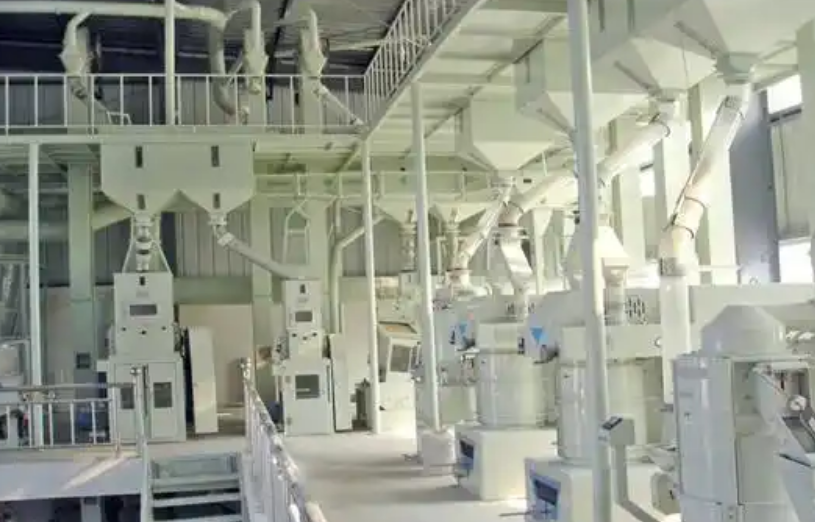
Section 1: Detailed Composition of Automated and Intelligent Processing Plant Equipment
This 50-ton rice milling production line mainly consists of a feeding system, a huller, a rice milling machine, a polishing machine, a grading screen, and a packaging machine. The huller is one of the core components of the entire production line, effectively separating paddy husks from rice grains. The rice milling machine, through different grinding processes, turns brown rice into white rice. The polishing machine is used to improve the gloss and quality of the rice. In addition, the grading screen is used to screen the finished rice, ensuring product uniformity and quality consistency. Finally, the packaging machine is responsible for packaging the finished rice for easy storage and transportation.
Paragraph Two: Selection Should Be Based on Production Capacity Needs
When choosing a 50-ton rice milling production line, the first thing to clarify is your own production scale and capacity requirements. For enterprises with an annual output of several thousand tons or more, a daily production capacity of 50 tons may only be a basic configuration, but for some small processing plants, such production capacity is already quite considerable.
Therefore, before purchasing, you must fully assess your market needs to ensure that the selected equipment can meet current production requirements without wasting resources.
Paragraph Three: FOTMA MILL Quality Management
Among numerous rice milling equipment suppliers, FOTMA MILL has won widespread market recognition for its strict quality management system and excellent service. The company not only possesses advanced production equipment and technology, but also has established a comprehensive quality control system from raw material procurement to product delivery, ensuring that every product leaving the factory meets industry standards or even higher levels. At the same time, FOTMA also provides a comprehensive after-sales service system, including installation and commissioning, technical training, and subsequent maintenance, providing customers with all-round support.
Paragraph 4: FOTMA MILL’s Process Flow
FOTMA MILL’s 50-ton rice milling production line employs an advanced process flow design. From the moment the paddy enters the production line, it undergoes multiple steps including hulling, milling, and polishing, ultimately producing high-quality rice. Throughout the process, the equipment seamlessly integrates, significantly improving production efficiency. Particularly in the hulling and milling stages, multi-stage grinding technology is used to ensure the integrity and taste of the rice. Furthermore, the intelligent control system allows operators to easily adjust equipment parameters for precise control, further enhancing product quality.
Paragraph 5: Price and After-Sales Service
For any business, cost control is an indispensable aspect of operation. Regarding price, FOTMA MILL offers a variety of configuration options for customers to choose from, allowing for flexible customization based on their budget. Even so, compared to other similar products on the market, our prices remain highly competitive. More importantly, the comprehensive after-sales service provided by the company eliminates concerns about potential problems. Whether it’s equipment malfunction repair or routine maintenance consultation, timely and effective responses are provided, ensuring smooth production.
In conclusion, the 50-ton rice milling production line, as a key piece of equipment in the modern grain processing industry, brings significant economic and social benefits to enterprises through its high efficiency and stable performance. By rationally selecting and correctly using this type of advanced equipment, not only can production efficiency be greatly improved, but product quality can also be effectively guaranteed, helping enterprises stand out in fierce market competition.
Post time: May-20-2026