

With the advancement of agricultural modernization and the development of the grain processing industry, small-scale rice milling machines have been widely used in rural areas and small to medium-sized grain processing plants. These machines are characterized by their compact structure, simple operation, low investment, and quick returns, making them particularly suitable for small to medium-sized rice processing needs. This article will analyze the production process of a small-scale rice milling machine production line in detail to help users better understand its working principles and application advantages.
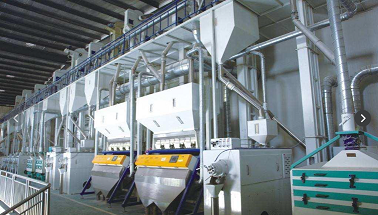
I. Raw Material Receiving and Cleaning Stage
The first step in a small-scale rice milling machine production line is the receiving and cleaning of raw materials. Before entering the processing stage, rice paddies usually contain impurities such as soil, stones, metal fragments, and straw. To ensure the safe operation of subsequent processing equipment and the quality of the finished rice, preliminary cleaning of the rice paddies is necessary.
This stage mainly uses equipment such as vibrating screens, destoners, and magnetic separators to remove impurities through screening, air separation, and gravity separation. Only after the cleaned rice paddies reach a certain level of purity can they proceed to the next process.
II. Hulling Stage
After cleaning, the paddy rice is fed into a hulling machine for dehulling. The outer layer of the paddy rice is covered with a hard husk (commonly known as the “husk”), which needs to be removed mechanically. Common hulling equipment includes two types: roller hullers and disc hullers.
During this process, the paddy rice is separated from the husk by the friction between the high-speed rotating rollers or discs, forming brown rice. Simultaneously, the generated husks can be recycled through a specialized collection system for power generation or reuse as fuel.
III. Paddy-Hulling Separation Stage
The product after hulling is a mixture of brown rice and unhulled paddy rice, which needs to be separated by a paddy-hulling separator. This equipment utilizes the differences in density and size between brown rice and paddy rice, effectively separating them through airflow or screen vibration.
The separated brown rice proceeds to the next stage of processing, while the unhulled paddy rice is returned to the hulling machine for further dehulling, improving overall processing efficiency and rice yield.
IV. Rice Milling Stage
Brown rice contains more bran and germ, resulting in a coarser texture. Therefore, it needs further milling to remove these parts, transforming it into white rice that meets edible standards. This process is completed by a rice milling machine.
Small rice milling machines often use iron roller milling machines or sand roller milling machines. Through the squeezing and friction between the high-speed rotating milling rollers and the rice sieve, the bran and germ on the surface of the brown rice are gradually removed, making the rice grains white and smooth.
The milling time and pressure can be adjusted according to different rice varieties and customer requirements to control the degree of milling.
V. Rice Grading and Polishing (Optional)
For high-quality rice products, grading and polishing are also required. Rice grading machines separate rice grains of different sizes and integrity, facilitating subsequent packaging and sales. Polishing machines use water spray or dry polishing techniques to make the rice grain surface smoother, improving appearance quality and helping to extend shelf life.
VI. Finished Product Conveying and Packaging
After the above processing steps, the rice is finished product and needs to be centrally transported to the metering and packaging system via conveyor belt. Modern small-scale rice milling production lines are mostly equipped with automatic weighing, quantitative bagging, and sealing functions, realizing integrated operation from processing to packaging, greatly improving production efficiency.
FOTMA MILL is a company specializing in the research and development and manufacturing of grain and oil machinery equipment, with extensive experience in rice milling equipment production. The company provides complete rice milling production line solutions from small to large, widely used in various grain processing plants and trusted by users. If you are looking for efficient, energy-saving, and environmentally friendly small-scale rice milling machine sets, please contact FOTMA MILL. We will provide you with professional technical support and high-quality service.
Post time: May-31-2026