

When configuring a 30-ton rice milling system, multiple factors should be considered to ensure efficient operation and long-term stability.
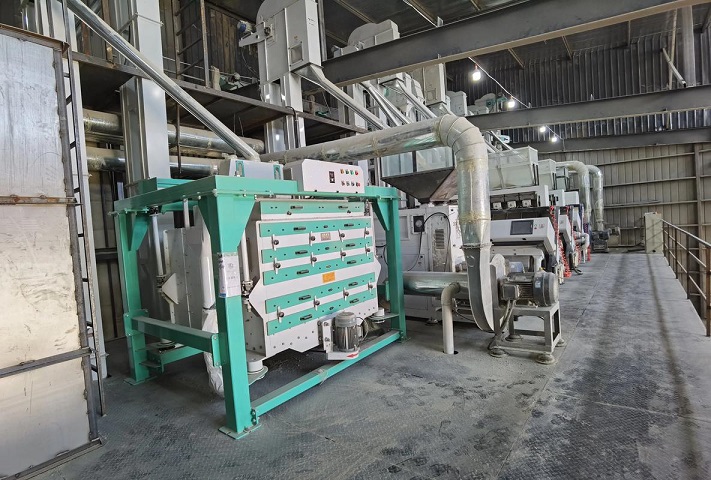
First, selecting a high-quality rice milling machine is crucial; such equipment typically offers higher processing precision and a longer service life. Second, auxiliary equipment such as magnetic separators, destoners, and screening machines in the cleaning process are also essential. These devices effectively remove impurities from the paddy rice, ensuring the quality of the final product. Furthermore, an automated control system is an indispensable part of a modern rice milling production line. It not only improves production efficiency but also reduces labor costs and minimizes human error. For a production capacity of 30 tons/day, it is recommended to use at least two rice milling machines, equipped with corresponding auxiliary equipment, to enable continuous operation and rapid switching in case of failure.
How Ordinary People Should Choose the Capacity Size
For ordinary people new to rice milling equipment, choosing the appropriate capacity size requires a comprehensive consideration of their own circumstances and market demand. First, assess your own raw material supply situation, including the stability of rice sources and the impact of seasonal changes on yield. Second, research local market demand to understand the surrounding consumers’ needs for rice and their quality preferences, thus determining whether it’s necessary to expand production. In addition, consider factors such as equipment investment costs, operating and maintenance expenses, and potential profit margins. Generally, a capacity of 30 tons/day is suitable for small-scale processing plants or family workshops of a certain size, meeting daily processing needs without wasting resources. Therefore, ordinary people should weigh the above factors when choosing equipment and select the most suitable configuration for their situation.
Preliminary Preparation
Before purchasing a 30-ton rice milling machine, thorough preliminary preparation is crucial. First, plan the site layout in detail, ensuring sufficient space for equipment placement and adequate passage and operating areas, while also considering infrastructure construction such as ventilation and drainage. Second, conduct in-depth research on equipment suppliers, choosing a reputable brand like FOTMA MILL with excellent after-sales service. When signing a contract, all technical parameters, delivery deadlines, installation and commissioning services, and training support should be clearly defined to ensure all details are documented. Furthermore, relevant permits, such as business licenses and environmental approvals, must be obtained in advance to guarantee legal and compliant business operations. Finally, a professional operation and maintenance team should be established, receiving regular professional training to familiarize themselves with the equipment’s working principles and daily maintenance knowledge, laying a solid foundation for smooth production in the future.
Industry Prospects and Profits
In recent years, with the continuous improvement of people’s living standards, the demand for high-quality rice has been increasing, bringing broad development opportunities to the rice milling industry. Especially for enterprises using modern technology and equipment, their products are more competitive in the market. On the one hand, high-quality rice is favored by consumers for its unique taste and nutritional value; on the other hand, refined management and scientific planting can significantly improve the quality of raw materials, thereby increasing the value of the finished product. Regarding profit margins, although the initial investment is large, as production scale expands and brand influence strengthens, unit costs will gradually decrease, and profitability will increase accordingly. Of course, intense market competition also means the need for continuous innovation in marketing strategies and expansion of sales channels, such as developing e-commerce platforms and participating in agricultural product trade fairs, to attract a wider customer base. Overall, as long as market trends are accurately grasped, costs are reasonably controlled, and brand building is strengthened, the prospects for the rice milling industry remain very promising.
The above analysis shows that, considering equipment configuration, capacity selection, and market prospects, FOTMA MILL’s 30-ton rice milling equipment possesses high practical value and development potential.
Post time: Jul-09-2026