

Rapeseed oil, rich in unsaturated fatty acids, vitamin E, and other nutrients, is one of my country’s important edible oil varieties. To meet the production needs of oil mills of different sizes, rapeseed oil production lines mainly consist of raw material pretreatment, pressing, filtration, and refining systems. Equipment configuration varies depending on the production scale (small workshops, medium-sized oil mills, large factories) and oil grade (crude oil, aromatic rapeseed oil, first-grade refined oil).
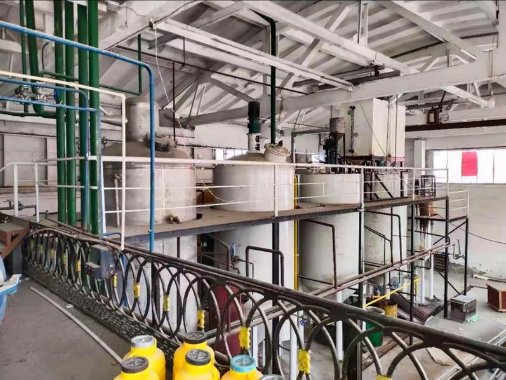
Raw Material Pretreatment Section:
Vibrating Cleaning Screen: Removes large, medium, and small impurities such as straw, weeds, and mud lumps from the rapeseed.
Gravity Destoner: Separates stones and mud lumps with similar volume but different specific gravity to the rapeseed.
Magnetic Separator: Adsorbs metal impurities such as iron filings and nails, protecting subsequent equipment.
Toothed Roller Crusher: Crushes the rapeseed into 2-4 pieces, increasing surface area.
**Rice Roller:** Presses crushed rapeseed into thin flakes of approximately 0.3mm, disrupting cell structure and facilitating oil extraction.
**Small Drum Roasting Pan:** Directly heats and stirs the rapeseed, controlling moisture and temperature (100-120℃).
**Medium/Large Vertical/Horizontal Steam Roasting Pan:** Uses steam heating with precise temperature and water control, denaturing proteins and causing oil accumulation.
Oil Extraction Section:
The pressing method (physical oil extraction) uses mechanical force to squeeze the oil out of the oilseeds. The screw oil press relies on the rotating screw to generate immense continuous pressure within the pressing chamber, extracting the oil. Continuous production, high efficiency, low labor intensity, suitable for large-scale production. Multi-functional, it can process various oilseeds without using chemical solvents, avoiding organic solvent residues and largely preserving the natural nutrients in rapeseed, such as polyunsaturated fatty acids, proteins, and trace elements. This process is suitable for small and medium-sized oil mills or high-end edible oil production, and the product is often called “traditional pressed oil” or “physically pressed oil.” Applicable scenarios: Large and medium-sized oil mills seeking efficient and continuous commercial production.
Hydraulic oil presses utilize the static pressure generated by a hydraulic system to intermittently and under high pressure extrude oilseeds. Advantages: Gentle pressing process, high oil yield, pure oil, better preservation of original aroma and nutrients, suitable for “cold pressing” processes. Applicable scenarios: Small oil mills, individual processing, high-end cold-pressed oil production.
Leaching method (chemical oil extraction)
This method uses food-grade solvents (such as No. 6 light gasoline) to soak and spray the oilseeds, dissolving the oil through high-temperature extraction. The solvent is then recovered through evaporation and stripping to obtain crude oil. This process has a high oil yield and low residual oil rate (can be reduced to below 1%), resulting in significant economic benefits and is the mainstream industrial oil extraction method for large oil mills.
Refining system (producing national standard edible oil):
Degumming: Removes colloidal impurities such as phospholipids. Deacidification: Neutralizes free fatty acids.
Decolorization: Adsorbs pigments using activated clay.
Deodorization: Removes off-odor substances using high-temperature steam distillation.
Dewaxing (optional): Improves low-temperature clarity.
Refining equipment is available in batch (suitable for daily processing up to 20 tons), semi-continuous, and fully continuous types (suitable for large oil plants), enabling automated control and improving efficiency and oil stability.
Reference Configurations for Production Lines of Different Sizes:
1. Small Workshops (Daily Processing Capacity 1-5 Tons): Vibrating Screen → Drum Roasting Pan → Screw Press → Plate and Frame Filter/Centrifuge → Finished Oil Tank
2. Medium-Sized Oil Mills (Daily Processing Capacity 10-30 Tons): Cleaning Screen + Destoner → Crusher → Rolling Mill → Steam Roasting Pan → Screw Press → Leaf Filter → Semi-Continuous Refining Equipment → Oil Storage Tank
3. Large Factories (Daily Processing Capacity Over 30 Tons): Fully Automatic Pre-treatment Line → Pre-press → Extractor (Horizontal Rotary/Crawler Type) → Evaporation/Stripping System → Fully Continuous Refining Equipment → Fully Automatic Packaging Line
Determine Your Scale First, Then Select Equipment: Clearly define your target daily processing capacity. Define your product positioning: Do you want to produce richly flavored “strong aroma” hot-pressed oil, or “cold-pressed oil” with higher nutritional value, or high-yield, low-cost oil produced through solvent extraction for large-scale production? We will customize a specific Rapeseed Oil Pressing Equipment list and quotation plan for you based on your daily processing capacity and budget.
Post time: Apr-20-2026