

The Economic Impact of Process Parameter Optimization on 50-Ton Rice Milling Lines
As a key segment in the grain processing industry, the economic efficiency and productivity of rice milling production lines directly determine a company’s market competitiveness. This paper examines the price ranges of 50-ton rice milling production lines of varying configurations, as well as how optimizing process parameters affects overall line performance. Drawing on market research and existing literature, the analysis focuses on cost-effectiveness and process parameter tuning.
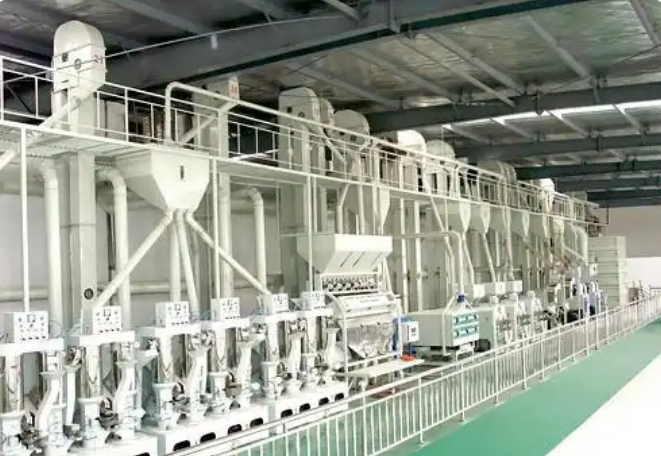
1. Market Research and Price Range Analysis
Prices for rice milling production lines vary widely based on capacity. Small-scale lines (under 50 tons per day) typically cost between 150,000 and 250,000 RMB. Medium-scale lines (50 to 100 tons per day) range from 250,000 to 1,000,000 RMB. Large-scale lines (over 100 tons per day) generally fall between 1,000,000 and 1,500,000 RMB. These figures cover equipment purchase, installation, commissioning, and initial operational setup costs.
2. Importance of Process Parameter Optimization
Optimizing process parameters is critical to improving the economic returns of rice milling lines. Properly calibrated settings boost productivity, cut energy use, and extend equipment service life. Major factors in parameter optimization include:
Material pre-treatment: Appropriate pre-processing reduces energy consumption and material loss during later stages, while raising final product yield.
Milling pressure control: Precise pressure regulation maximizes rice output without compromising quality.
Air separation system optimization: An efficient air classifier removes impurities and recovers partially separated grains, improving resource utilization.
Automated control systems: Advanced automation enables precise process control, minimizes human error, and further enhances productivity and product consistency.
3. Data-Driven Cost-Benefit Analysis
A real-world case analysis was conducted to quantify the economic benefits of parameter optimization. Under identical production conditions, lines with optimized parameters reduced energy consumption by an average of 15% and increased product yield by roughly 5%. For the same output volume, optimized operations directly translate to higher profit margins for processors.
4. Conclusion and Future Outlook
Reasonable process parameter settings significantly improve the economic performance of 50-ton rice milling lines across different capacity levels. Scientific adjustments boost efficiency, lower energy use, and extend equipment durability. Future research should explore integrating big data and artificial intelligence to enable intelligent, real-time optimization of rice milling parameters, achieving superior technical and economic outcomes. Contact us to start your project and save your money!
Post time: May-09-2026