

Industry Development Drives Diverse Demands for Rice Milling Equipment
As China’s grain processing industry upgrades towards large-scale and refined operations, the demands for rice milling equipment from different types of grain processing entities are gradually diverging. Large-scale production entities such as large rice mills require complete sets of equipment with high processing capacity and a high degree of automation to meet the requirements of standardized production and digital management; small and medium-sized processing entities prioritize the cost-effectiveness and ease of operation of the equipment, balancing capacity and input costs; farmers in remote areas require equipment that is portable, energy-efficient, and easy to maintain, adaptable to limited production conditions. Public data shows that the product segmentation of the domestic rice milling machinery market continues to improve, covering different processing needs ranging from several tons to hundreds of tons per day.
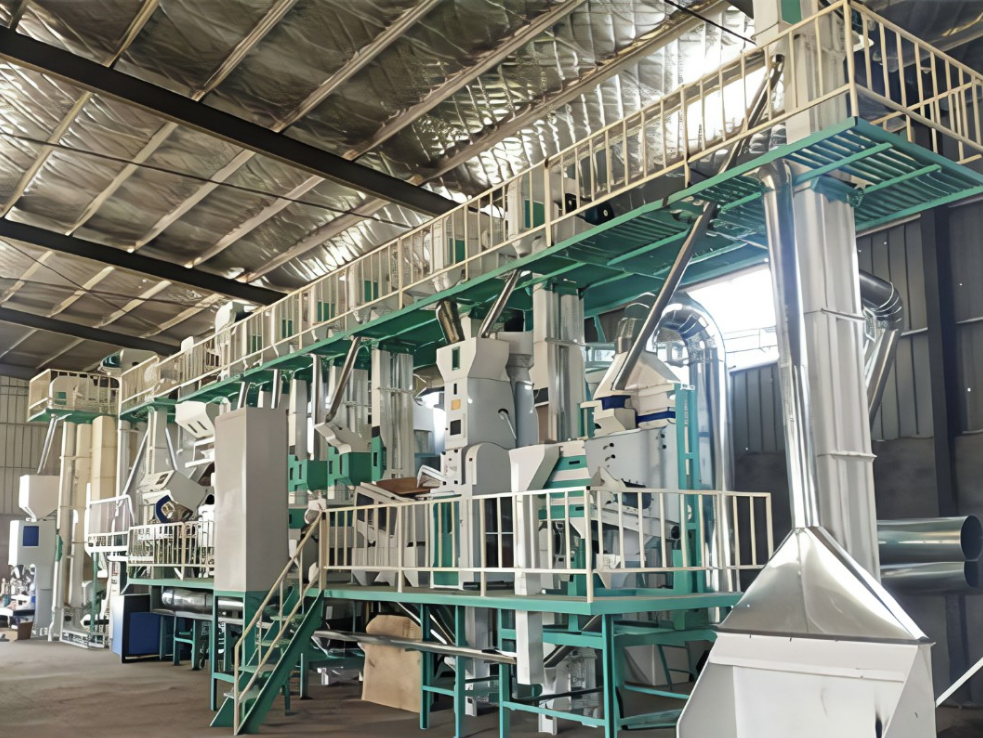
Equipment Categories Cover Diverse Processing Scenarios
Current mainstream rice milling equipment can be used in various scenarios. To meet the large-scale production needs of large rice mills, complete rice milling equipment consists of multiple functional units including paddy cleaning, hulling, milling, polishing, color sorting, and packaging. These units are seamlessly integrated through an intelligent control system, forming a complete automated production line capable of processing tens or even hundreds of tons of paddy per day. This effectively ensures product quality stability and reduces energy consumption per unit of production. Fully automatic intelligent rice milling machines integrate IoT, AI, and big data technologies. They can identify parameters such as paddy variety and moisture content using sensors, automatically adjusting the processing technology to increase rice yield by 3%-5%. They also support remote monitoring and fault diagnosis, enabling unattended intelligent production. New rice milling machines optimize the milling roller structure and airflow sorting technology, reducing broken rice rate by 20% and energy consumption by 15% compared to traditional equipment. The user interface features a one-button design, requiring no professional training, making it suitable for small and medium-sized processing operations. Semi-automatic rice milling machines feature a lightweight design, simple structure, and easy maintenance. They can operate stably in areas with unstable power supply, making them suitable for the scattered processing needs of small farmers in remote areas.
Quality and Service Guarantee a Better User Experience
FOTMA MILL, a manufacturer deeply rooted in the rice milling machinery industry, strictly adheres to the ISO9001 quality management system. From raw material procurement and parts processing to finished product assembly and testing, the entire process is meticulously managed. Simultaneously, the company implements various environmental protection requirements, obtaining relevant environmental permits and certifications, ensuring its products meet green production standards. The company collaborates with numerous domestic agricultural research institutions to optimize equipment adaptability for rice varieties specific to the hilly regions of southern China. It has also built a service network covering multiple provinces, enabling 24-hour response to equipment malfunction reports and on-site problem resolution within 48 hours, taking into account the seasonal nature of agricultural production. Regular equipment operation and maintenance training helps users improve equipment efficiency. Many users have reported that the company’s equipment is durable, has a low failure rate, and is easy to operate, effectively reducing the overall cost of grain processing.
Equipment Selection Guidelines for Different Processing Entities
Large-scale production entities such as large state-owned grain depots and chain grain processing groups can prioritize fully automated intelligent complete sets of rice milling equipment, suitable for daily processing needs of hundreds of tons or more, meeting regulatory requirements such as production data traceability and food traceability. Rural cooperatives, family farms, and other new agricultural business entities can choose suitable small- to medium-sized equipment based on their production capacity, balancing input costs and processing efficiency to achieve a value-added closed loop of self-production and self-processing of agricultural products. Individual processors and grain and oil dealers can choose portable equipment as mobile processing platforms to serve surrounding farmers. Specialty agricultural product growers can choose intelligent equipment that supports customized processing parameters to maximize the preservation of the nutritional components and flavor of specialty rice, creating a differentiated product advantage. Farmers in remote mountainous areas can choose semi-automatic rice milling equipment to complete rice processing at their doorstep, reducing transportation costs.
Q: What dimensions should large rice mills focus on when choosing a complete set of rice milling equipment?
A: First, it is necessary to confirm whether the daily processing capacity of the equipment matches the production scale. Second, attention should be paid to the core performance indicators of the equipment, such as the level of automation, rice yield, and energy consumption. At the same time, the production qualifications and environmental compliance of the production enterprise should be verified, and the coverage of supporting services should be understood to ensure the stability of subsequent production.
Post time: Jun-10-2026