

Preparatory Work Before Starting the Rice Processing Equipment:
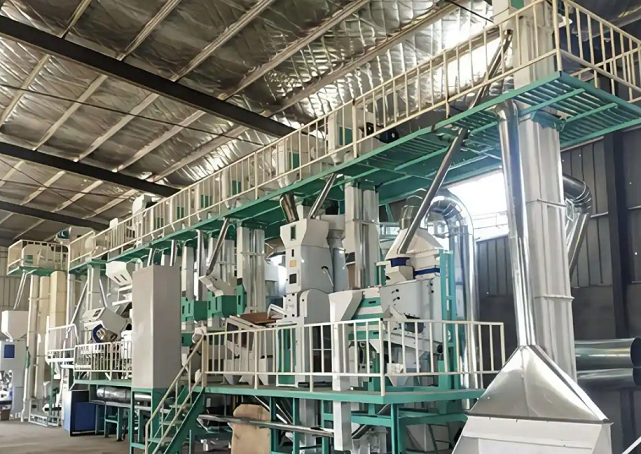
(I) Thoroughly understand the quality of the raw grain and the finished product to be processed, and take appropriate measures to process raw grain that does not meet quality requirements.
(II) Inspect the condition of all machine parts, the dust collection system, and electrical control equipment. Repair or replace any damaged parts.
(III) Check all equipment inlets and pipes for blockages.
(IV) Manually rotate all rotating parts of the machine to check the lubrication of each bearing.
(V) Regularly check the tension and joint tightness of all drive belts (V-belts and grain conveyor belts). Correct any problems.
(VI) Check the unobstructed flow of the sieve holes, the tension of the sieve surface, and the degree of wear on the sieve surface. Correct or replace any non-compliant parts.
(VII) For newly repaired machinery, check for any tools or parts left inside the machine.
(VIII) Obtain all necessary spare parts and materials in advance.
(IX) In case of inventory clearance or batch change, remove all accumulated grains from warehouse equipment and pipelines.
(X) Check the oil level in the gearbox. If insufficient, add oil promptly.
(XI) Check all glass tubes for damage. Replace any damaged tubes.
(XII) Thoroughly remove minerals from the magnetic separator.
(XIII) In addition to the above, operators at each stage should perform the following procedures depending on the process:
I. Cleaning Procedure:
Raw material cleaning is the first step in rice milling. It mainly includes preliminary cleaning and destoning. Using appropriate equipment, a suitable process route, and proper methods, impurities mixed into the rice are removed to ensure safe production and the quality of the finished product. If impurities are not properly removed, it will have extremely adverse consequences for rice processing, namely, increasing the processing burden, damaging machinery and affecting equipment efficiency, reducing output, and decreasing the purity of the rice, thus impairing the quality of the finished product. Therefore, in the grain processing production process, doing a good job in impurity removal, and making every effort to reduce the impurity content and improve the purity of rice, is a very important task.
(I) In grain processing technology, there are also large, small, and light impurities. Impurities that remain on a 5.0 mm diameter round hole sieve are called large impurities; substances that pass through a 2.0 mm diameter round hole sieve are called small impurities.
(II) The gravity destoner is mainly used to remove stones from grains. It includes components such as a feed hopper, flow regulation mechanism, and guide control plate. The sieve surface (fish scale plate) can automatically select and discharge stones using two balanced triangular zones and two stone outlets. It is a crucial link in controlling the grain content in the stones and is directly related to the destone removal efficiency. The air supply system of the destoner mainly consists of two parts: a fan and a uniform air distribution device. The quality of automatic material separation is closely related to the process effect of the equipment. In production practice, the flow rate of the destoner is crucial; too high or too low a flow rate will reduce the destone removal efficiency.
The airflow adjustment of the destoner can be determined based on the movement of the material on the screen surface and the quality of the material at both outlets.
(III) High-speed cleaning screens are a type of body vibration frequency, widely used in rice milling to screen grain impurities. They mainly consist of a feeding mechanism, a suction device, a vibrator, and a support mechanism. Flow rate is one of the main factors affecting the small wheel. Generally, when the flow rate is high, the material is difficult to jump due to the thick flow layer. Therefore, the cleaning efficiency is reduced, affecting production efficiency when the raw grain contains too many impurities.
(IV) Operation, maintenance, and management of the cleaning destoner
1. During operation, ensure the screen surface is installed flat and taut. The screen body must not be tilted. The length and angle of the hangers or support rods must be consistent to avoid uneven material flow on the screen surface, or even breakage of the hangers or support rods.
2. Strictly prevent sudden changes in flow rate. The air inlet and other components of the fish-scale screen surface are airflow components and must be kept unobstructed at all times. When the fish-scale screen is clogged, it can be cleaned with a wire brush; do not tap it.
3. The screen surface must be evenly tensioned on the screen cabinet, with consistent tension in both the horizontal and vertical directions. Otherwise, it will affect the screening efficiency and the service life of the screen surface. A comprehensive inspection of the equipment is necessary before operation.
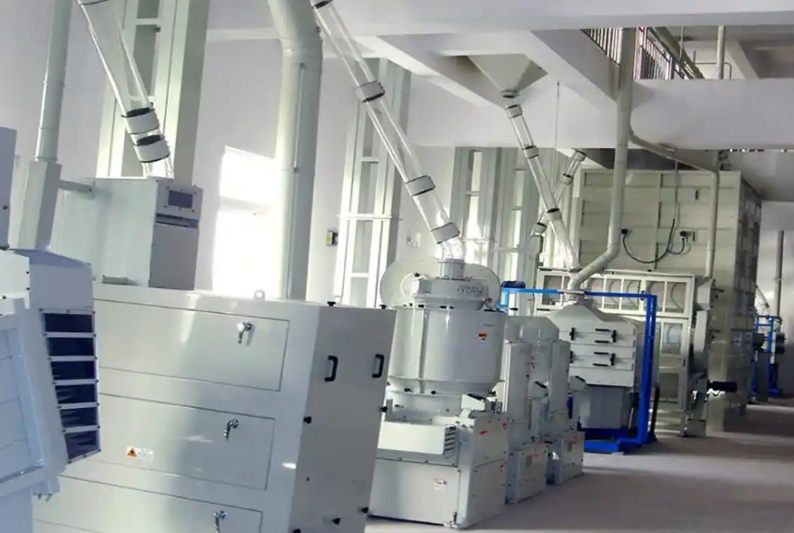
(I) The quality of the rice hulling process is closely related to the quality, yield, and output of the finished product. Therefore, during rice hulling, it is necessary to keep the rice grains as intact as possible and reduce grain breakage to improve the rice yield. The smooth surface of the brown rice should be avoided as much as possible to improve the separation of paddy and brown rice. A high and stable hulling rate should also be maintained to increase hourly output. At the same time, it is essential to save power and reduce material consumption to lower processing costs. Therefore, we should select and use rice hulling equipment appropriately according to the processing characteristics of rice to ensure good processing results.
(II) The rice huller and its structure are generally composed of a feeding mechanism, rubber rollers, a roller gap adjustment mechanism, a transmission mechanism, and a suction separation device. During operation, the rice is dehulled in the working area of the two rollers through the transmission of the feeding mechanism. The mixture then flows through the bran separation device, where the bran is separated first, and then discharged from the machine. The working distance between the two rubber rollers is called the roller gap. During operation, a larger roller gap results in lower pressure between the rollers; conversely, a smaller roller gap results in higher pressure. Under normal working conditions, the required roller pressure is generally around 5 kg/cm. Therefore, to ensure the necessary pressure during operation, a roller gap or roller pressure adjustment mechanism must be provided to select a reasonable roller gap at any time, maintaining a certain pressure of the rubber rollers on the rice grains, thereby achieving a certain dehulling effect. Therefore, the rice huller has a high dehulling rate. However, this is accompanied by an increase in broken rice rate and power consumption. When the roller gap is too small or the roller pressure is too large, black rice grains often appear, due to the extensive wear of the rubber rollers. The roller gap is typically around 0.7 mm. In production, it is usually determined based on the appropriate hulling rate. The hulling rate is generally maintained at around 75%-85%.
(III) Before starting the machine, familiarize yourself with the raw grain conditions, check the purity of the cleaned grain, determine the operating method, and perform a balance check on newly installed rubber rollers. Check whether each component is functioning properly, whether any parts are loose, whether the belt tension is appropriate, and determine the diameter of the fast and slow rollers. The diameter of the fast roller can be slightly larger than that of the slow roller, but the maximum should not exceed 4 mm.
(IV) Equipment Maintenance and Management of the Rice Hulling Machine
1. During operation and management, it is strictly forbidden for the rubber rollers to come into contact with mineral oil (gasoline, diesel, engine oil), otherwise the rubber layer will be corroded.
2. Because the rubber is easily oxidized and deteriorates, losing elasticity and hardening, it must be placed in a cool place to avoid heat and sunlight. When placing it, the rollers should be vertical, not horizontally stacked, to prevent uneven hardness and elasticity of the rubber surface. The storage area should be dry and free from moisture.
3. To prevent prolonged continuous use of the rubber rollers, spare rollers should be provided during production for rotation during shift changes.
4. Replace easily worn parts of the equipment promptly. Ensure proper installation during replacement to prevent misalignment.
5. Pay attention to lubrication of the transmission components to ensure normal operation.
6. Regularly check for wear on the rubber rollers. If any defects such as unevenness, grooving, or roughening are found on the surface of the rubber rollers, immediately identify the cause and correct it.
III. Operation and Maintenance Management of Rice and Grain Separation
1. Start the machine before feeding material, and cut off the feed before shutting down.
2. Adjust the spring on the equalization disc to prevent material from overflowing and ensure even distribution into the feed pipe.
3. Adjust the uniformity of material flow on each separation plate: Fill the separation plate with material to approximately 10mm, then stop the machine. Check the uniformity of material flow through the observation window of the discharge device. If the thickness of each layer is inconsistent, adjust the baffles in the feed pipe and adjust the lateral inclination angle of the screen body.
4. Adjusting Output and Quality: First, loosen the two fastening handles and rotate the lifting handle to adjust the lateral inclination angle of the screen body. A larger lateral inclination angle results in a thinner material layer in the clean/rough rice zone and a thicker material layer in the hulling zone; a smaller lateral inclination angle has the opposite effect. Aim for a clean/rough rice layer of approximately 10mm. After adjustment, tighten the two fastening handles and adjust the position of the two baffles in the discharge device. Second, if the first step does not achieve the desired result, adjust the two adjusting screws in the eccentric device. Shortening the screws will thin the material layer in the clean/rough rice zone, while lengthening them will thicken it.
5. The adjusting flap in the discharge device should be closed before starting and stopping the machine to allow impure brown rice to flow back. Move the two baffles (clean/rough rice baffle and hulling baffle) to achieve the optimal processing effect before opening the flap. 6. Precautions after normal machine operation: Regularly check the quality of cleaned hulled and rehulled rice. Adjust the positions of the cleaned hulling and rehulling baffles appropriately to ensure compliance with national standards and improve cleaned hulling output.
7. Regularly check the consistency of separation quality on each separation plate. If inconsistency is found on any layer, first check if the feed inlet is blocked by foreign objects, then adjust the baffles in the feed pipe to ensure consistent flow on each separation plate. Depending on the amount of impurities in the feed mixture, clean the separation plates with a wire brush every 7-15 days.
8. Check the feeding situation to ensure uniform feeding. Maintain a certain amount of material in the hopper above the feed inlet to ensure uniform feeding. If the feed of the rice-hulled mixture is insufficient, the material on the separation plate will inevitably rise along the protrusions, affecting the cleaned hulling quality. Increase the lateral tilt angle. Conversely, excessive feeding will affect the rehulling quality. Control the hulling rate of the rice-hulled mixture entering the machine to 85%-90%, with a husk content of less than 0.8%.
IV. Rice Milling and Finished Product Processing
The requirements for rice milling are to minimize broken rice, increase yield, purity, and output, reduce costs, and ensure safety, while ensuring the finished rice meets the prescribed standards. During the milling process, it is essential to strictly adhere to national rice grading standards and retain an appropriate amount of rice bran. This is not only beneficial for providing nutrition but also significant for food conservation. In particular, achieving optimal rice milling requires a comprehensive understanding and mastery of the processing characteristics of brown rice, the principles of rice milling, the equipment used, and advanced operating methods. This ensures the highest possible rice output while maintaining the precision of the finished product. High-quality rice grains generally withstand a pressure of 3-6 kg, which can be adjusted appropriately. The higher the precision required for the finished product, the greater the pressure required inside the rice milling machine. Excessive pressure can lead to a large amount of broken rice, while insufficient pressure can result in uneven milling. Therefore, flexible adjustments are necessary. However, white rice often contains excessive broken rice and bran due to various reasons, affecting the quality of the finished product. Therefore, it is essential to process and grade the finished product. Primarily based on finished product quality requirements, to separate broken rice exceeding specified standards, our factory uses a flat rotary screen. Considering the possibility of screen breakage in rice milling machines, the lower screen surface supports small rubber balls for cleaning the upper screen surface. It is suspended from the screen frame by four rods and rotates in a planar motion driven by an eccentric transmission mechanism. During operation, the material on the screen surface slides relative to the screen body due to the screen body’s movement, allowing material smaller than the screen holes to pass through and be separated. Subsequently, the content of broken rice and bran powder in the white rice is checked, and the machine is adjusted promptly to reduce the content of broken rice and bran powder.
V. Polishing Process
1. Check the V-belt for proper tension. Insufficient tension will cause the V-belt to slip, while excessive tension will reduce the service life of the bearings and V-belt, and may even cause machine malfunctions and damage.
2. Run the machine under no-load to check for overheating of the bearings, abnormal vibration and noise, and any abnormal increase in motor current.
3. Adjust the air pressure: Adjust the incoming air pressure to approximately 0.2 MPa. 4. Adjust water pressure: Turn on the water pump and adjust the water pressure to approximately 2 kg/cm². This value can be displayed on the water pressure gauge.
5. Start the blower on the ventilation network.
6. Load the raw materials into the feed hopper and start the main motor.
7. Pull the baffle to adjust the flow rate to the desired output (generally around 3500-5000 kg/h).
8. Adjust the pressure roller to create slight resistance.
9. Start the water pump and slowly turn the water flow meter adjustment knob to set the water flow rate appropriately.
10. If the rice can be easily clumped together and then naturally dispersed when released, the water flow rate is appropriate. If the rice clumps together easily and doesn’t disperse when released, the water flow rate is too high and should be reduced. Conversely, if the rice disperses easily and doesn’t disperse, the water flow rate is insufficient and should be increased.
11. Increase resistance by moving the pressure roller until it reaches the optimal setting. At this point, further increasing resistance will not improve the rice’s shine.
12. The shutdown sequence is: stop water intake—insert the baffle plate to allow all rice to drain from the polishing chamber—turn off the main motor—let the fan run for 5 minutes before turning it off to ensure the polishing chamber is dry, reduce bran buildup, and prevent water accumulation.
13. To prevent the introduction of spoiled rice, keep the area around the polishing machine clean.
14. Clean the components and nozzles of the water filter, paying particular attention in areas with poor water quality.
15. Adjust the water pressure: The water pressure is controlled by the safety valve installed on the water inlet. Check the water pressure gauge reading; the pressure should be approximately 2 kg/cm². If too low, rotate the valve clockwise; if too high, rotate it counter-clockwise.
16. Regularly check the cleanliness of the sieve plate surface and promptly remove any accumulated bran to prevent clogging. Damaged sieve plates should be replaced immediately. Adjusting the sieve plates and swapping their positions can ensure even wear.
17. Replacement of parts such as the main shaft pulley, sieve plate, bearings, polishing roller, and screw propeller.
18. Replacement of the main shaft pulley.
VI. Quantitative Packaging Process for Finished Rice
1. Keep the entire machine clean at all times. If dust or materials enter the electrical control box or controller, clean them promptly. During shift changes, open the front and rear doors of the quantitative scale, blow away any dust or materials inside the scale with compressed air, and wipe it clean with a dry cloth. If material adheres to the inner wall of the weighing tank, remove it promptly to avoid affecting the accuracy of the measurement.
2. Regularly check if the water cup of the air pressure triplet is filled with water. If water is accumulated, press the drain valve at the bottom of the water cup upwards to drain the water. Check the oil level in the oil mist lubricator; add 20# machine oil when the oil level is less than 1/3 of the oil cup.
3. The entire machine should be properly grounded, and strong magnetic and electrical interference should be avoided nearby.
4. If the scale is not in use temporarily, such as during shift changes or when the material in the hopper is too low, the scale should be paused.
5. Do not immediately turn the power back on after a power outage, as the power supply will be in a protective state. Therefore, there should be at least a 15-second interval between each power outage and power restoration.
6. Manual feeding is fast but difficult to control manually, easily leading to errors. Therefore, manual feeding is generally not suitable. When manually discharging, wait until all the material has been discharged before releasing the discharging button; otherwise, the material will be splashed everywhere by the metering hopper door.
7. If the scale is to be shut down for an extended period, first clean the dust and material inside and outside the scale according to routine maintenance procedures.
8. Disconnect the electrical control box, limit switches, weight sensors, and connecting cables between components. Use bolts to suspend the metering hopper through the connecting beam to unload the sensors.
9. Clean the disassembled parts with compressed air, then wipe them clean with a damp cloth (do not wash with water). For connectors with electrical contacts, clean with alcohol first, then wipe with a cloth dampened with machine oil to prevent oxidation.
10. After cleaning, store these parts in a dry, room-temperature, and well-ventilated place.
Post time: Jun-11-2026