

In the modern grain processing industry, complete sets of small-scale flour milling machinery are widely favored by small and medium-sized flour processing plants due to their advantages such as low investment, quick returns, and ease of operation. A complete set of small-scale flour milling machinery can not only meet daily production needs but also effectively reduce energy consumption and labor costs, and improve production efficiency. This article will provide a detailed analysis of the price of a complete set of small-scale flour milling machinery and the production line process.
I. Overview of the Price of a Complete Set of Small-Scale Flour Milling Machinery
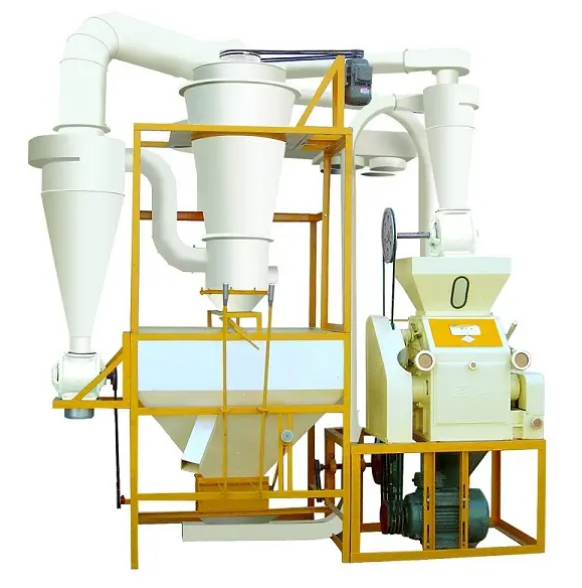
A complete set of small-scale flour milling machinery typically includes cleaning equipment, grinding equipment, sieving equipment, conveying equipment, and an electrical control system. Depending on the output, common configurations include equipment with daily capacities of 30 tons, 50 tons, and 100 tons.
The price of the equipment is affected by several factors, mainly including:
Capacity: Higher capacity and larger equipment size naturally result in a higher price.
Degree of Automation: Fully automatic control systems are more expensive than semi-automatic or manual systems, but they are more convenient to operate and more efficient.
Brand and Quality: While equipment from well-known brands requires a higher initial investment, it offers stable performance and comprehensive after-sales service.
Completeness of Supporting Equipment: Does it include functional modules such as cleaning, dust removal, and grading?
Currently, in the market, a complete set of small-scale flour milling machinery with a daily processing capacity of 30-50 tons of wheat costs approximately between 300,000 and 800,000 RMB. The specific price will be determined based on customized customer requirements and the manufacturer’s quote.
II. Detailed Process Flow of a Small-Scale Flour Production Line
The core objective of a complete flour processing production line is to process raw grains (such as wheat) through multiple processes to ultimately obtain flour products that meet national standards. The following is a typical process flow for a small-scale flour production line:
Raw Grain Receiving and Cleaning
After the raw wheat enters the production line via a conveyor belt, it first needs to be cleaned. This stage mainly uses equipment such as vibrating screens, destoners, and magnetic separators to remove impurities such as sand, metal particles, and straw, ensuring the safety of subsequent processing and the quality of the finished product.
2. Conditioning and Wheat Nourishing
After cleaning, the wheat grains enter the conditioning system, where water spraying and settling soften the wheat bran and harden the endosperm, facilitating subsequent grinding and separation. This process significantly improves flour yield and whiteness.
3. Milling
This is the core of the entire production line. A roller mill is used to break down the wheat in stages, separating the endosperm from the bran. The milling process generally consists of coarse, medium, and fine grinding stages to ensure the fineness and uniformity of the flour.
4. Sieving and Grading
The milled mixture enters a high-square flat sieve for sieving, separating coarse flour, fine flour, bran, and wheat germ. During sieving, fine grading can also be performed according to the flour’s intended use (e.g., extra virgin flour, standard flour, specialty flour).
5. Finished Product Packaging and Storage
The sieved finished flour enters the packaging system for quantitative packaging and storage in the finished product warehouse. Modern equipment enables fully automated weighing, sealing, and stacking, saving manpower and improving efficiency.
6. Dust Removal and Environmental Protection
To ensure a clean workshop environment and employee health, the entire production line is equipped with a pulse dust removal system for centralized dust collection and treatment, meeting environmental emission standards.
III. The Importance of Choosing High-Quality Equipment
For investors, selecting a set of efficient, energy-saving, and stable small-scale flour milling machinery is crucial. High-quality equipment not only improves product quality but also extends service life and reduces later maintenance costs. Furthermore, a reasonable process layout and excellent after-sales service are also key factors for successful operation.
Conclusion
FOTMA MILL, a well-known domestic manufacturer of grain and oil machinery, has focused on the research and development and production of flour milling machinery for many years, providing various models of small-scale flour milling equipment widely applicable to small and medium-sized flour processing plants. The company always adheres to a customer-centric approach, committed to providing customers with efficient, energy-saving, and intelligent solutions. If you are looking for cost-effective and stable flour production equipment, FOTMA is your ideal choice.
Post time: Apr-09-2026