

In the modern grain processing industry, fully automatic rice milling systems are indispensable, key pieces of equipment. With technological advancements, these systems have evolved from traditional semi-automated setups into highly integrated, automated, and intelligent systems, significantly boosting production efficiency and product quality. A complete fully automatic rice milling system comprises several key components, including the feeding system, milling system, grading system, cooling system, dust removal system, and control system.
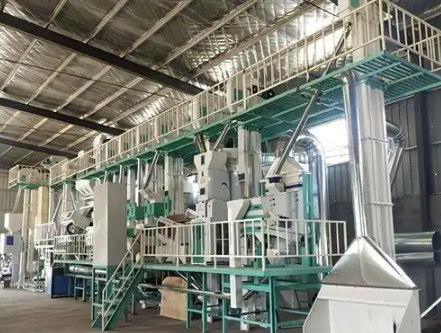
First, the feeding system ensures the uniform transport of paddy rice into the milling system. Next, the milling system utilizes rollers to precisely mill the rice, removing the husks while retaining the rice kernels. Subsequently, the grading system sorts the rice based on size and quality, ensuring uniformity and consistent product quality. The cooling system plays a vital role in maintaining stable, long-term operation by preventing equipment overheating. Additionally, the dust removal system effectively collects dust generated during production, keeping the workshop environment clean. Finally, the entire process is intelligently managed by an advanced control system, enabling fully automated control from raw material input to finished product output.
Selecting Equipment Based on Production Capacity Needs
When purchasing a fully automatic rice milling system, enterprises should make their choice based on their specific production scale and capacity requirements. Small enterprises processing limited quantities of paddy rice might opt for lower-capacity machines to reduce initial investment costs. Conversely, large-scale processing plants require high-output equipment capable of continuous operation to meet mass production demands. Therefore, before purchasing, enterprises should carefully assess their actual needs and select the appropriate equipment specifications and models to maximize their return on investment.
FOTMA MILL is a company dedicated to the R&D and manufacturing of grain processing equipment. Since its inception, the company has adhered to the business philosophy of “Quality First, Customer Foremost,” strictly controlling quality at every stage of production. From raw material procurement to final product dispatch, FOTMA employs international testing standards to ensure every machine meets the highest industry benchmarks. Furthermore, the company has established a comprehensive after-sales service system, providing customers with all-around technical support and maintenance services to ensure the long-term, stable operation of their equipment. FOTMA Milling Process
FOTMA’s fully automatic rice milling system employs advanced production processes to ensure the output of high-quality rice. First, pre-treated paddy enters the feeding system and is conveyed to the milling chamber, where high-pressure milling removes the husks. Next, the rice passes through a grading system to be sorted by grain size. Subsequently, air separation technology is used to further purify the rice by removing impurities and dust. Throughout the production process, cooling and dust removal systems work in tandem; this not only ensures the smooth operation of the equipment but also improves the workshop’s working environment. Finally, after undergoing a series of precision processing steps, the finished rice is packaged and warehoused, ready for sale.
Pricing and After-Sales Service
In terms of pricing, FOTMA MILL offers excellent value for money, thanks to its superior performance and stable production capabilities. The company tailors solutions to meet specific customer needs and provides reasonable price quotations. Furthermore, FOTMA has established a comprehensive service network, ensuring that customers receive timely and attentive after-sales support regardless of their location. Whether for equipment installation and commissioning or routine maintenance, FOTMA’s professional team provides end-to-end guidance, ensuring peace of mind for every customer.
Post time: Jul-13-2026