

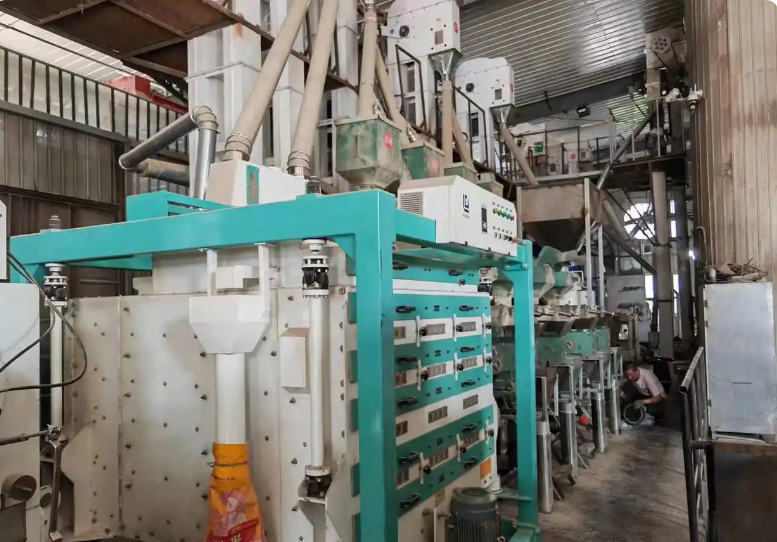
When purchasing a 120-ton rice milling system, the choice of configuration directly impacts the equipment’s efficiency and service life. A complete system typically comprises core machinery—such as cleaners, paddy huskers, rice milling machines, white rice graders, and finished product silos—along with auxiliary facilities like conveying systems, dust removal systems, and electrical control systems. Cleaners remove impurities from the paddy to ensure purity for subsequent processing; huskers separate the hulls from the paddy, marking the first step in the milling process; rice milling machines use friction to remove the outer layers of brown rice, achieving the desired degree of whiteness; white rice graders sort and classify the milled rice to ensure consistent product quality; and finished product silos store the processed rice pending packaging or sale. Additionally, an efficient dust removal system minimizes dust pollution, protects the environment, and safeguards the health of operators.
How to Choose the Right Production Capacity
For most people, selecting the appropriate production capacity for rice milling equipment involves weighing multiple factors. First, it is essential to clarify your production scale and market demand. If the target market is small or initial capital is limited, opting for lower-capacity equipment—such as a system with a daily processing capacity of 50–80 tons—can reduce startup costs and allow for gradual production expansion. Second, consider the equipment’s flexibility and scalability. As the business grows, you may need to add equipment to increase output; therefore, choosing a system that allows for flexible adjustments or upgrades is a wise decision. Finally, consider maintenance costs and technical support. While high-capacity equipment offers advantages in terms of throughput, it entails higher maintenance costs and greater technical demands; users should fully assess their own technical capabilities and financial resources before making a choice.
Preliminary Preparation
Thorough preparation is crucial before installing and operating a 120-ton rice milling system. First, conduct a site visit to the facility to ensure there is adequate space for installation and that the site complies with local safety standards and environmental regulations. Second, familiarize yourself with the equipment’s specifications and installation requirements in advance, and communicate with the supplier to determine the optimal layout plan. For instance, equipment should be spaced appropriately to facilitate material transfer and personnel operations, while also accounting for factors like ventilation and lighting to create a safe, comfortable work environment. Furthermore, operators should receive training to familiarize them with equipment operation and maintenance procedures, ensuring long-term, stable performance. Finally, maintaining a stock of necessary spare parts and consumables—such as screens and blades—is essential for handling emergencies, minimizing downtime, and ensuring continuous production.
Industry Outlook and Profitability
In recent years, growing public concern regarding food safety and healthy eating has driven a steady rise in the demand for high-quality rice, creating unprecedented growth opportunities for the rice milling industry. On one hand, as consumers increasingly favor organic or “green” rice—valued for superior taste and nutritional content—enterprises are compelled to adopt advanced processing technologies and equipment to enhance product quality. On the other hand, technological advancements have led to the widespread adoption of automated and intelligent rice milling equipment; this not only boosts production efficiency and lowers labor costs but also minimizes product quality fluctuations caused by human error. For investors, the rice milling sector offers a stable revenue stream and the potential for rapid profitability driven by robust market demand. However, the market is becoming increasingly competitive. To stand out, enterprises must go beyond product quality by continuously innovating their marketing models and service systems, as well as strengthening their brand influence, to secure a winning position amidst the competition.
Choosing the right development path—whether starting on a small scale or pursuing large-scale expansion—requires careful planning and sustained effort. Throughout this process, success hinges on a commitment to learning new technologies and knowledge, alongside maintaining keen market insight. Choosing FOTMA MILL’s 120-ton rice milling equipment is a wise decision.
Post time: Jul-08-2026