
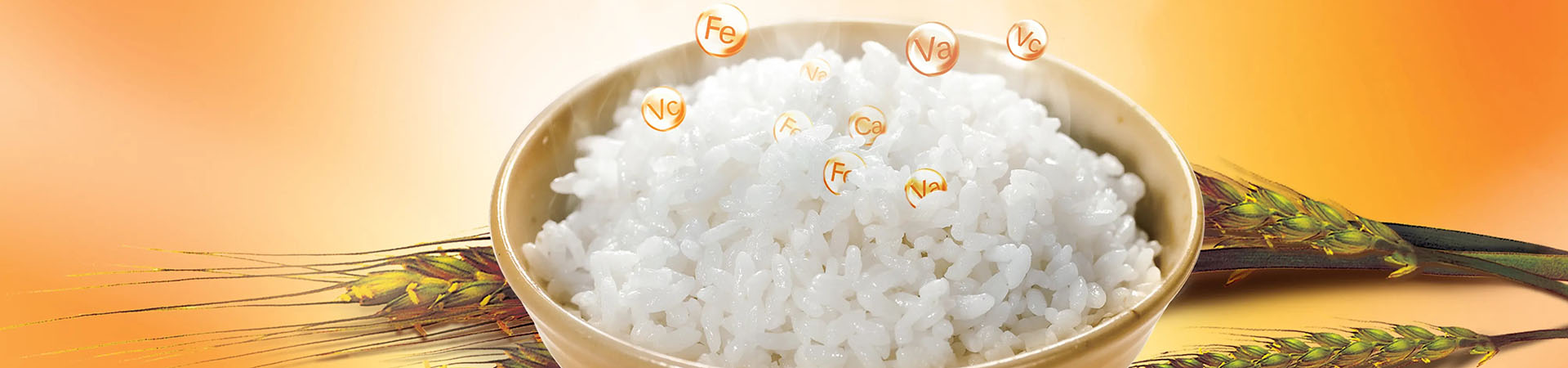
A rice dryer is a specialized piece of equipment for drying rice. It achieves this drying process through a series of working principles to ensure the quality and storage of the rice. The working principle of a rice dryer will be explained in detail below.
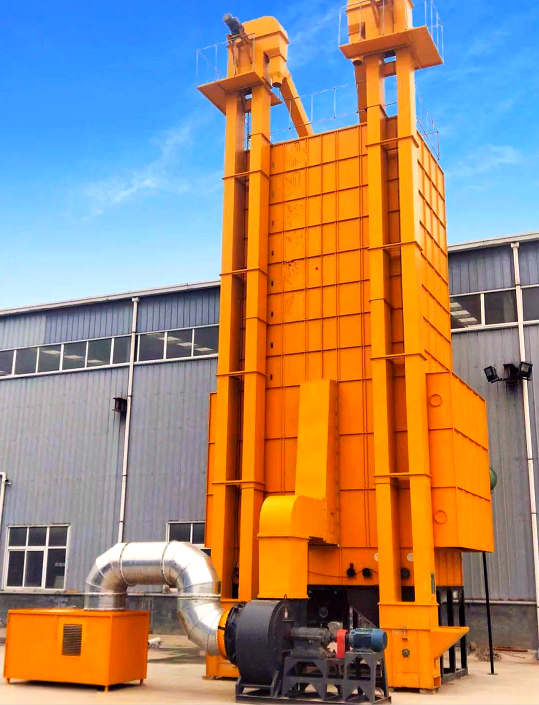
First, the working principle of a rice dryer can be divided into two main parts: the hot air circulation system and the rice conveying system.
The hot air circulation system is the core component of the rice dryer. It achieves the drying of the rice by generating and circulating hot air. The hot air circulation system includes a heating furnace, a hot air generator, a fan, and hot air ducts.
The heater is the source of the hot air circulation system. It generates high-temperature hot air by burning fuel. The fuel in the heating furnace can be natural gas, biomass pellets, coal, electricity, etc., which generates a large amount of heat during heating.
The hot air generator is the device that converts the high-temperature hot air generated by the heating furnace into hot air. The hot air generator contains many heat exchange tubes. The hot air enters the drying layer through these tubes to exchange heat with the rice, causing the moisture in the rice to evaporate.
The blower is the power unit in the hot air circulation system. It generates airflow through rotation, blowing hot air from the hot air generator into or out of the rice drying chamber. The blower’s speed is adjustable to control the flow rate and speed of the hot air to meet the drying requirements of different types of rice.
The hot air duct is the channel connecting the hot air generator and the rice drying chamber, guiding the hot air from the generator into the drying chamber. The design of the hot air duct ensures that the hot air is evenly distributed to all parts of the rice to achieve uniform drying.
The rice conveying system transports the rice to be dried from the inlet to the outlet. It includes a feeder, conveyor belt, and discharge device.
The feeder is the device that puts the rice to be dried into the rice drying chamber. It can control the feeding speed and amount of rice to adapt to different drying requirements.
The conveyor belt is the device that transports paddy rice from the feeder to the discharge port. It controls the speed and direction of the rice movement by adjusting its speed and tilt angle, ensuring the rice passes evenly through the drying chamber.
The discharge port is the device that removes the dried paddy rice from the drying chamber. It controls the discharge speed and quantity to adapt to different production needs.
In summary, the working principle of a paddy dryer mainly includes a hot air circulation system and a paddy rice conveying system. The hot air circulation system generates and circulates hot air to dry the paddy rice, while the paddy rice conveying system is responsible for transporting the paddy rice from the feeder to the discharge port. The coordinated work of these two systems ensures the drying of the paddy rice within the dryer.
This is a detailed introduction to the working principle of a paddy dryer. By understanding the working principle of a paddy dryer, we can better understand its operation, thereby better using and maintaining the paddy dryer and improving the drying efficiency of the paddy rice.
Post time: Jun-03-2026