

In the rice processing industry, broken rice rate is a key indicator for evaluating equipment performance and economic efficiency. This article will systematically analyze the seven core factors affecting broken rice rate and their corresponding solutions.
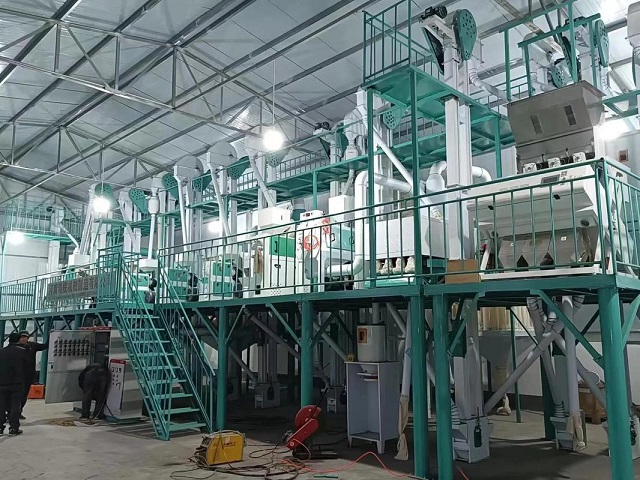
I. Key Controls in Paddy Pre-treatment
1. Precise Control of Moisture Adjustment
The moisture content of paddy directly affects the distribution of mechanical stress during milling. Experimental data shows that when the moisture content is controlled between 14.5% and 15.2%, the binding force between the endosperm and bran is most suitable for processing. It is recommended to use a microwave moisture detector for real-time monitoring, combined with a spray watering system, with the error controlled within ±0.3%. A large rice mill improved the moisture uniformity of different batches of paddy by 40% by installing an intelligent conditioning tower.
2. Process Innovation for Grading and Impurity Removal
The presence of impurities, especially adjacent stones, significantly increases the risk of broken rice. A combined cleaning process is recommended: first, separate irregularly shaped grains using a width-grading screen; then, process with a gravity grading destoner; and finally, remove diseased grains using a color sorter. A company in Jiangxi province reduced broken rice caused by imperfect grains by 62% after adopting this process.
II. Optimization of Core Parameters of Rice Milling Units
1. Pressure Gradient Setting in Whitening Chambers
The pressure distribution in multi-stage whitening chambers should follow the principle of “light pressure, more milling.” Practice shows that the optimal pressure ratio for the three whitening chambers is 1:1.5:2, and the lead angle of the screw propeller is recommended to be set between 22° and 25°.
2. Scientific Selection of Milling Roller Characteristics
The combination of diamond rollers and iron rollers yields significant results. It is recommended to use #24-#30 grit sand rollers in the first stage and polished iron rollers in the subsequent stage. A composite nano-coated milling roller developed by an equipment manufacturer in Hunan province extends the service life by 3 times while reducing broken rice generation by 27%.
III. Intelligent Monitoring of Equipment Operating Status
1. Real-time Early Warning of Vibration and Temperature Rise
An online monitoring system is installed to collect bearing temperature and spindle vibration values. An alarm is immediately triggered when the vibration speed exceeds 4.5 mm/s or the bearing temperature exceeds 65°C. A smart workshop has reduced sudden rice breakage incidents caused by equipment malfunctions by 90% using this system.
2. Precise Control of Airflow System
The suction volume should be maintained at 18-22 m³/min·m², and the air velocity controlled at 8-12 m/s. Recent research shows that suction hoods designed with the Venturi effect can improve airflow uniformity by 35%, effectively preventing rice grain collision and breakage.
IV. Dynamic Adjustment of Process Route
1. Variety Adaptability Modification
For long-grain indica rice (such as Meixiangzhan No. 2), the milling speed should be appropriately reduced to 850-900 rpm, shortening the milling stroke by 15%; while for short-grain japonica rice (such as Koshihikari), the polishing passes need to be increased. A variety database established by a processing plant can achieve automatic parameter matching, reducing the difference in rice breakage rate between different varieties to within 0.5%.
2. Application of Flexible Processing Technology
A servo motor drive system is introduced to automatically adjust the feeding speed when the feed rate fluctuates. Test data shows that when the processing volume varies within 70%-110% of the rated capacity, the system can maintain a broken rice rate fluctuation of no more than 0.3%.
V. Standardized Management of Operation and Maintenance
1. Periodic Inspection of Mill Roller Wear
Establish a three-dimensional wear map of the mill rollers, and perform contour inspection every 200 tons processed. Replace the rollers when the wear height of the protrusions on the surface exceeds 1.2mm. Using a laser rangefinder can improve the measurement accuracy by 5 times compared to traditional calipers.
2. Standardized Equipment Maintenance Procedures
Includes: daily cleaning of impurities from the magnetic separator, weekly check of screen cylinder tension, and monthly calibration of the pressure sensor. After implementing Total Productive Maintenance (TPM) by a certain group, the equipment failure rate decreased by 76%, resulting in a 43% reduction in broken rice loss.
VI. Environmental Factor Control Strategies
1. Workshop Temperature and Humidity Balance
Maintaining a temperature of 20-25℃ and a relative humidity of 60%-65% is ideal. It is recommended to install a constant temperature and humidity system, especially during the rainy season when dehumidification should be strengthened. Comparative tests show that workshops with well-controlled environments can reduce broken rice rates by 0.4%-0.7%.
2. Noise and Vibration Reduction Engineering Measures
Rubber vibration damping bases are installed on high-speed operating equipment, and flexible joints are used at pipe connections. When the sound pressure level is controlled below 85dB, the probability of operator error is reduced by 60%, indirectly improving process stability.
VII. Quality Traceability and Continuous Improvement
A full-process quality archive is established from raw materials to finished products, and big data analysis is used to determine the temporal distribution and location characteristics of broken rice generation. One company discovered through its traceability system that approximately 32% of broken rice was concentrated in the night shift from 2:00 AM to 4:00 AM. After adjusting the shift schedule, the broken rice rate during this period decreased by 1.2 percentage points.
The most advanced solution currently is to use machine vision technology, capturing the movement trajectory of rice grains through high-speed cameras and adjusting equipment parameters in real time using AI algorithms. Tests show that this technology can further reduce the broken rice rate to below 0.8%, but the initial investment requires an additional 300,000 yuan. Companies with a capacity of 200 tons/day or more are advised to consider this option. Special attention should be paid to the following: when processing aged rice (stored for more than one year), the milling pressure should be reduced by an additional 20%, and a tempering process should be added. For processing high-quality fragrant rice, a “low-temperature milling” process is recommended, controlling the milling chamber temperature below 40℃. Although this will reduce production capacity by 15%, the head rice yield can be increased by 2-3 percentage points.
With the implementation of new national standards such as the “Energy Consumption Limits for Rice Processing,” future equipment will develop towards the dual goals of “low breakage rate and low energy consumption.” Industry forecasts predict that by 2027, the market penetration rate of rice milling equipment equipped with intelligent control systems will reach 45%, at which time the average broken rice rate is expected to exceed 1%.
FOTMA MILL is a professional company specializing in rice processing engineering research, design, production, installation, commissioning, and training services. With over thirty professional technicians, we help you build technical reserves and continuously enhance your competitiveness through regular equipment upgrades and operational training.
Post time: Jun-08-2026