

A rice milling production line with a daily processing capacity of 300 tons is a large-scale rice milling production system with the following characteristics:
1. High capacity: It can process a large amount of paddy rice daily.
2. High degree of automation: Reduces manual operation and improves production efficiency.
3. Strict quality control: Ensures consistent quality of the milled rice.
4. Diversified products: It can produce rice of different specifications.
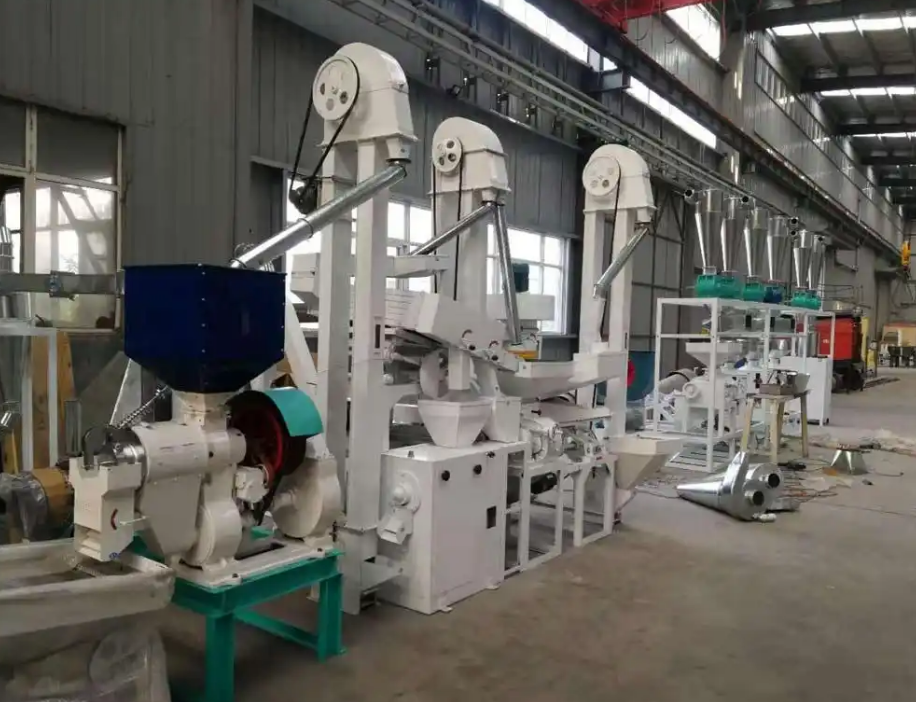
Its main components include:
1. Feeding system: Used for conveying and storing paddy rice.
2. Cleaning equipment: Removes impurities and defective paddy rice.
3. Hulling machine: Dehulls the paddy rice.
4. Rice milling machine: Whitens the rice grains.
5. Polishing machine: Improves the smoothness of the rice.
6. Sorting equipment: Separates rice grains of different qualities.
7. Packaging Equipment: Packaging the finished rice.
Constructing such a production line requires consideration of the following factors:
1. Site Planning: Ensuring sufficient space for equipment placement.
2. Energy Supply: Meeting the equipment’s power requirements.
3. Personnel Training: Operators need to acquire relevant skills.
4. Cost Input: Including equipment procurement, installation, and maintenance costs.
5. Environmental Measures: Reducing dust and noise pollution.
The construction period for such a 300-ton-per-day paddy rice milling production line is typically affected by several factors, including but not limited to the following:
1. Equipment Customization and Procurement: Specially designed or non-standard equipment may require longer manufacturing times.
2. Site Preparation: Infrastructure construction, layout planning, etc.
3. Installation and Commissioning: Ensuring the normal operation of all equipment.
4. Personnel Training: Training for operators and maintenance personnel.
Overall, the construction period is generally several months to about one year. However, the specific time will depend on the following factors:
1. Project Complexity. 2. Supplier delivery time.
3. Construction schedule and resource allocation.
4. Relevant approval procedures.
To shorten the construction period, FOTMA MILL recommends the following measures:
1. Plan ahead to ensure smooth workflow at each stage.
2. Work closely with suppliers to monitor equipment manufacturing progress.
3. Optimize the construction schedule to improve work efficiency.
4. Resolve potential problems promptly.
Post time: Mar-23-2026