

Coconuts are mainly distributed in tropical or subtropical coastal areas and, along with camellia, olive, and palm, are known as the four major woody oilseed plants. Coconut products are mainly copra, with an annual output of over one million tons, making it the primary raw material for coconut oil production. One can imagine the considerable yield after copra is converted into coconut oil.
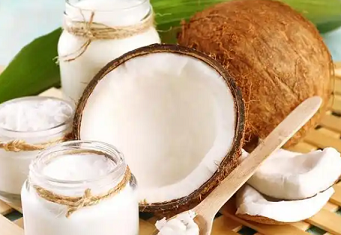
Coconut oil is a white or pale yellow oil widely used in the special medical food industry and the food industry. Its saturated fatty acid content is over 80%, primarily lauric acid. Coconut oil also contains polyphenols, sterols, and other accompanying oil compounds, possessing various physiological activities. Coconut oil is mostly obtained by pressing or solvent extraction from copra. The resulting crude coconut oil is darker in color and has a higher acid value, making it unsuitable for direct consumption and requiring refining.
With increasing refining levels, the quality of the oil changes significantly, leading to a substantial loss of beneficial accompanying compounds such as sterols, tocopherols, and polyphenols. To address this issue, producers employ mechanical methods to extract coconut oil from fresh coconut meat. The extraction process maintains a stable temperature, resulting in high-quality coconut oil that doesn’t require bleaching or deodorization.
Mechanically processed coconut oil retains more nutrients, such as vitamin E, phytosterols, and polyphenols, while preserving various active substances and the aroma of coconut milk, making it a popular choice in the market. Mechanical coconut oil processing can be divided into wet processing and enzymatic hydrolysis, with wet processing being considered more ideal for industrial production.
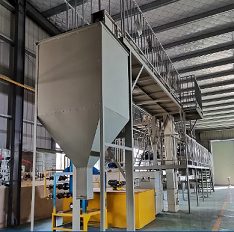
Wet processing involves crushing mature fresh coconut meat into a pulp, pressing it in cheesecloth, refrigerating it for a period, and then heating it in a constant-temperature oven. The crude coconut oil is then filtered through coarse cotton cloth to obtain healthy coconut oil. While wet-processed coconut oil is of high quality, although the coconut meat residue still contains approximately 36%–48% oil, the remaining oil can be extracted using extraction methods or further processed to obtain coconut powder and coconut oil.
Enzymatic extraction of coconut oil involves breaking down the lipid compounds in coconut milk using enzymes. This separates the coconut oil from proteins and other compounds, accelerating the separation of coconut oil from the emulsion and ultimately yielding the oil. Using cellulase to hydrolyze coconut milk achieves an oil yield of over 90%.
Studies have found that coconut oil extracted using either wet processing or enzymatic extraction methods maintains a saturated fatty acid content of around 90%, is rich in lauric acid, and exhibits greater stability and higher quality compared to coconut oil extracted using conventional methods, making it more popular in the market.
FOTMA MILL are one of the most experienced manufacturers and suppliers of coconut oil presses in China. Welcome to purchase affordable coconut oil presses from our factory. Please contact us for details.
Post time: Apr-12-2026